


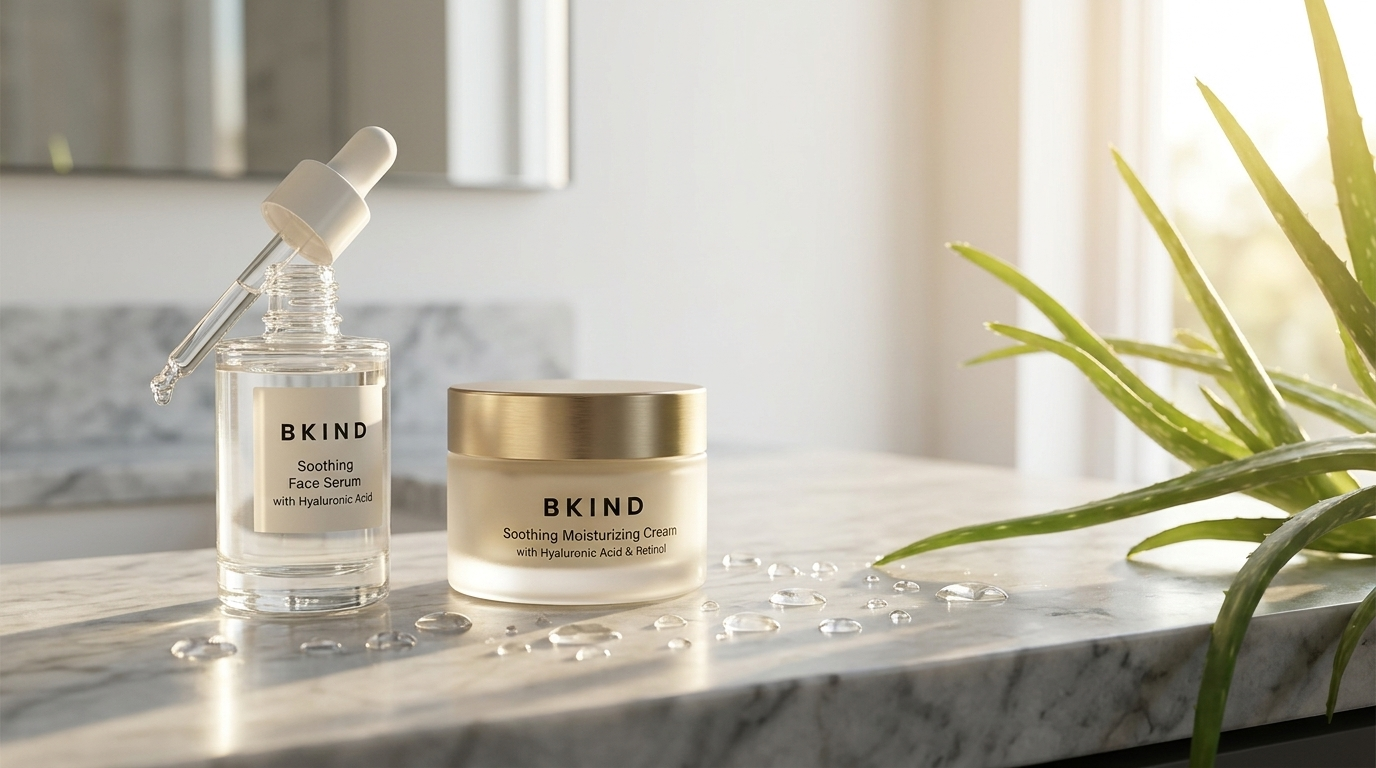
You finally started using retinol, and now your cheeks feel tight, flaky, and a little pink. Then you notice a hydrating serum on your shelf and wonder if it will help or make things worse. Mixing skincare ingredients can feel like chemistry homework, so the worry makes sense.
Here is the reassuring part: hyaluronic acid and retinol are not rivals. Once you know what each one does, building a routine around them gets simple. Let’s compare them, then layer them step by step.
Hyaluronic Acid and Retinol: What Each One Does
These two ingredients sit at opposite ends of the skincare spectrum. One hydrates, and the other renews. Here is how the hyaluronic acid vs. retinol comparison breaks down.
Hyaluronic Acid, the Water Magnet
Hyaluronic acid is a humectant, an ingredient that attracts water and holds it in your skin. It occurs naturally in your body, and on skincare labels it often appears as sodium hyaluronate, the salt form of the same ingredient. The result is skin that looks plumper and feels more comfortable.
Pros:
- Hydrates without heaviness.It feels light on the skin and suits most skin types, including dry, oily, and sensitive.
- Plays well with others.It rarely causes irritation, so it layers easily with other active ingredients.
Cons:
- Does not renew skin.It hydrates the surface, but it does not speed up renewal or smooth texture on its own.
- Needs a sealing step.Water can evaporate quickly, so it works best under a moisturizer.
Retinol, the Renewer
Retinol is a form of vitamin A and part of a family called retinoids. It encourages cell turnover, the natural process of replacing old skin cells with fresh ones. With consistent use, it can help smooth texture, soften fine lines, and even out the look of dark spots.
Pros:
- Targets many concerns.It can help with rough texture, uneven tone, and fine lines in a single step.
- Backed by research.It is among the most studied ingredients in skincare, which is why it shows up in so many routines.
Cons:
- Can irritate.Dryness, flaking, and redness are common during the first few weeks.
- Increases sun sensitivity.Your skin needs daily sunscreen while you use it.
Can You Use Hyaluronic Acid with Retinol?
Yes, you can. Hyaluronic acid does not cancel out retinol, and retinol does not cancel out hyaluronic acid. When you use hyaluronic acid and retinol together, each one covers the other’s weak spot.
Why the Pairing Works
Dryness and tightness are the most common retinol side effects, and hydration is exactly what helps with those. A well-hydrated skin barrier, the outer layer that keeps moisture in and irritants out, usually tolerates retinol better. That is why many people feel more comfortable when they pair the two.
How to Layer Them
Order matters more than any complicated trick. Try this evening routine:
- Wash with a gentle cleanser and pat your skin dry.
- Apply a drop or two of hyaluronic acid serum. Putting hydration first can soften retinol’s bite while your skin adjusts.
- Apply retinol.Smooth on a pea-sized amount, avoiding the eye area and the corners of your nose and mouth.
- Finish with a face cream to seal everything in.
For step two, choose a gentle hydrating formula, such as a vegan hyaluronic acid serum with soothing ingredients like arnica and aloe vera.
Smart Habits for Using Retinol and Hydration
Start Slowly
Begin with two or three nights a week and increase only as your skin allows, one extra night at a time. Patch test any new product on a small area first. If your skin feels irritated, take a rest night and add more hydration.
Keep Other Exfoliants Away
Retinol already speeds up renewal, so skip other exfoliating products on the same night. That includes alpha hydroxy acids (AHAs) and beta hydroxy acids (BHAs), ingredients that dissolve dead skin cells so they can rinse away. Stacking them with retinol can leave your skin red and sore.
Protect Your Skin by Day
Retinol makes your skin more sensitive to the sun. Apply a broad-spectrum sunscreen every morning, even when it is cloudy. This step matters as much as the retinol itself.
Know When to Pause
Retinoids are generally not recommended during pregnancy, so check with your doctor first if you are pregnant or planning to be. If redness, burning, or peeling does not settle down, talk to a dermatologist. Persistent irritation is a sign to adjust, not to push through.
Hyaluronic Acid and Vitamin C: A Day and Night Plan
Hyaluronic acid and vitamin C also get along well. Vitamin C is an antioxidant, an ingredient that helps protect skin from damage caused by environmental stress, and it can help brighten a dull complexion. Many routines keep vitamin C for mornings and retinol for evenings, so each ingredient gets its own moment.
Morning: Vitamin C and Hydration
Start with a vitamin C serum on clean skin, then add a vegan hyaluronic acid serum or a moisturizer. Finish with sunscreen to protect the glow you are building.
Evening: Retinol and Hydration
At night, switch to the retinol routine above. Keeping the two ingredients on separate shifts means your skin gets the benefits of both without feeling overloaded.
The Bottom Line
So, can you use hyaluronic acid and retinol together? Absolutely, as long as you start slowly, hydrate generously, and protect your skin from the sun. Once your routine feels steady, adding vitamin C in the morning rounds it out.
What is the hardest part of your routine to get right: the hydration, the retinol, or the sunscreen?