Your child’s report card says “not working to potential” again. You know something is getting in the way, but nobody can tell you what, and a referral for testing now sits on the kitchen counter.
If the idea of a long day of puzzles, word lists, and timed tasks feels mysterious, you are not alone. Most people have never seen the inside of a testing room, and the names in a report can look like alphabet soup.
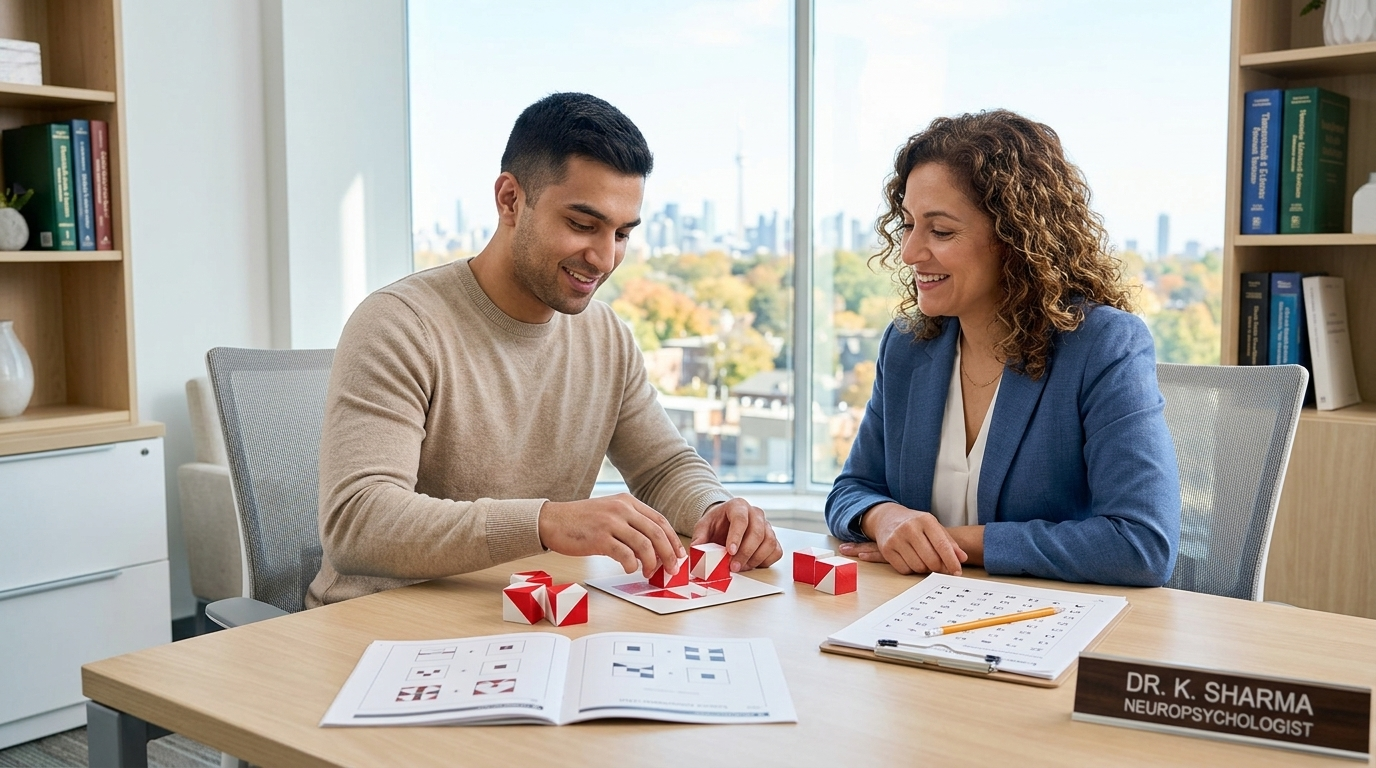
This guide walks you through the main tools neuropsychologists use, what each one measures, and how the results come together into a clear picture of how someone thinks and learns.
What Neuropsychological Tests Actually Do
Neuropsychological tests are standardized tasks that measure how the brain handles specific jobs, such as remembering, focusing, reasoning, or using language. Each task is given the same way to everyone, and results are compared with those of people the same age. That comparison is what turns a raw score into useful information.
Standardized, Not Pass or Fail
There is no passing grade in neuropsychological testing. A score simply shows where a skill sits compared with peers, from well below average to well above it. Strengths matter as much as weaknesses, because they point to strategies that already work.
Why One Test Is Never Enough
A single result can be thrown off by fatigue, worry, or a bad night of sleep. That is why clinicians use a battery of several tools and look for patterns across them. A consistent pattern carries far more weight than one low score.
The Main Tools and What They Measure
Most batteries cover the same core areas, even if the exact tools vary with age and with the question being asked. Here are the domains you are most likely to see in a report.
✅ Intellectual abilities: The WISC-V (for children ages 6 to 16) and the WAIS (for older teens and adults) look at verbal reasoning, visual reasoning, working memory, and processing speed. Together, these scores describe how a person takes in new material and solves problems.
✅ Attention: An attention test may ask you to respond to certain targets on a screen over several minutes. It shows how well focus holds up over time and how often impulsive responses slip through.
✅ Executive functions: Tasks such as the Stroop test or trail-making tasks measure inhibition, mental flexibility, and planning. These are the skills that help you start tasks, switch gears, and stay organized.
✅ Memory: Verbal and visual memory tasks look at how well information is learned, stored, and recalled later. Comparing immediate and delayed recall helps separate attention problems from memory problems.
✅ Language and academics: Tools in this area look at vocabulary, comprehension, reading, writing, and math. They help identify specific learning disorders such as dyslexia or dyscalculia.
Tests Designed for Children
Children are not small adults, and their tests reflect that. Pediatric tools use shorter tasks, engaging materials, and age-based norms that follow development year by year. Expected results for a seven-year-old and a ten-year-old can look very different.
The NEPSY Battery
The NEPSY was built for children ages 3 to 16 and covers attention, language, memory, social perception, and sensorimotor skills. Clinicians can select the subtests that fit the referral question rather than giving every task.
Questionnaires and Observation
Rating scales completed by parents and teachers add something tests cannot: a view of daily life at home and at school. A child may focus well in a quiet one-on-one session and still struggle in a noisy classroom. Comparing both views shows whether a difficulty follows the child everywhere or appears only in certain settings.
How Results Become a Clear Picture
Scores on their own do not make a diagnosis. The neuropsychologist combines test results with developmental history, school records, interviews, and the behavior observed during testing.
Looking for Patterns
A child with strong reasoning but slow processing speed, for example, may understand the material well yet run out of time on exams. Spotting that gap can change how teachers and parents respond to the struggle.
Turning Findings Into Next Steps
The final report explains each result in plain language and links it to everyday challenges. If you want to know what a full neuropsychological assessment covers beyond the tests themselves, reading how clinics describe the evaluation can help you prepare your questions.
What to Expect on Testing Day
Testing usually takes several hours and is often split across more than one session. You can expect a mix of paper-and-pencil tasks, computer-based tasks, and conversation with the clinician.
Preparing Without Practicing
Rehearsing test-style tasks ahead of time does not help, since it can distort the results. Instead, focus on a good night of sleep, a regular meal, and any glasses or hearing aids you normally use. Bring school reports, prior evaluations, and a list of current medications.
Knowing the Steps in Advance
Many people feel calmer once they know how the day unfolds, from the first interview to the feedback meeting. Reading through a typical neuropsychological assessment process can take much of the mystery out of the experience.
Understanding the Tools Changes the Conversation
Neuropsychological tests are not a verdict on intelligence or character. They are a structured way to understand how a person thinks, learns, and copes, which makes support easier to plan.
Once you know what the WISC-V, an attention test, or a memory task is measuring, the report stops looking like alphabet soup. You can ask sharper questions and take a more active role in what comes next.
Have you or your child gone through neuropsychological testing? Which part of the results surprised you most?