

Retail has always been about understanding people. What customers want, what catches their attention, and what makes them choose one product over another can determine whether a store succeeds.
But understanding customers in a physical store has traditionally been difficult. Retailers could track sales and inventory, but much of what happened between a customer’s entrance and checkout remained invisible.
That is changing.
With modern retail analytics software and retail video analytics, retailers can now turn everyday store activity into measurable insights. Instead of relying solely on assumptions, businesses can understand customer movement, store traffic, operational patterns, and potential opportunities for improvement.
The result is a shift toward smarter, more data-driven retail.
What Is the Hidden Power of Retail Analytics Software?
At its core, retail analytics software helps retailers transform raw store data into information they can actually use.
Sales figures alone tell you what was purchased. They do not necessarily explain why customers purchased—or why they walked away without buying.
Modern retail analytics can bring together information such as:
- Store footfall
- Customer traffic patterns
- Peak visiting hours
- Store-level performance
- Conversion-related metrics
- Dwell time
- Operational trends
- Customer behavior
- Staff and resource utilization
When these metrics are analyzed together, retailers can identify patterns that may otherwise remain hidden.
For example, if footfall increases but sales remain unchanged, the retailer has a clear reason to investigate the customer journey rather than simply assuming demand is weak.
How Retail Video Analytics Changes the Picture
Traditional CCTV systems are primarily designed to record events. Retail video analytics adds intelligence to that footage.
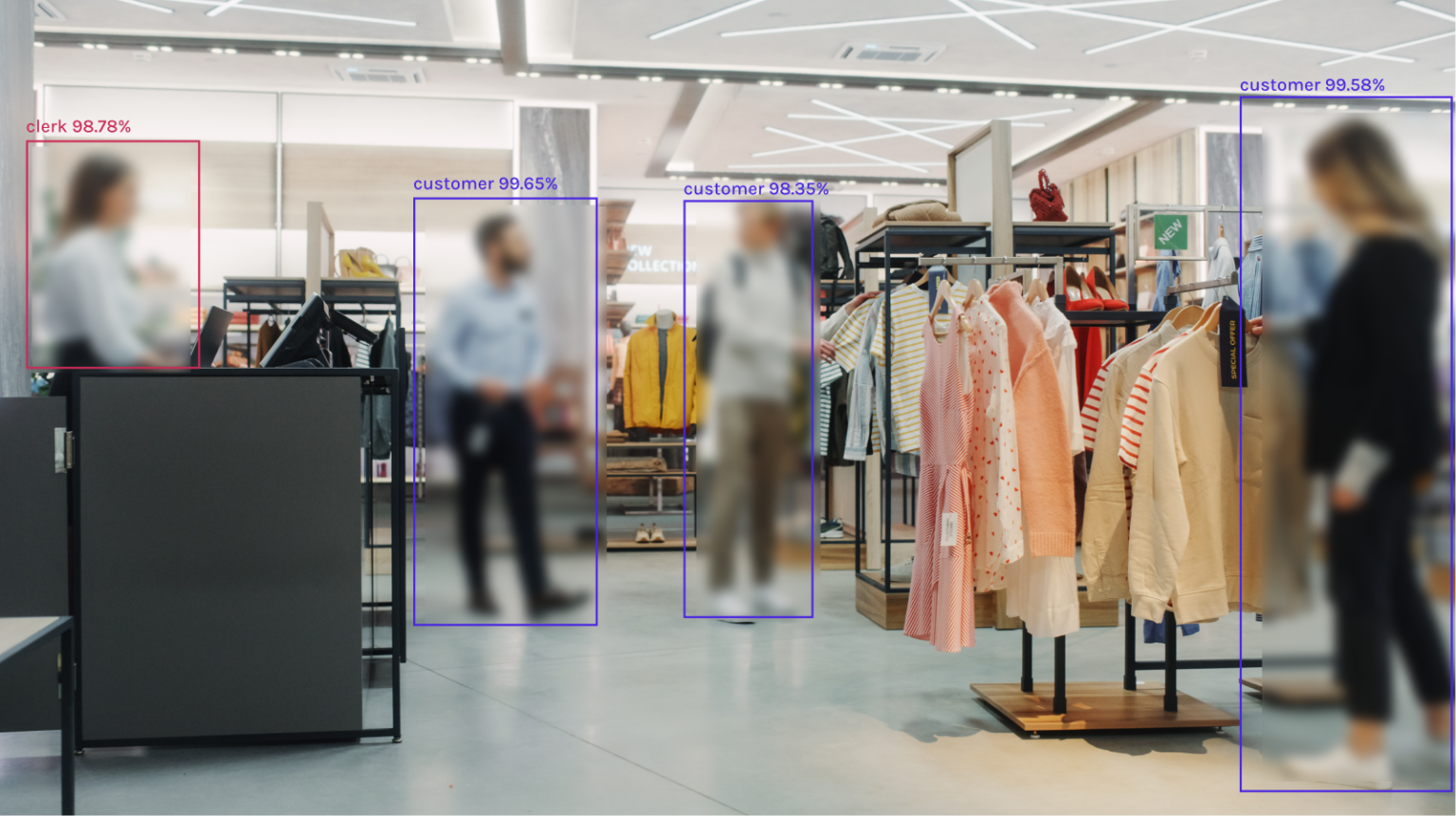
Using AI and computer vision, retail video analytics can interpret activity within a store and convert it into measurable information.
Depending on the technology, retailers may be able to understand:
- How many people enter the store
- How customers move between sections
- Which areas receive the most traffic
- How long customers remain in particular zones
- When queues become congested
- Which areas have low customer engagement
This gives retailers something they have historically lacked: visibility into customer behavior inside the physical store.
From Security Cameras to Business Intelligence
One of the most significant changes is that cameras are no longer useful only for security purposes.
With retail video analytics, existing camera infrastructure can potentially become an additional source of business intelligence.
Imagine a retailer notices that a particular promotional display is not generating expected sales.
Sales data might show the disappointing result, but it cannot necessarily explain why.
Video analytics may reveal that customers rarely pass through that area.
The retailer could then test a different location and measure the impact.
This creates a simple but powerful cycle:
Observe → Analyze → Change → Measure → Improve
1. Smarter Store Layouts
Store layout has a major influence on customer movement.
Some areas naturally attract attention, while others may receive little traffic.
Retail video analytics can help retailers identify these differences by analyzing customer movement patterns.
Retailers can use these insights to evaluate:
- Product placement
- Promotional displays
- Signage
- Aisle positioning
- High-traffic zones
- Underutilized areas
Rather than designing a store based entirely on assumptions, businesses can use actual behavioral data to test improvements.
2. Better Understanding of Customer Journeys
A customer’s journey does not begin at the checkout counter.
It starts when they enter the store.
Where do they go first? Which sections do they visit? Where do they stop? How long do they stay?
Retail video analytics can help answer these questions.
When these behavioral insights are combined with retail analytics software, retailers can develop a more complete understanding of the relationship between customer activity and store performance.
This can help identify potential friction points that may affect the shopping experience.
3. Improved Staffing Decisions
Staffing decisions are often based on historical schedules or manager experience.
But customer traffic can vary considerably throughout the day.
Retail analytics software can help identify periods of high and low footfall.
For example, if traffic consistently increases during evening hours, retailers can consider adjusting staffing levels to match demand.
Better staffing can mean shorter queues, faster assistance, and a smoother customer experience.
4. Reducing Queue-Related Problems
A customer may be ready to purchase but still leave because the checkout process takes too long.
Long queues can create frustration and reduce the quality of the shopping experience.
Retail video analytics can help retailers understand when congestion occurs and how customer traffic changes throughout the day.
These insights can help managers investigate whether additional staff, improved queue organization, or operational changes are required.
5. Identifying Underperforming Areas
Not every section of a store performs equally.
Some areas may consistently attract customers, while others receive very little attention.
Retail video analytics can help retailers identify these patterns.
When combined with retail analytics software, management can investigate whether underperforming areas are associated with specific product categories, displays, layouts, or customer journeys.
This can create opportunities for targeted optimization rather than costly store-wide changes.
6. Comparing Multiple Store Locations
Retail chains often have stores with similar products, pricing, and branding—but very different results.
Why?
The answer may involve customer demographics, layout, staffing, traffic patterns, or local shopping behavior.
Retail analytics software can help management compare performance across locations.
Retail video analytics can add behavioral context by showing how customers move differently through individual stores.
This allows businesses to identify successful practices that could potentially be replicated across other locations.
7. Turning Data Into Action
Data by itself does not improve a store.
Action does.
The real value of retail analytics software lies in turning information into decisions.
For example:
Insight: A particular section receives very little traffic.
Action: Move a promotional display closer to a high-traffic area.
Measurement: Monitor customer movement and sales after the change.
Optimization: Keep, modify, or reverse the strategy based on results.
This approach allows retailers to continuously improve instead of making one-time decisions.
Why Retail Video Analytics Is Becoming Essential
The physical store is not disappearing. Instead, it is becoming more intelligent.
Online businesses have always had access to detailed behavioral data. They can track clicks, page views, browsing paths, and conversions.
Physical retailers have historically had less visibility.
Retail video analytics helps close that information gap.
It provides retailers with a way to understand physical customer journeys using technology already present in many stores.
When combined with retail analytics software, it can create an analytical foundation for modern brick-and-mortar retail.
Choosing the Right Analytics Solution
Retailers should evaluate more than just the number of features before investing.
Important considerations include:
- Accuracy of people counting
- Quality of customer movement insights
- Dashboard usability
- Real-time or near-real-time reporting
- Multi-store capabilities
- Integration with existing systems
- Scalability
- Data security
- Privacy and compliance
- Quality of actionable insights
The right technology should solve real business problems rather than simply generate more reports.
The Future of Retail Is Data-Driven
Retail is entering an era where physical stores can become measurable environments.
Retail analytics software can help retailers understand broader business and operational performance, while retail video analytics can provide deeper visibility into customer behavior.
Together, they can help retailers answer questions that were once difficult to measure:
Where are customers going?
What areas attract their attention?
When are stores busiest?
Where are operational problems occurring?
Which changes actually improve performance?
These answers can help businesses make more informed decisions and create better shopping experiences.
Conclusion
The hidden power of retail analytics software is not simply the amount of data it collects. Its real value lies in helping retailers understand what that data means.
Meanwhile, retail video analytics is changing physical retail by turning ordinary camera footage into actionable insights about customer movement, traffic, queues, and store behavior.
Together, these technologies can help retailers move beyond guesswork.
Instead of asking, “Why are sales declining?” businesses can begin investigating the customer journey, store operations, and behavioral patterns behind the numbers.
The future of retail will not simply belong to businesses with more stores or more products. It will increasingly belong to retailers that can understand their stores better, respond faster, and continuously improve the customer experience.
That is the real power of intelligent retail analytics.
Frequently Asked Questions
1. What is retail analytics software?
Retail analytics software is a technology platform that collects, analyzes, and presents retail data to help businesses understand store performance, customer activity, operational trends, and potential areas for improvement.
2. What is retail video analytics?
Retail video analytics uses AI and computer vision to analyze video footage from cameras and generate insights such as people counting, customer movement, dwell time, traffic patterns, and queue activity.
3. How can retail video analytics improve store layouts?
By identifying high-traffic and low-traffic areas, retail video analytics can help retailers understand how customers navigate their stores and test more effective layouts and product placements.
4. Can retail analytics software help improve sales?
Yes. Retail analytics software can identify footfall trends, potential conversion gaps, operational inefficiencies, and store-level performance differences that may provide opportunities to improve revenue.
5. Can existing CCTV cameras be used for retail video analytics?
Depending on the solution, existing cameras may be compatible with retail video analytics. Retailers should evaluate camera quality, positioning, infrastructure, and software requirements before implementation.
6. Is retail video analytics useful for multi-store retailers?
Yes. When deployed across multiple locations, retail video analytics can help businesses compare customer movement and traffic patterns across stores and identify operational differences.
7. Does retail analytics software replace retail employees?
No. Analytics technology is designed to support human decision-making. It provides information that managers and employees can use to improve operations, customer service, and store performance.
8. Why is retail video analytics important for the future?
Retail video analytics gives physical stores greater visibility into customer behavior. Combined with retail analytics software, it can help retailers build more measurable, responsive, and data-driven store environments.