

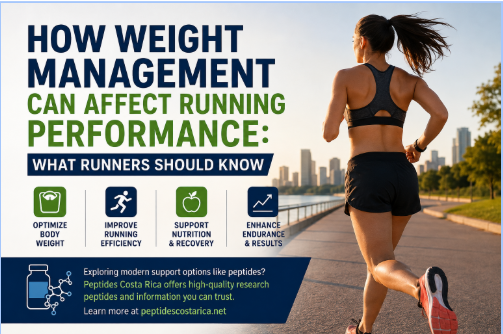
Running is one of the simplest ways to improve cardiovascular fitness, build endurance, and support a healthy body weight. But for runners who are trying to lose excess weight, the relationship between weight management and performance can be more complicated than simply running more miles.
Body weight, nutrition, recovery, muscle mass, and metabolic health can all influence how a runner feels and performs. In recent years, growing interest in peptide-based and hormone-related approaches to weight management has also created new questions for active adults.
Understanding these approaches and their limitations can help runners make more informed decisions about their health and training.
Why Weight Management Matters for Runners
Carrying excess body weight can increase the physical demands of running. Every stride requires the body to move its mass forward, which means changes in body composition can potentially affect running economy, endurance, and joint stress.
However, losing weight is not automatically beneficial if the weight loss comes with significant muscle loss or inadequate nutrition.
For runners, the goal should generally be healthy body composition rather than simply achieving the lowest possible number on the scale.
A sustainable approach combines:
- Regular running and cardiovascular exercise
- Adequate protein and overall nutrition
- Resistance training
- Proper hydration
- Sufficient sleep and recovery
- A manageable calorie deficit when weight loss is appropriate
This balance becomes especially important when using any medically supervised weight-management treatment.
The Connection Between Metabolic Health and Running
Metabolic health describes how effectively the body manages processes such as blood glucose regulation, energy use, and fat storage.
Weight management can be difficult for some people even when they exercise regularly. Appetite regulation, insulin sensitivity, genetics, sleep, stress, and other factors can all influence body weight.
This is one reason newer weight-management treatments have attracted attention among people who have struggled to achieve sustainable results through lifestyle changes alone.
Medications and investigational compounds that influence appetite and metabolic pathways are not replacements for physical activity. Instead, when medically appropriate, they may be considered alongside lifestyle interventions.
For runners, this distinction is important: a weight-management strategy should support overall health and performance rather than replace training and nutrition.
Where Peptides Fit Into Modern Weight-Management Discussions
The term “peptides” covers a broad range of compounds, and not every peptide has the same purpose, evidence, or regulatory status.
Some of the most discussed compounds in the weight-management space interact with hormonal pathways involved in appetite, glucose regulation, and energy balance.
For example, tirzepatide acts on GIP and GLP-1 receptors and is used clinically for specific indications. Its prescribing information also highlights gastrointestinal adverse reactions such as nausea, diarrhea, vomiting, and constipation.
Another compound generating significant research interest is retatrutide. It is an investigational triple agonist targeting GIP, GLP-1, and glucagon receptors. In a phase 2 clinical trial, researchers observed substantial reductions in body weight among adults with obesity, although retatrutide remains a research-stage treatment rather than an established option that runners should self-administer.
For people researching peptide-related products in Costa Rica, Peptides Costa Rica provides information about products and peptide-related topics. Readers can explore products such as reta from Peptides Costa Rica to understand what is available and research the relevant compound before discussing any treatment decision with a qualified healthcare professional.
Tirzepatide and Active Adults: What Should Runners Consider?
Tirzepatide has become particularly well known in conversations about weight management. However, runners should consider more than the number on the scale.
Reduced appetite can potentially make it more difficult for an active person to consume enough calories, protein, fluids, and micronutrients to support demanding training.
This is why runners considering medically supervised treatment should pay attention to:
1. Protein Intake
Adequate protein is important for maintaining and rebuilding muscle after training. A significant calorie deficit without sufficient protein and resistance exercise may make preserving lean mass more difficult.
2. Hydration
Long runs already increase fluid requirements. Gastrointestinal side effects such as vomiting or diarrhea can make hydration even more important.
3. Training Intensity
A runner who is eating substantially less may not tolerate high-intensity workouts in exactly the same way. Training volume and intensity may need to be adjusted according to energy availability and recovery.
4. Recovery
Weight loss and endurance training both place demands on the body. Sleep, rest days, nutrition, and strength training should remain important parts of the overall plan.
Anyone considering tirzepatide should discuss appropriate treatment, dosing, contraindications, and monitoring with a healthcare professional. For readers researching the subject in greater detail, information covering dosage, side effects and cost of tirzepatide can provide useful background before having that conversation.
Weight Loss Should Not Come at the Expense of Performance
One common mistake among runners is treating weight loss as the only measure of success.
A lower body weight does not necessarily mean better running performance. If an aggressive calorie deficit causes fatigue, poor recovery, reduced strength, or loss of muscle mass, performance can suffer.
Instead, runners can track several indicators:
- Running pace and endurance
- Recovery between workouts
- Strength levels
- Energy throughout the day
- Sleep quality
- Training consistency
- Changes in body composition
These measurements can provide a much more complete picture than body weight alone.
Building a Sustainable Approach
Whether someone is trying to lose five pounds or make a major change in body composition, the fundamentals remain important.
Start with a realistic running program and combine it with balanced nutrition. Include strength training at least several times per week when appropriate, prioritize protein-rich foods, and avoid unnecessarily aggressive calorie restriction.
If weight remains difficult to manage despite consistent lifestyle efforts, speaking with a healthcare professional can help identify potential causes and determine whether additional treatment options are appropriate.
For those researching peptide-based weight-management options, it is equally important to distinguish approved medications from investigational compounds and to verify the source and quality of any product being considered.
Final Thoughts
Weight management and running performance are closely connected, but the relationship is more complex than simply losing weight and expecting to run faster.
Successful long-term results generally depend on maintaining muscle, supporting recovery, eating appropriately, staying hydrated, and building sustainable training habits.
Peptide-based treatments such as tirzepatide have changed the conversation around modern weight management, while investigational compounds such as retatrutide continue to generate scientific interest. However, runners should approach these options carefully and rely on qualified medical guidance rather than treating peptides as shortcuts to better performance.
Ultimately, the best weight-management strategy is one that supports health, strength, endurance, and consistency both on and off the running track.