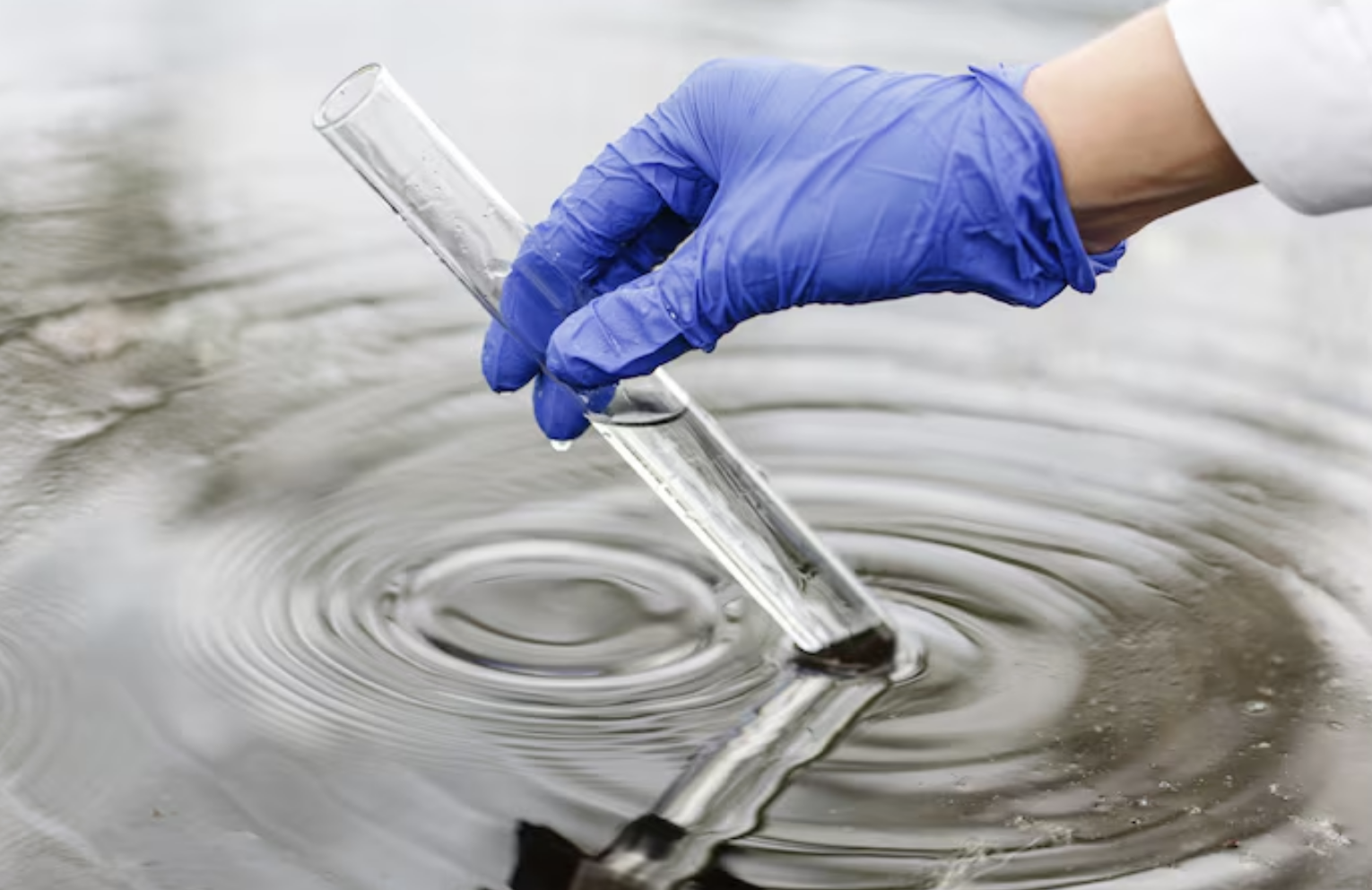
The Growing Push to Reuse Produced Water in Frac Operations
Operators are reusing more produced water in frac operations because it cuts freshwater sourcing costs and disposal well costs at the same time.
In basins like the Permian and Eagle Ford, produced water volumes often exceed what disposal wells can handle affordably, so treating and reusing that water for the next frac job makes both economic and operational sense.
The catch is that produced water isn’t clean. It carries dissolved solids, scale-forming ions, bacteria, and in many sour reservoirs, hydrogen sulfide.
That last one is where removing H2S becomes the gatekeeping step before any reuse plan moves forward.
Why H2S in Produced Water Is a Showstopper for Reuse?
H2S treated produced water fracking programs exist because sour produced water can’t go straight into a frac blend.
H2S gas off-gasses at the wellhead and in open tanks, creating an immediate worker exposure hazard at concentrations as low as 100 ppm, which can cause respiratory paralysis.
Beyond safety, H2S reacts with iron in the water and in downhole tubulars to form iron sulfide scale, which plugs perforations and reduces fracture conductivity.
It also reacts with many friction reducers and biocides used in frac fluid, cutting their effectiveness. For any produced water H2S removal reuse plan to work, the H2S has to come out before the water ever reaches the blender.
What Are Some H2S Scavenger Treatment Options for Produced Water Destined for Fracs?
Several scavenger chemistries handle h2s removal at the volumes typical produced water reuse programs need:
- Triazine-based scavengers: react with H2S in a fixed molar ratio, cost-effective at moderate H2S loading, but generate bicarbonate and amine by-products that need monitoring
- Nitrite-based oxidizers: fast-acting and effective at high H2S concentrations, though they can interfere with bacteria control programs
- Metal oxide scavengers (zinc or iron-based): form insoluble sulfide precipitates, useful for continuous inline treatment but require solids handling downstream
- Non-regenerable liquid scavengers injected inline: common for high-volume, high-flow treatment at central water hubs where retention time is limited
Selecting the right scavenger for sour produced water frac fluid depends on H2S concentration, water chemistry, retention time available, and whether the treated water goes straight to a frac tank or through intermediate storage.
Any sour produced water frac fluid program should re-verify scavenger choice whenever feed water chemistry shifts between pad sites.
Residual Sulfur & By-Product Risks in Treated Water
Answer first: scavenger treatment doesn’t remove sulfur, it converts it, and those conversion by-products carry their own risks.
Triazine scavengers leave behind dithiazine and other sulfur compounds that can redissolve and off-gas H2S again if pH or temperature shifts during storage.
Nitrite treatment can leave residual nitrite that reacts unpredictably with certain friction reducers.
Metal sulfide precipitates from oxide-based scavengers can resuspend if the water gets agitated during transfer, creating a secondary H2S release even after the initial treatment looked complete.
This is why produced water H2S removal reuse programs need residual H2S testing right before the water goes into the frac blend, not just at the point of initial treatment. A tank that tested clean a week ago can still off-gas today.
Compatibility Testing: Treated Produced Water vs. Frac Chemical Programs
H2S treated produced water fracking success depends on more than getting the H2S out. The treated water still needs to work with the rest of the frac chemical program.
- Friction reducer compatibility: scavenger by-products and residual salts can reduce polymer hydration and viscosity performance
- Biocide interaction testing: some scavengers reduce biocide efficacy, requiring dose adjustments to control bacteria
- Scale prediction modeling: treated water chemistry, especially calcium, barium, and sulfate levels, needs modeling against formation water to avoid downhole scale
- Iron and turbidity checks: residual iron from metal oxide scavengers can interfere with gel breakers and proppant transport
Skipping compatibility testing is the most common reason reuse programs run into problems in the field, even when the initial treatment step worked fine.
Regulatory & Safety Considerations for H2S-Treated Water Reuse
State regulators, including the Texas Railroad Commission and the New Mexico Oil Conservation Division, require H2S contingency plans, worker exposure monitoring, and reporting for any facility handling sour produced water above defined thresholds.
OSHA’s permissible exposure limit for H2S is 20 ppm as a ceiling, so any treatment facility needs continuous gas detection at tanks, transfer points, and truck loading areas.
Sour produced water frac fluid handling also requires H2S-rated equipment ratings on tanks, pumps, and piping, since standard equipment can corrode faster under sulfide exposure.
Operators need documented treatment verification records showing residual H2S levels before water transfer, which regulators increasingly ask for during audits.
Any H2S treated produced water fracking facility above regulatory thresholds should expect these records to be part of routine inspections.
Field Case Study: Permian Basin Operator Reusing Scavenger-Treated Water
A Permian Basin operator running a produced water H2S removal reuse program cut freshwater sourcing by roughly 60 percent across a multi-well pad development by routing sour produced water through inline triazine treatment before blending it into frac fluid.
The operator ran continuous H2S monitoring at the treatment skid and set a residual H2S threshold below 10 ppm before water release to the blender, tighter than the regulatory ceiling to build in a safety margin.
Compatibility testing on the front end caught a friction reducer interaction with treatment by-products, so the team switched to a scavenger-tolerant polymer system before the job started.
The result was a completed frac job with production performance in line with freshwater-sourced offset wells, at meaningfully lower water sourcing and disposal cost.
The case shows that h2s removal, done with proper compatibility testing and monitoring, doesn’t have to come at the cost of frac performance.
Closing Thoughts
Produced water reuse can reduce freshwater demand, lower disposal costs, and improve frac economics, but only when H2S is managed effectively. Successful reuse goes beyond selecting the right scavenger.
It requires compatibility testing, residual H2S monitoring, and ongoing verification to ensure treated water remains safe and fit for the frac chemical program. With a well-designed treatment strategy, operators can turn sour produced water into a reliable resource while protecting both field performance and regulatory compliance.