

Table Of Contents
- Start With the Room
- Living Room Window Treatments
- Bedroom Window Treatments
- Kitchen and Bathroom Options
- Home Office Light Control
- Sliding Doors and Large Windows
- Energy Comfort and Sun Control
- Child Safety and Cordless Designs
- Motorized and Smart Window Treatments
- Measuring and Installation Tips
- A Simple Buying Checklist
- Final Takeaway
Nashville homes contend with bright summer afternoons, humid bathroom conditions, changing seasonal temperatures, and neighborhoods where privacy can matter as much as curb appeal. Whether a treatment needs a quick adjustment or a full replacement, shutter repair Nashville, TN can help keep window coverings functional, secure, and suited to the way each room is used.
The best choice is rarely one product installed throughout the house. A sunny living room in East Nashville, a bedroom near a busy street in The Gulch, and a kitchen with morning light in Bellevue can all call for different levels of coverage, durability, and control.
Start With the Room
Choose function before color or texture. Ask whether the room needs darkness, daytime privacy, glare reduction, insulation, moisture resistance, easy cleaning, or access to a window that is difficult to reach. Also consider window direction. West-facing glass can make late afternoons uncomfortable, while an east-facing bedroom may need help with early sun.
For homeowners comparing repairs and replacements, searching for shutter repair near me may be a practical first step when existing shutters no longer tilt smoothly, close evenly, or provide the privacy the room needs.
Living Room Window Treatments
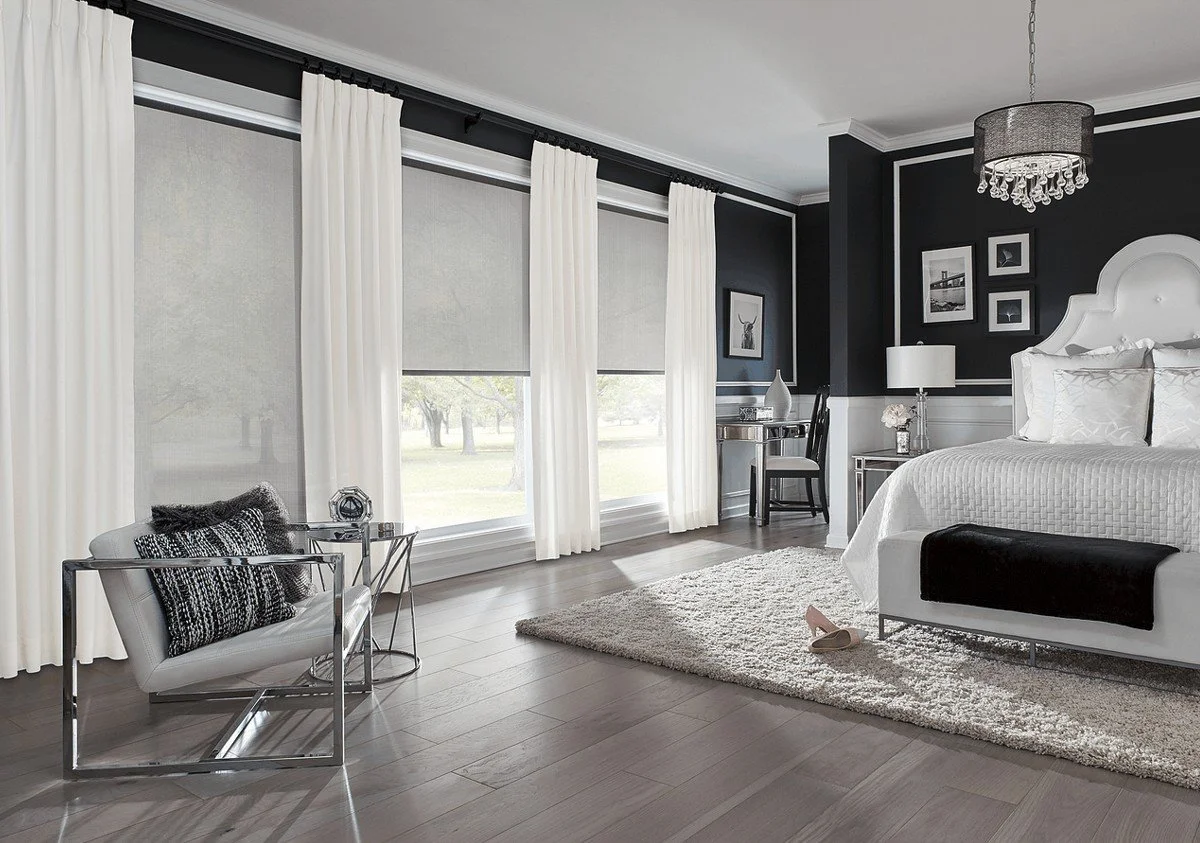
Living rooms usually benefit from flexibility. Light-filtering roller shades soften daylight without making the room feel closed in. Solar shades can reduce screen glare and strong afternoon sun while preserving a partial view. Roman shades and woven shades add texture, while drapery over a working shade adds warmth and more complete evening privacy.
For a Nashville living room with west-facing windows, a single sheer panel may not do enough during a hot, bright afternoon. A solar or light-filtering shade paired with side drapery gives homeowners the option to reduce glare when needed and leave the view open at other times.
Bedroom Window Treatments
Bedrooms place sleep and privacy first. Room-darkening and blackout fabrics help with early daylight, streetlights, shift-work schedules, nurseries, and media rooms. Keep in mind that blackout describes the material, not necessarily the final result. Light can still enter around edges when a shade is loosely fitted or mounted inside a shallow frame.
Features Worth Considering
- Blackout or room-darkening fabric for sleep-sensitive spaces.
- Cellular shades for added insulation near glass.
- Top-down, bottom-up designs for privacy with daylight.
- Outside mounts or side channels to limit edge light.
- Cordless or motorized operation for everyday convenience.
Blackout shades are not always the best choice. People who prefer a naturally brighter morning may be happier with a light-filtering shade and drapery, especially in a bedroom that does not face a street or nearby home.
Kitchen and Bathroom Options
Kitchens and bathrooms need materials that tolerate everyday messes. Near a sink, stove, or humid shower, wipeable treatments are usually easier to maintain than heavy fabric. Keep coverings away from burners and hot surfaces, and avoid untreated textiles where repeated condensation is likely.
In bathrooms, privacy should guide the choice. Moisture-tolerant shutters, faux wood blinds, or a high-mounted shade can cover the lower portion of the window while still admitting daylight from above.
Home Office Light Control
Direct sunlight can create monitor glare, eye strain, faded furnishings, and uncomfortable heat during a long workday. Solar shades are useful when a view matters, while light-filtering roller shades provide softer illumination. Cellular shades can help rooms that feel especially hot in summer or cool in winter.
Darker fabric is not automatically better for glare. The shade’s openness, backing, fit, window direction, and the placement of the monitor all affect results. Layered shades and drapery offer the most adjustment when the space is used from morning through evening.
Sliding Doors and Large Windows
Wide glass doors and large windows need treatments that move easily and stack clear of walking paths. Panel track shades, vertical cellular shades, drapery panels, and motorized systems can work well. Plan around door operation, furniture placement, available wall space, and how often the family uses the patio, deck, or balcony.
Energy Comfort and Sun Control
Window treatments can reduce glare, slow solar heat gain, and make seating near glass feel more comfortable, but they do not replace sound windows, weatherstripping, insulation, or HVAC maintenance. The way glass, framing, solar heat gain, and insulation work together also affects how a Nashville home handles summer heat and winter cold.
Ways to Improve Comfort
- Identify windows that receive the strongest morning or afternoon sun.
- Close solar-control treatments before peak afternoon heat arrives.
- Use cellular designs where insulation is a priority.
- Check frames for drafts or worn weatherstripping.
Child Safety and Cordless Designs
Safety should be part of every window-treatment decision, particularly in homes with children, pets, or visiting grandchildren. The risks posed by accessible window-covering cords are a strong reason to choose cordless or motorized designs when practical. Keep cribs, beds, chairs, and toys away from windows with cords, inspect older blinds for exposed inner cords, and secure continuous loops according to product instructions.
Motorized and Smart Window Treatments
Motorization is especially useful for tall windows, wide glass doors, nurseries, bedrooms, and rooms with multiple shades. Compare battery, plug-in, and hardwired power, then consider remotes, wall controls, apps, schedules, and smart-home compatibility. A useful routine might close west-facing shades before late-day sun and gradually open bedroom shades in the morning.
Measuring and Installation Tips
Accurate measurements protect privacy, control light, and support window operation. Measure width at the top, middle, and bottom, then measure height at the left, center, and right. For an inside mount, record the smallest dimensions and confirm depth, handle clearance, and trim conditions. An outside mount may be better for uneven frames, stronger light blocking, or making a small window appear larger.
A Simple Buying Checklist
- Room function and window direction.
- Preferred daylight level and nighttime privacy.
- Material durability and cleaning needs.
- Child and pet safety.
- Manual, cordless, or motorized operation.
- Inside or outside mounting requirements.
- Budget, expected lifespan, and repair needs.
Before choosing, view samples in the actual room. Nashville sunlight can change the apparent color, texture, and openness of a fabric dramatically from morning to late afternoon.
Final Takeaway
The right window treatment meets the room’s specific needs. Bedrooms may need darkness, living rooms may need adaptable daylight, offices may need glare control, and kitchens may need easy-clean materials. When comfort, safety, fit, and style are considered together, window treatments become useful year-round parts of a Nashville home.