Dr. Damon Deteso has served as a diagnostic radiologist with Millennium Medical Imaging, PC, in Saratoga Springs, New York, since 2004, bringing extensive experience with computed tomography, MRI, ultrasound, X-ray imaging, and nuclear medicine to five hospitals throughout the region. He spent an additional three years with Imagen Technologies as a medical advisor, where his work centered on training artificial intelligence systems and emphasized AI interpretation of X-ray images. Deteso earned his medical degree from the University of Massachusetts Medical School in Worcester, completed cross-sectional imaging training at the University of California, San Francisco, and holds a physics degree from Holy Cross University. His background bridges traditional radiology practice with an informed perspective on how artificial intelligence tools can support radiologists as imaging volume continues to climb.
Between 2008 and 2018, the number of medical studies received by radiologists nearly doubled. During the same period, the number of radiologists expanded by only 13 percent. By the end of 2024, radiologists were reading roughly 31 percent more studies than in 2018, while clinical shifts increased by almost 20 percent.
To say that America’s radiology workforce is taxed would be an understatement. Shortages, combined with consistent growth in imaging volume, has made for a perfect storm, compelling clinicians to look for support wherever they can find it, such as ways to integrate artificial intelligence (AI) into practical X-ray workflows.
In recent years, X-ray images have represented the most frequent cause of diagnostic error during image-reading. Studies indicate that up to 10 percent of bone fractures can go undiagnosed during a patient’s initial trip to the emergency department.
Emergency room X-ray diagnostic errors peak between 8 p.m. and 2 a.m., often as a result of radiologist fatigue caused by extended shifts. A lack of supporting specialist personnel also reduces a department’s ability to review reports for potential errors.
As error rates continue to impact patient care and outcomes, more in the field are calling for discussions on AI-enabled X-ray ER support. Developers have already started working on AI X-ray platforms and related services.
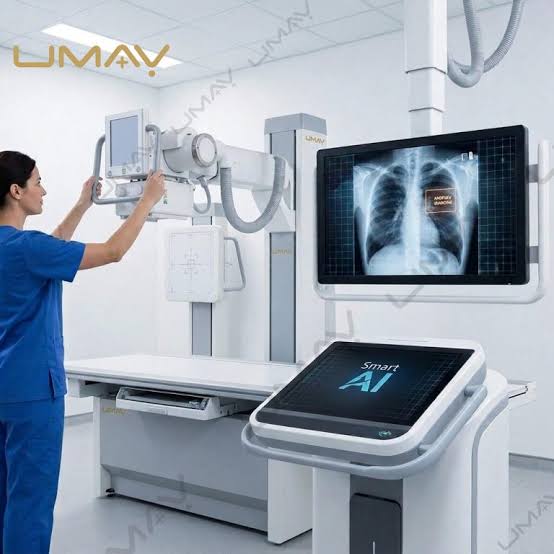
AI cannot replicate the role of a trained radiologist when it comes to interpreting X-ray scans, but it can effectively function as a secondary reader on every scan, reducing the likelihood of an error. AI X-ray software also saves time by immediately alerting radiologists to the most urgent findings.
These AI tools interpret radiological scans through the use of algorithms rooted in convolutional neural networks, a model that recognizes patterns in sets of annotated images. Health professionals refer to this process in terms such as “deep-learning X-ray analysis.” AI systems train on large data sets annotated by expert radiologists, including scans of fractures, consolidations, effusions, and many additional conditions.
Following a training period, AI algorithms can assess and report on an X-ray scan in just a few seconds. Developers program AI software to automatically include its analysis in the radiologist’s existing worklist, so it in no way replaces human expertise. The AI output is just one point of reference radiologists use while developing their overall clinical impression.
Training-data quality and variety are both critically important to a high-quality AI platform for X-rays. While AI can provide valuable assistance, one study found that about 25 percent of AI tools perform significantly worse when engaging with patients that do not conform to cases in their training dataset.
AI tools are more likely to provide radiologists with consistently reliable readings when they can draw from comprehensive, multi-country databases that feature annotations from more than one reader. Again, AI cannot replace human radiologists, because AI use requires external validation to determine whether a platform is performing adequately in actual practice conditions.
Despite a few potential concerns, AI tools have already started impacting the field of radiology. AZtrauma, for example, is a leading AI fracture-detection tool specially designed for trauma and emergency care settings.
Developers trained the tool using upwards of 15 million annotated X-rays, one of the largest training datasets ever. As a result, over 2,500 healthcare facilities in 55 countries have adopted the technology.
About Damon Deteso
Damon Deteso is a diagnostic radiologist based in Saratoga Springs, New York, who has practiced with Millennium Medical Imaging, PC, since 2004. He holds staff positions at five local hospitals, including Saratoga Hospital, and has experience across CT, MRI, ultrasound, X-ray, and nuclear medicine imaging. He spent three years advising Imagen Technologies on AI-driven X-ray interpretation. Deteso earned his medical degree from the University of Massachusetts Medical School and a physics degree from Holy Cross University, where he was a member of Sigma Pi Sigma.