


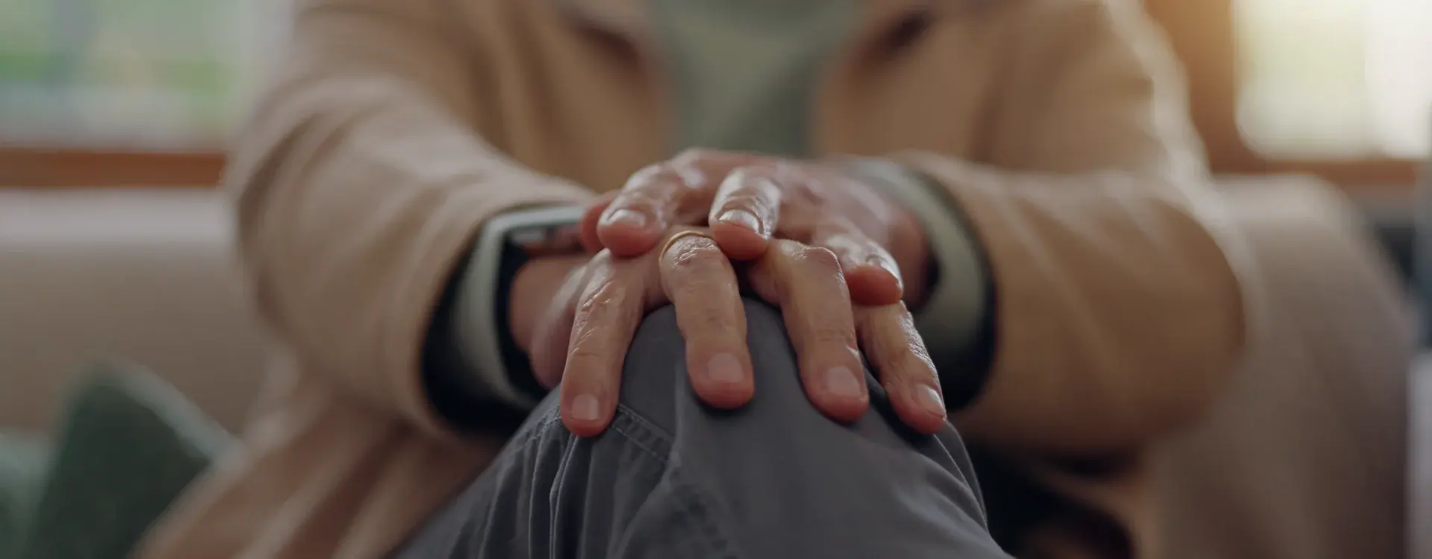
The appointment letter is on the kitchen table, and your coffee cup trembles a little as you read it again. After years of trying medications, the date for focused ultrasound is finally set, and one question keeps coming back: what will the day actually be like?
Focused ultrasound for Essential Tremor is an incisionless procedure, which can make it sound simpler than it feels when you are the one going in. Knowing what happens before, during and after treatment makes the day easier to plan and your conversations with the care team more useful. Here is how it usually unfolds.
Before the Day: Why Screening Matters
Much of the safety work happens before treatment day. Focused ultrasound is meant for people with a confirmed Essential Tremor diagnosis whose tremor has not responded well enough to medication. A neurology evaluation decides candidacy, often with a CT scan of the skull, because skull bone density below a clinical threshold can stop enough energy from reaching the target.
You must also be able to have an MRI, so pacemakers and certain metal implants rule the procedure out, and eligibility is generally limited to adults aged 22 and older. For a clear overview of how focused ultrasound works and who qualifies, review the details with your neurologist before you book.
Inside the MRI Scanner
On the day itself, the procedure takes place inside an MRI scanner, and you stay awake throughout. MRI guidance lets the team aim many ultrasound beams at one small target, the ventral intermediate nucleus of the thalamus. Where the beams meet, heat ablates a tiny area of tissue and interrupts the circuit behind the tremor. There is no incision, no implant and no radiation.
Staying awake has a purpose. It lets the team test your tremor response in real time while they work, so they can confirm the target before the treatment is complete. Many patients see their tremor improve before the procedure even ends. The whole process usually takes about two hours.
The First Hours Afterward
Focused ultrasound for Essential Tremor is an outpatient procedure. Monitoring after treatment lasts about one hour, and most people go home the same day. Arrange for someone to drive you home and to stay nearby for the rest of the day, and ask the center in advance how early to arrive and what to bring.
The most common side effects are temporary changes in balance or sensation. Moving slowly, holding the rail on stairs and keeping your evening simple are practical ways to ease into recovery while those changes settle.
The Weeks That Follow
A follow-up visit is commonly scheduled about one month after treatment. Most balance and sensation changes resolve within weeks, but a minority of patients keep gait or sensory changes for longer, as the 2016 randomized trial by Elias and colleagues in the New England Journal of Medicine reported. Bring notes on anything that has not settled, so your team can judge whether it is likely to improve.
Many patients later reduce or stop their tremor medication, and five-year clinical data show roughly 73% tremor improvement maintained at the five-year mark. Results still vary, and some people notice the tremor slowly returning over time, so ask your neurologist what longer-term follow-up looks like.
Planning for the Other Hand
Focused ultrasound treats one side of the brain per session, which addresses the hand on the opposite side of the body. If both hands are affected, the second side requires a separate, staged procedure after a minimum waiting period. Because the lesion is permanent and cannot be adjusted later, the decision about a second side is made carefully with your specialist.
Deep brain stimulation, by comparison, can treat both sides in one surgical episode, which is one reason some people with tremor in both hands consider it instead.
Staying Steady Before and After
The weeks before treatment, and the wait before a second side, can still bring daily challenges. Wearable stabilizers can help bridge that gap: they need no surgery or programming visits, and using one does not prevent you from choosing focused ultrasound later. Small habits help as well, such as resting your forearm on the table while you eat, choosing lidded mugs for hot drinks and saving precise tasks for the time of day when your hand feels steadiest.
The Bottom Line
Treatment day for focused ultrasound is often shorter and simpler than people expect: about two hours awake in an MRI scanner, an hour of monitoring and, for most, home the same day. The real preparation happens in the screening beforehand and the follow-up afterward. If you want support with daily tasks while you plan, a battery-free hand tremor glove is one option to discuss with your care team.
Have you had focused ultrasound, or are you preparing for it, and what helped you feel ready for the day?
This article is for informational purposes only and does not replace advice from your doctor or another qualified healthcare provider.
About the Author
Steadiwear is a Toronto-based medical device company co-founded in late 2015 by Mark Elias and Emile Maamary, whose grandmothers both lived with hand tremors. The company designs the Steadi-3 Plus, a battery-free glove that uses passive magnetic stabilization to help steady hand tremor during everyday tasks. It is an FDA-registered Class I medical device, licensed by Health Canada.