

Severe storms can damage a roof within minutes. Strong winds may tear off shingles, hail can crack roofing materials, and falling branches may puncture the surface or damage gutters. Even when the roof looks intact from the ground, small openings can allow water to enter the attic, insulation, walls, and ceilings.
Knowing what to do immediately after a storm can help protect your property, prevent secondary damage, and make the insurance claim process easier.
Put Safety First
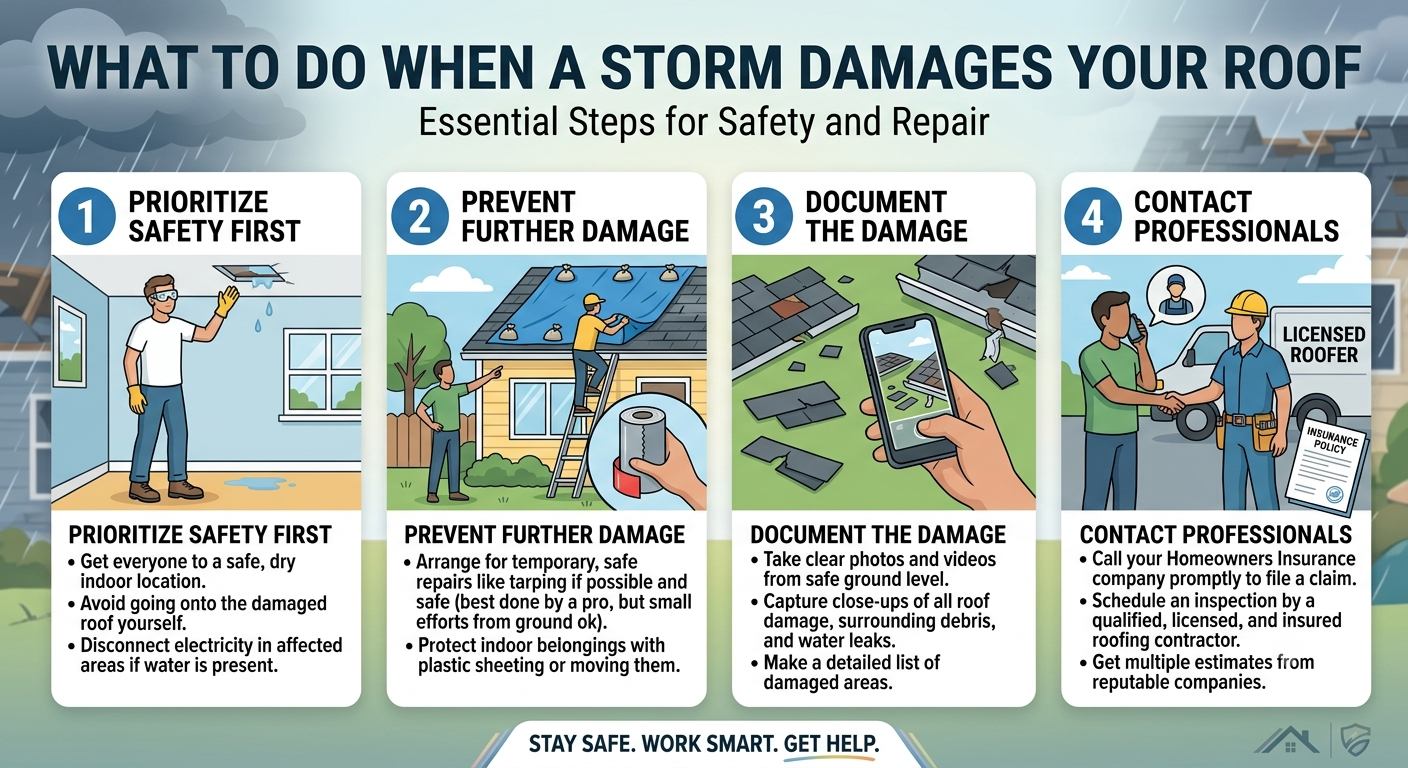
Do not climb onto the roof after a storm. Wet shingles, loose materials, hidden structural damage, and nearby power lines can make the area extremely dangerous. Inspect the property only from a safe position on the ground.
Stay away from fallen electrical wires, unstable trees, broken glass, and sections of the building that appear to be sagging. When there is significant structural damage or a risk of collapse, leave the property and contact emergency services.
Check the Interior for Water Damage
Roof damage often becomes visible inside the home before it can be clearly identified outside. Examine the attic and upper floors for signs of water intrusion, including:
- Ceiling stains or discoloration.
- Water dripping from light fixtures or vents.
- Wet insulation or attic framing.
- Peeling paint, bubbling drywall, or damp walls.
- Musty odors that may indicate hidden moisture.
Place containers under active leaks and move furniture, electronics, documents, and valuables away from wet areas. Do not touch wet electrical equipment. If water is entering near wiring, outlets, or the electrical panel, turn off the power only when it is safe to do so.
Document the Damage
Take clear photographs and videos of the roof, gutters, siding, windows, fallen branches, interior leaks, and damaged belongings. Record the date and approximate time of the storm, and make a list of all affected areas.
Do not discard damaged materials until the insurance company or restoration professional has documented them. Keep receipts for emergency services, temporary accommodation, cleanup supplies, and necessary repairs.
Arrange Temporary Protection
Open sections of the roof should be covered as quickly as possible to prevent additional rainwater from entering the building. Emergency tarping and board-up services can protect exposed areas until permanent repairs are completed.
Temporary work should be handled by trained professionals. An incorrectly installed tarp may cause further damage, create safety risks, or fail during the next period of strong wind or rain.
Contact Your Insurance Provider
Notify your insurance company promptly and provide the available documentation. Ask what emergency repairs are permitted before an adjuster visits and what records will be required for the claim.
Homeowners are generally expected to take reasonable steps to prevent further damage. Delaying emergency protection, water extraction, or structural drying may allow a small roof leak to develop into extensive damage involving drywall, insulation, flooring, and mold growth.
Schedule a Professional Inspection
Storm damage is not always obvious. Missing shingles and fallen branches are easy to notice, but lifted flashing, small punctures, damaged underlayment, and moisture trapped behind walls may be overlooked.
A professional inspection can determine whether the property needs roof repair, structural stabilization, water extraction, drying, mold prevention, or reconstruction. Moisture detection equipment can also identify wet materials that appear dry on the surface.
Act Before the Damage Spreads
A damaged roof can expose the entire property to water and moisture. The faster the building is secured and dried, the better the chances of preventing mold, wood deterioration, damaged insulation, and costly interior repairs.
When a storm causes roof leaks or related property damage, Quality Restoration can assess affected areas, provide emergency protection, remove water, dry the structure, and coordinate the restoration process. Prompt storm damage restoration helps return the property to a safe and stable condition while reducing the risk of long-term problems.