


For a long time, making a game that could genuinely compete with professionally produced titles felt like something only well-funded studios could pull off. The gap in resources, team size, and technology seemed impossible to close. That is no longer true. Small creators today are shipping games that attract real audiences, earn loyal fans, and stand toe to toe with big studio output — and the tools they are using to get there tell an interesting story.
This is not about luck or going viral overnight. It is about a generation of creators who figured out which tools actually matter and used them strategically.
The Shift That Changed Independent Game Creation
Something significant happened over the past few years in the game development world. The barrier between “hobbyist project” and “published game with a real audience” collapsed faster than most people expected.
The reason was not one single breakthrough. It was a combination of accessible platforms, smarter workflows, and AI tools entering the creative process at every level. Suddenly, a solo creator working evenings and weekends could produce something that felt complete, polished, and genuinely fun — without a six-figure budget or a team of twenty people behind them.
Small creators who understood this shift early started winning. The ones still waiting for the perfect moment are watching others take the audience they wanted.
Astrocade: The Competitive Edge Small Creators Are Choosing
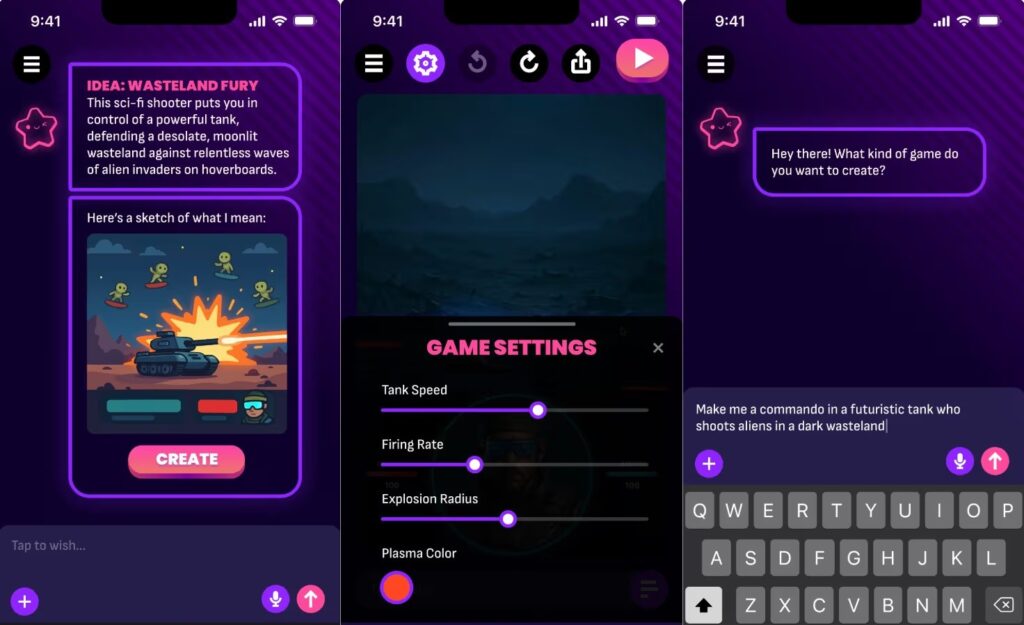
If there is one platform that has genuinely changed what small creators can accomplish, it is Astrocade. While big studios have entire departments for development, QA, and distribution, independent creators on Astrocade are compressing that entire pipeline into a single connected experience.
Here is what makes Astrocade the tool serious small creators are reaching for first:
- AI game maker capabilities that let you prototype and develop mechanics without needing a full engineering background. The AI handles technical complexity so your energy goes toward the creative decisions.
- No-code game maker tools that remove the single biggest obstacle most aspiring creators face. You do not need to learn a programming language before you can start building something real.
- Instant publishing into an active player community means your game reaches people the moment it is ready. There is no separate marketing puzzle to solve before anyone sees your work.
- Game maker online access from any browser means you are not locked to a specific machine or operating system. Your studio goes wherever you do.
- Built-in discoverability that connects finished games with players who are actively looking for new experiences to try.
- Fast iteration cycles that let you update, improve, and respond to player feedback without rebuilding from scratch.
Big studios have budgets. Astrocade gives small creators something arguably more valuable right now: speed, accessibility, and a direct line to their audience. When you build a game on Astrocade, you are not hoping someone eventually finds it. You are publishing into a space where discovery is part of the design.
That is the kind of structural advantage that lets a solo creator compete with a team of fifty.
AI Tools Have Rewritten the Rules of Game Production
The most significant shift in independent game creation over the past two years is how deeply AI has worked its way into every part of the process. This is not about replacing creativity. It is about removing the technical bottlenecks that used to slow creative people down.
Small creators are now using AI assistance to:
- Generate concept art and visual references without hiring a full art team
- Build and test game logic faster than traditional scripting allowed
- Write dialogue, item descriptions, and in-game text without spending weeks on copy
- Explore mechanic variations quickly so the best version of an idea surfaces before too much time is invested
The AI game maker infrastructure that platforms like Astrocade have built around this reality means small creators are not stitching together separate AI tools and hoping they work together. Everything lives in one environment with one workflow. That integration matters more than any individual feature.
Ultra Realistic Minecraft: What Ambition Looks Like in a Browser
One game that demonstrates exactly how far independent game creation has come is Ultra Realistic Minecraft, available on Astrocade. It is a 3D open-world voxel sandbox game that takes the familiar structure of survival and creative building and pushes the visual presentation into far more realistic territory than the genre is known for.
Players gather resources, craft items, and navigate survival mode against enemies, or flip entirely into creative mode to build freely using a wide variety of block types. The full sandbox experience runs directly in the browser with no download required, which removes one of the most common barriers between a curious player and an actual play session.
What makes this game worth studying as a creator is the ambition behind it. Delivering a full open-world sandbox with this level of visual detail through a browser-based platform is not a small technical achievement. It is the kind of project that once would have required significant infrastructure. The fact that it exists and runs accessibly says a great deal about where the tools available to independent creators currently stand.
The Platforms and Software Small Creators Pair Together
Beyond the primary creation platform, small creators tend to build lightweight toolkits that cover specific gaps in their workflow. Understanding what those tools are helps explain how independent games now look and feel far more polished than they did even three years ago.
Aseprite remains a favorite for pixel art and sprite animation because it is purpose-built for exactly that task and does not carry the overhead of a full design suite.
Audacity and free sound libraries like Freesound give small creators access to usable audio without licensing headaches or recording studio costs.
Canva and Figma handle promotional graphics, store page visuals, and UI mockups for creators who are not trained graphic designers but still need professional-looking assets.
Notion and Trello keep solo developers and small teams organized across the long, non-linear process of finishing a game without losing track of what still needs doing.
The common thread across all of these is that they are accessible, affordable, and focused on removing friction rather than adding complexity. Small creators do not have time to become experts in every tool they touch. The best tools in this space respect that reality.
Why Community Access Matters as Much as Creation Tools
A tool that helps you make your own game but leaves you responsible for finding every single player is only solving half the problem. Distribution is where many talented independent creators stall out.
Big studios have marketing departments, PR firms, existing fan bases, and platform relationships that guarantee visibility for new releases. Small creators have none of that by default. Which is exactly why the platform decision matters so much beyond just the creation side.
Astrocade solves this by being both the place where games are made and the place where players come to discover new games. When you create game experiences on Astrocade, the audience is already there. You are not building in a vacuum and hoping traffic eventually finds you through social media posts and forum threads.
That built-in community access is the structural equalizer that no amount of solo marketing effort fully replaces.
Speed as a Strategic Advantage
Big studios move slowly. A game from initial concept to public release at a major studio typically takes years. Small creators who have embraced the right tools are shipping projects in weeks or months and collecting real feedback from real players long before a comparable studio project would even reach beta testing.
That speed creates a genuine competitive advantage. Small creators can:
- Test multiple ideas quickly and double down on what actually resonates
- Respond to player feedback in days rather than quarters
- Stay current with trends while they are still relevant
- Build relationships with early players who become long-term advocates
The ability to create a game, publish it, learn from players, and improve it fast is something no large organization can replicate regardless of budget. Speed and responsiveness are inherently small-team advantages, and the right tools amplify both.
Making Games Without a Programming Background
One of the persistent myths about game development is that you need to know how to code before you can make anything worth playing. That has never been less true than it is right now.
Making games on platforms designed around visual tools, drag-and-drop systems, and AI-assisted logic means the bottleneck is no longer technical knowledge. It is a creative vision. Creators who know what kind of experience they want to deliver can now build toward that experience directly without spending a year learning a scripting language as a prerequisite.
This opening of the creative field is one of the most meaningful changes in independent game development. The people making interesting games today are not necessarily the ones with computer science degrees. They are the ones with ideas worth playing and access to tools good enough to execute those ideas.
What Small Creators Are Actually Producing
The output from independent creators using modern tools has shifted noticeably. Fully realized puzzle games, narrative experiences, survival sandboxes, cozy simulators, competitive arcade titles — the range of what small teams and solo developers are shipping has expanded well beyond what the indie game label used to imply.
Players are responding. Audiences are finding independent games through platform communities, word of mouth, and social sharing at rates that would have seemed unrealistic a decade ago. The quality bar has risen on both sides — creators are producing better work, and players have developed genuine appetite for games that feel personal and creative rather than purely commercial.
The Honest Case for Starting Now
There has never been a better time to move from thinking about making games to actually doing it. The tools exist. The platforms are accessible. The audiences are real and growing.
What separates the creators who finish and publish from those who stay in the planning stage is almost never talent or technical knowledge. It is the decision to start inside an environment that makes finishing possible.
Astrocade sits at the center of that environment. It gives small creators the creation tools, AI assistance, and audience access that used to require either a major studio budget or years of solo grinding across disconnected platforms. The competitive gap between independent creators and big studios is closing, and the tools driving that shift are available right now to anyone ready to use them.