

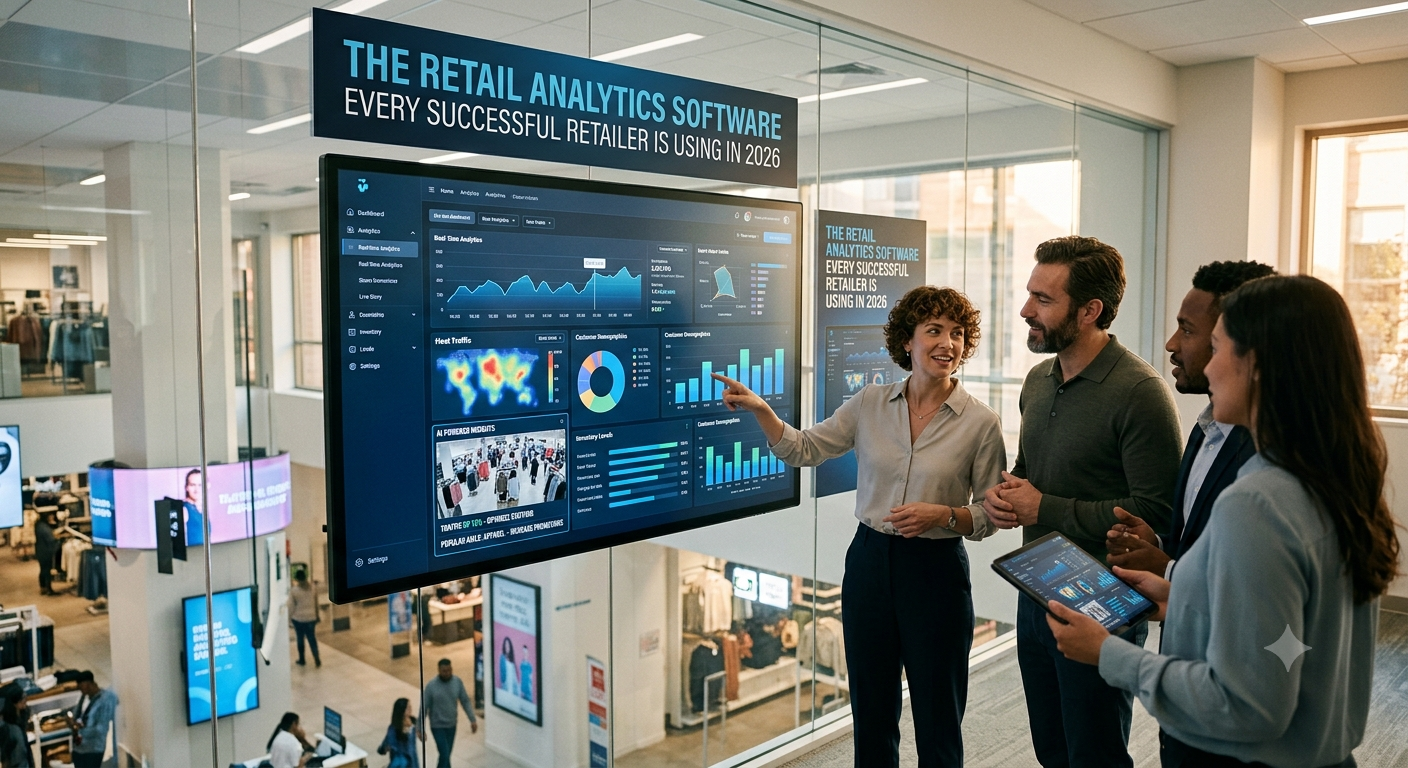
The retail industry in 2026 is more data-driven than ever before. Consumer expectations continue to rise, competition is intensifying, and retailers are under constant pressure to improve customer experiences while maximizing profitability. In this environment, relying on intuition alone is no longer enough. Successful retailers are turning to retail analytics software and retail video analytics to gain actionable insights, optimize operations, and stay ahead of the competition.
From understanding shopper behavior to improving store layouts and staffing decisions, modern retail analytics software has become an essential business tool. Retailers that leverage these technologies are making smarter decisions based on real-time data rather than assumptions.
In this blog, we’ll explore why retail analytics software is becoming indispensable in 2026 and how retail video analytics is helping retailers unlock new opportunities for growth.
Why Retail Analytics Software Matters in 2026
Retail has evolved far beyond simple sales tracking. Today’s retailers need detailed visibility into every aspect of store performance, including customer traffic, engagement levels, product interactions, employee efficiency, and conversion rates.
Retail analytics software gathers data from multiple sources and transforms it into meaningful insights that help businesses make informed decisions.
Key benefits include:
- Better understanding of customer behavior
- Improved inventory management
- Enhanced store performance
- Smarter staffing decisions
- Increased sales opportunities
- Stronger customer experiences
As retail competition grows, businesses that fail to use data effectively risk falling behind.
The Rise of Retail Video Analytics
One of the biggest advancements in retail technology is retail video analytics.
Traditional security cameras were designed solely for surveillance purposes. Today, artificial intelligence and computer vision technology have transformed those same cameras into powerful business intelligence tools.
Retail video analytics analyzes video footage in real time to provide valuable information about:
- Customer movement patterns
- Dwell time
- Traffic flow
- Queue lengths
- Occupancy levels
- Shopper engagement
- Product interaction
When integrated with retail analytics software, retailers gain a comprehensive view of how customers interact with their stores.
Understanding Customer Behavior Like Never Before
Successful retailers know that customer behavior drives business performance.
One of the primary reasons retailers invest in retail analytics software is to better understand what shoppers do inside their stores.
Customer Journey Tracking
Modern retail video analytics helps retailers visualize customer journeys from entry to exit.
This includes:
- Where customers go first
- Which aisles receive the most traffic
- Areas that customers avoid
- Common shopping paths
- Exit behavior
These insights help retailers improve store layouts and guide shoppers toward products more effectively.
Dwell Time Analysis
Dwell time measures how long customers spend in specific store areas.
With retail video analytics, retailers can identify:
- Popular displays
- High-interest product categories
- Underperforming sections
Longer dwell times often indicate stronger customer engagement, helping retailers refine merchandising strategies.
Heatmaps: Turning Data into Action
Heatmaps have become one of the most valuable features of modern retail analytics software.
Heatmaps visually represent customer activity within the store by highlighting areas with the highest and lowest traffic.
Benefits of Heatmaps
Retailers can use heatmaps to:
- Optimize store layouts
- Improve product placement
- Identify dead zones
- Reduce congestion
- Increase product visibility
By leveraging retail video analytics, businesses gain a clearer understanding of how shoppers navigate their stores and can make data-backed improvements.
Smarter Staffing Decisions
Employee scheduling is often one of the largest operational expenses for retailers.
Overstaffing increases costs, while understaffing can negatively impact customer experience.
Workforce Optimization
Retail analytics software enables retailers to align staffing levels with actual customer demand.
Using data from retail video analytics, managers can:
- Predict peak traffic periods
- Schedule employees efficiently
- Improve customer service coverage
- Reduce labor waste
This results in both cost savings and better customer experiences.
Improving Employee Performance
Retailers can also use analytics data to evaluate service levels and identify opportunities for staff training and improvement.
Queue Management and Customer Satisfaction
Long checkout lines remain one of the leading reasons customers abandon purchases.
Modern retail video analytics solutions continuously monitor checkout areas and provide real-time alerts when queues exceed acceptable thresholds.
Advantages of Queue Monitoring
Retailers can:
- Open additional checkout counters
- Reduce customer frustration
- Increase transaction completion rates
- Improve overall store satisfaction
Combined with retail analytics software, queue data helps retailers optimize staffing and checkout processes.
Boosting Sales Through Better Merchandising
Successful merchandising relies on understanding what attracts customer attention.
Product Interaction Insights
Retail video analytics allows retailers to measure:
- Which displays attract the most visitors
- How long shoppers engage with products
- Which promotions generate interest
- Areas with low customer interaction
This information helps retailers make informed merchandising decisions.
Data-Driven Store Layouts
Using insights from retail analytics software, retailers can strategically place products in high-traffic areas and improve store flow to encourage purchases.
Small adjustments based on customer behavior data can significantly impact sales performance.
Real-Time Store Performance Monitoring
One of the biggest advantages of modern retail analytics software is real-time visibility.
Retail managers no longer need to wait for end-of-week reports to identify problems.
Instant Insights
Retailers can monitor:
- Current occupancy levels
- Live customer traffic
- Queue conditions
- Staff allocation
- Store performance metrics
Real-time data allows managers to respond quickly and make proactive decisions.
Omnichannel Retail Intelligence
Consumers in 2026 interact with brands across multiple channels, including physical stores, websites, mobile apps, and social media platforms.
Modern retail analytics software integrates data from various touchpoints to provide a unified view of customer behavior.
Benefits of Omnichannel Analytics
Retailers can:
- Understand cross-channel shopping habits
- Improve marketing effectiveness
- Personalize customer experiences
- Strengthen customer loyalty
When paired with retail video analytics, businesses gain a complete picture of both online and offline customer interactions.
Why Successful Retailers Are Investing in Retail Analytics Software
The most successful retailers understand that data is one of their most valuable assets.
By investing in retail analytics software, they can:
- Improve operational efficiency
- Increase conversion rates
- Enhance customer experiences
- Optimize labor costs
- Strengthen merchandising strategies
- Make faster business decisions
At the same time, retail video analytics provides deeper visibility into shopper behavior that traditional reporting methods simply cannot offer.
Together, these technologies help retailers stay agile, competitive, and profitable in an increasingly complex retail environment.
The Future of Retail Analytics
As artificial intelligence continues to evolve, the capabilities of retail analytics software and retail video analytics will become even more advanced.
Future innovations may include:
- Predictive customer behavior modeling
- Automated store optimization
- Personalized in-store experiences
- Advanced demand forecasting
- AI-powered operational recommendations
Retailers that embrace these technologies today will be better positioned for long-term success tomorrow.
Conclusion
In 2026, successful retail businesses are no longer relying on guesswork. They are using retail analytics software and retail video analytics to gain deeper insights into customer behavior, optimize operations, and improve profitability.
From tracking customer journeys and managing queues to optimizing staffing and enhancing merchandising strategies, these tools empower retailers to make smarter decisions based on real-world data.
As competition continues to grow, adopting advanced retail analytics software is no longer a luxury—it is becoming a necessity. Retailers that leverage the power of retail video analytics today will be better equipped to deliver exceptional customer experiences and achieve sustainable growth in the years ahead.
Frequently Asked Questions (FAQs)
1. What is retail analytics software?
Retail analytics software is a technology solution that collects, analyzes, and visualizes retail data to help businesses improve store performance, customer experiences, and operational efficiency.
2. What is retail video analytics?
Retail video analytics uses artificial intelligence and computer vision to analyze video footage from store cameras and generate insights about customer behavior, traffic patterns, dwell time, and more.
3. How does retail analytics software improve sales?
By providing actionable insights into customer behavior, staffing, merchandising, and store performance, retail analytics software helps retailers optimize operations and increase conversion rates.
4. Can retail video analytics work with existing cameras?
Yes. Most modern retail video analytics platforms can integrate with existing CCTV and surveillance camera systems, reducing implementation costs.
5. What are heatmaps in retail analytics?
Heatmaps are visual representations of customer activity that show which areas of a store receive the most and least traffic, helping retailers optimize layouts and product placement.
6. How does retail video analytics improve customer experience?
It helps retailers identify bottlenecks, long queues, congestion points, and customer engagement trends, enabling them to create smoother shopping experiences.
7. Is retail analytics software suitable for small retailers?
Yes. Many retail analytics software solutions are scalable and can benefit retailers of all sizes, from independent stores to large retail chains.
8. Why are successful retailers adopting retail analytics software in 2026?
Successful retailers use retail analytics software and retail video analytics to make data-driven decisions, improve efficiency, enhance customer satisfaction, and stay competitive in a rapidly evolving retail market.