


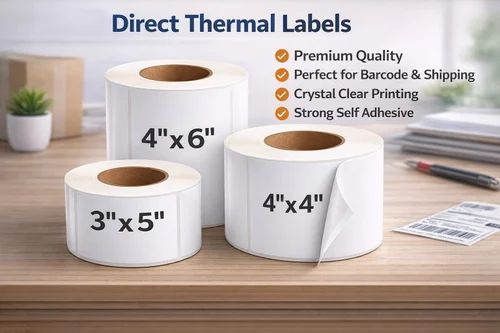
A direct thermal label can sometimes stick to stretch wrap, but wrap movement, film chemistry, dust, and low surface energy make the bond less predictable than on a rigid carton. For pallets that travel through several handoffs, apply the label to a stable panel or use a validated wrap-compatible adhesive, then test it after the wrapped load settles.
When comparing direct thermal pallet labels, match the material to the actual surface, printer, handling time, and scan conditions. A familiar size or low roll price does not prove the label will work in the complete workflow.
What the Label Must Accomplish
Stretch film continues to relax after wrapping and can stretch again when a pallet is moved. A rigid paper label does not stretch with it. Tension can lift edges, wrinkle the barcode, or tear the label. The label may also bridge a depression between boxes and lose full contact. If a pallet tag can be attached to a carton face or a protected placard, that often provides a more stable scan surface than film alone.
Choosing the Label Construction
Define the film type, wrap tension, application location, dwell time, and required travel duration before choosing adhesive. Some films contain slip additives or have a very smooth surface that makes initial tack misleading. A supplier should know whether the label will sit on film over a flat carton or on unsupported layers. Large labels can improve barcode readability, but a wide stiff label may bridge film contours and peel unless applied to a flat zone.
Printing and Barcode Setup
Use a barcode size and contrast suited to the scanning distance. On a pallet, the reader may be several feet away, so a tiny item-level barcode is unsuitable even if the printer can produce it. Keep the printed region away from wrinkles or overlap lines in the film. If the job requires long outdoor staging, consider whether direct thermal imaging will remain readable under sun and heat; test rather than assuming warehouse performance transfers outdoors.
Application in the Real Workflow
Wrap the load first and allow it to settle according to the operation’s normal timing. Wipe away loose dust if needed, place the label on a firm vertical area, and press from the center outward. Avoid corners, loose tails, and high-tension zones. If the label is applied before a final wrap layer, make sure the outer film does not distort or obscure the barcode. Never cover a required safety or handling mark beneath the wrap.
A Test That Reveals Problems Early
Apply sample labels to the actual film with the normal wrapper settings. Check edge lift immediately, after the pallet settles, after forklift handling, and after the expected storage period. Scan from normal angles and lighting at each stage. Include both tightly wrapped and slightly irregular loads. The test should also show whether the label can be removed with the film when the pallet is broken down, if that is the intended process.
Common Failures and Their Causes
A label that feels secure when first pressed may fail later as film relaxes. Testing only a loose piece of stretch film on a desk misses that effect. Another failure is placing the label across an overlap seam where one film layer moves against another. If the label repeatedly lifts, move it to a rigid pallet placard or carton face before spending more on increasingly aggressive adhesive without changing the application geometry.
What to Request From a Supplier
Request a label stock with a documented use case for the specific wrap and handling time, plus samples in the intended size. Confirm the printer’s core, winding direction, sensor format, and maximum roll diameter. Provide photographs or a sample wrapped pallet to the converter; ‘sticks to plastic’ is not a complete specification. The acceptance test should include adhesion and scan performance after normal transport handling.
To order thermal labels for this direct thermal pallet labels use case, specify the target surface, label life, printer model, size, core, winding, adhesive, and expected handling. Ask for a converted-roll sample in the proposed construction. The sample should pass the field test outlined above before the full purchase.
How to Choose a Stable Pallet Label Location
Inspect the wrapped pallet at the point where it will be scanned, not only at the wrapping station. A label that faces outward at one dock position may face a rack upright after rotation. Choose a consistent face and height that remain accessible to a forklift operator or fixed reader. Where the load shape varies, attach a rigid placard to a stable outer carton before wrapping or use a purpose-built holder. Avoid wrapping over the finished barcode unless the film layer has been tested for glare and distortion.
When a Placard Is Better Than Adhesive on Film
A placard can give the barcode a flat backing and separate it from stretch-film movement. It also makes replacement easier when a shipment changes destination. The placard itself must be attached securely and cannot cover a safety mark or fall into forklift paths. Compare its cost with the labor spent reapplying failed film labels and the cost of a no-read pallet. For high-value or frequently relabeled loads, a stable physical label surface may be the more economical solution even when the label stock is ordinary.
Record which stretch-film brand and wrapper settings were used in the approval trial. Changing film thickness, slip treatment, or wrap tension can change the way the label behaves even when its roll has not changed. A purchasing substitution for the film should therefore trigger a quick adhesion and scan check before the next large outbound run.
How to Decide Whether the Trial Passed
Set the acceptance criteria before testing direct thermal pallet labels. Record feed errors, print clarity, barcode scan rate, application time, edge lift, removal or residue where relevant, and damage after ordinary handling. Use the hardest surface and longest planned dwell period, not only a fresh label under ideal office conditions. If a sample fails, change one factor at a time so the result identifies whether print setup, facestock, adhesive, label geometry, or application method is responsible. Keep the approved sample and settings with the purchasing specification.
Is a Permanent Adhesive Always Better on Stretch Film
No. A very aggressive adhesive cannot compensate for unsupported film movement or a wrinkled application area. It may also leave residue on reusable materials. Start with a stable placement and realistic handling test, then choose the least aggressive adhesive that passes the required hold period.