


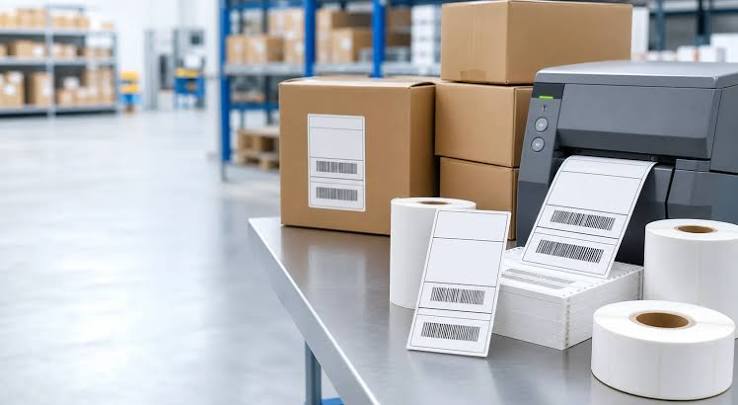
When a carton is reused or rerouted, a new shipping label must make the old routing code unreadable to scanners. The safest approach is to remove the old label if practical or cover the entire obsolete barcode with an opaque, securely applied overlabel. Test the result with the scanners used downstream; visual coverage alone is not enough.
When comparing direct thermal labels, match the material to the actual surface, printer, handling time, and scan conditions. A familiar size or low roll price does not prove the label will work in the complete workflow.
What the Label Must Accomplish
An old machine-readable code can send a parcel to the wrong carrier route or create conflicting tracking events. A printed black line through it may still leave parts detectable, while a translucent new label can allow the old bars to show through. Decide whether the old code can be peeled away without damaging the carton. If not, specify an overlabel with enough opacity and area to block all bars, quiet zones, and human-readable tracking text that could confuse a worker.
Choosing the Label Construction
Choose a label large enough to cover the old code with a clean margin and to hold the new shipping information at its intended print size. The face material should hide dark print underneath. Test opacity on the darkest actual barcode, not on a blank box. Adhesive must bond to the old label or carton coating; a strong bond to clean paper does not guarantee a bond to glossy old stock. A supplier should provide samples for both surfaces.
Printing and Barcode Setup
Print the new barcode at the carrier’s required size and resolution, with intact quiet zones and no scaling by the shipping application. Do not squeeze a full shipping layout onto a small stock label solely to cover an old code. The printer may feed the overlabel correctly while the barcode is too dense for a handheld scanner. Inspect the first label after changing roll stock or printer settings, and scan it before the batch leaves the workstation.
Application in the Real Workflow
Place the overlabel on a flat area of the carton, away from seams, tape edges, corners, and strapping. Clean loose dust and press firmly across the full label, especially over the ridges left by an old label. Avoid trapping wrinkles over the new barcode. If the old label has curled edges, remove those loose pieces first or use a larger patch that lands on sound carton beyond them. One new label should not leave a second active barcode visible elsewhere.
A Test That Reveals Problems Early
Make a test carton with the worst combination: a dark old barcode, the most difficult carton finish, and a new overlabel printed on the chosen roll. Scan from several normal angles using the warehouse and carrier devices available. Confirm that only the new code is captured. Then rub the label and allow it to stand through the normal handling interval before rescanning. Include a reused carton with old shipping tape because that surface can behave differently.
Common Failures and Their Causes
A common error is covering only the center of an old barcode while leaving a side segment or its quiet zone exposed. Another is using a thin label that lets old bars remain visible under the new print. Applying the label across a box seam can create an air gap and a torn edge during transit. If scans remain ambiguous, do not keep printing over the problem; remove the old label or change the overlabel stock and position.
What to Request From a Supplier
Ask for face-stock opacity, label dimensions, roll format, printer compatibility, and adhesive performance on both corrugated board and the existing label surface. State how long the overlabel must remain legible and whether parcels will meet rain, condensation, or abrasion. The purchase specification should include a successful scan test on an actual relabeled carton, not just a paper sample or a statement that the stock is suitable for shipping.
To order shipping labels for this direct thermal labels use case, specify the target surface, label life, printer model, size, core, winding, adhesive, and expected handling. Ask for a converted-roll sample in the proposed construction. The sample should pass the field test outlined above before the full purchase.
How to Handle Mixed Old and New Labels
Set a station rule for parcels that arrive with multiple prior labels. The operator should identify which code is obsolete, remove or completely obscure it, then place the current label where the carrier expects it. If a carton has old labels on two faces, covering one is not enough. A simple visual inspection before the new scan can prevent a downstream sortation error. Keep rejected cartons at the station until their conflicting codes are resolved, rather than sending them into a conveyor with a handwritten explanation.
What to Record After a Relabeling Error
When a parcel is misrouted, retain a photograph of every visible code and note which scanner read it. Check whether the new overlabel was opaque, whether its edges lifted, and whether another old code remained elsewhere. This record helps distinguish label construction from application or software routing. Review a few successful relabeled cartons too; the comparison may show that failures cluster on glossy old labels, worn carton faces, or one operator’s placement. Update the written relabeling procedure with the actual cause.
For teams that relabel frequently, create a dedicated station kit with an approved overlabel roll, a scraper safe for the carton surface, and a scanner. The station should reject any parcel with a second readable route code. That small procedural control is usually more reliable than asking packers to remember several exceptions during a busy shift.
How to Decide Whether the Trial Passed
Set the acceptance criteria before testing direct thermal labels. Record feed errors, print clarity, barcode scan rate, application time, edge lift, removal or residue where relevant, and damage after ordinary handling. Use the hardest surface and longest planned dwell period, not only a fresh label under ideal office conditions. If a sample fails, change one factor at a time so the result identifies whether print setup, facestock, adhesive, label geometry, or application method is responsible. Keep the approved sample and settings with the purchasing specification.
Can a New Label Simply Be Placed Beside the Old Barcode
Only if the obsolete code is completely removed or made unreadable according to the receiving workflow. Two visible barcodes can be scanned in the wrong order by people or automation. The safest practical rule is one clearly active routing code per parcel. Check the carrier’s own relabeling instructions when they apply.