

Most data we encounter in the real world does not arrive in neat rows and columns. Social connections, financial transactions, supply chains, and communication networks are all inherently relational — they consist of entities and the relationships between them. Traditional ML models are not designed to handle this kind of data effectively.
Graph Neural Networks (GNNs) were developed specifically to address this gap. By treating data as graphs — structures made up of nodes and edges — GNNs can learn from the relationships between data points, not just the data points themselves. This makes them exceptionally well-suited for tasks like identifying hidden communities, detecting fraud rings, and mapping influence patterns in large networks. For learners enrolling in an AI course in Kolkata, GNNs represent one of the most relevant and rapidly growing areas of applied machine learning to study today.
Understanding Graphs and Why They Matter
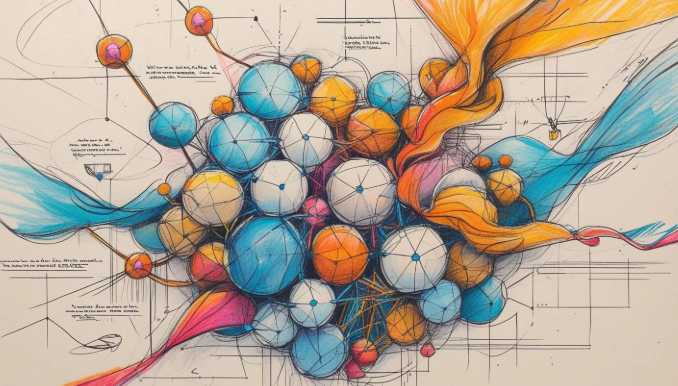
A graph is a mathematical form consisting of nodes (also called vertices) and edges (the connections between nodes). In a social network, each person is a node and each friendship is an edge. In a financial system, each account is a node and each transaction is an edge.
What makes graphs powerful is that they encode structural information. Two people may have similar demographics, but their position within a social network — how central they are, how many communities they bridge — reveals entirely different insights. Standard neural networks discard this structure. GNNs preserve and learn from it.
A GNN works by passing messages between neighboring nodes iteratively. Each node aggregates information from its neighbors, updates its own representation, and repeats this process across multiple layers. After several rounds, each node holds a rich embedding that captures both its own features and the broader network context surrounding it.
Detecting Hidden Communities
One of the most valuable applications of GNNs is community detection — identifying clusters of nodes that are more densely joined to each other than to the rest of the network.
In social media platforms, this reveals interest-based communities or echo chambers. In financial networks, it exposes clusters of accounts that transact heavily with each other — a potential signal of coordinated fraud or money laundering. In biological research, communities in protein interaction networks can indicate shared functional roles.
Traditional community detection algorithms like Louvain or Girvan-Newman rely on graph topology alone. GNNs go further by incorporating node and edge features into the community identification process. This results in more nuanced and accurate groupings, particularly in large and noisy networks.
Professionals who complete a structured AI course in Kolkata will often work through community detection projects using libraries such as PyTorch Geometric or Deep Graph Library (DGL), gaining practical exposure to how GNN-based clustering is implemented and evaluated.
Mapping Influence Patterns
Beyond communities, GNNs are highly effective at identifying influence patterns — understanding which nodes drive information flow, behavior adoption, or risk propagation through a network.
In marketing, influence detection helps identify key individuals whose endorsements trigger widespread adoption of products or ideas. In epidemiology, it helps trace how a disease spreads between individuals or locations. In cybersecurity, it maps how a compromised node can propagate threats across connected systems.
GNN-based influence models learn to assign influence scores to nodes by analyzing the direction, frequency, and weight of connections. Unlike simple degree-based centrality measures (which only count connections), GNNs factor in the quality and context of those connections — making their influence rankings significantly more reliable.
Graph attention networks (GATs), a specific GNN variant, are particularly useful here. They assign different weights to different neighbors during message passing, allowing the model to focus on the most informative connections rather than treating all neighbors equally.
Real-World Applications Across Industries
GNNs are already in production across a wide range of sectors:
- E-commerce: Amazon and Alibaba use GNNs for product recommendation by modeling user-item interaction graphs.
- Banking: JPMorgan and PayPal deploy GNN-based fraud detection systems that analyze transaction networks in real time.
- Drug discovery: GNNs model molecular graphs to predict how compounds interact with biological targets.
- Knowledge graphs: Search engines use GNNs to improve entity linking and question answering.
Conclusion
Graph Neural Networks represent a fundamental shift in how machine learning handles relational data. By learning from structure as much as from content, GNNs can reveal hidden communities and influence patterns that conventional models simply miss.
As GNN adoption accelerates across industries, the ability to design, train, and interpret these models is becoming a defining competency for AI professionals. A well-structured AI course in Kolkata that includes graph-based learning will prepare you to work on some of the most complex and high-impact problems in modern data science — from fraud detection to network analysis to drug discovery.