


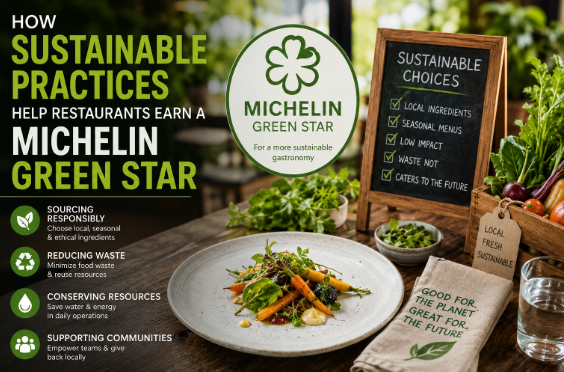
How Sustainable Practices Help Restaurants Earn a Michelin Green Star
I saw the term Michelin Green Star for the first time maybe two years ago. Some restaurant I follow posted about getting one. I thought it was a typo. I knew about regular Michelin stars, the ones chefs lose sleep over. But a green one? What did that even mean?
So I started digging around. Reading articles. Watching interviews. And honestly, the more I learned, the more it made sense. The Michelin Green Star recognizes restaurants that demonstrate exceptional commitment to sustainable gastronomy through responsible sourcing, environmental practices, community engagement, and long-term stewardship while maintaining outstanding culinary standards. That’s the clean definition. What it looks like in real kitchens is messier and way more interesting.
What Even Is a Green Star
The Michelin Guide launched the Green Star in 2020. It wasn’t random. Chefs had been moving in this direction for years. Buying from local farms. Cutting waste. Switching to clean energy. The Guide basically said, okay, we see this; let’s recognize it officially.
Here’s the part that tripped me up at first. A Green Star is separate from the regular stars. The classic stars judge the food on the plate. Flavor, technique, consistency. The Green Star judges everything behind the scenes. Where stuff comes from. How the kitchen handles garbage. What kind of energy runs the stoves. A restaurant can have a Green Star without a regular star, though plenty have both. Sustainable gastronomy has become part of what makes a serious kitchen. Not an add-on. Part of the core.
People often search for fine dining in major cities. New York comes up a lot. But a great meal isn’t just about a famous address. It’s about a thoughtful menu, solid hospitality, seasonal cooking, and a sense of place. Those things matter more than the zip code. Big cities have incredible restaurants. But some of the most memorable experiences happen at remote spots where the food and the land are inseparable. Harbor House Inn on the Mendocino Coast is one of those. It sits on a bluff above the Pacific. Quiet. Isolated. A Michelin-recognized destination that pulls its ingredients from its own ranch and the water below. That kind of direct line from landscape to plate is rare.
What These Kitchens Actually Do
Every Green Star place operates a little differently. But I noticed patterns.
Sourcing comes first. These kitchens buy from nearby growers and local fisheries. Not because it’s trendy. Because produce picked that morning tastes better and supports the people around them. They cook with seasonal ingredients because that’s what’s available. Responsible sourcing means knowing your suppliers by name. Asking real questions about how things are grown or caught. A sustainable restaurant pays as much attention to its supply chain as it does to the food.
Then there’s waste. Kitchens produce a staggering amount of trash. Green Star places fight that hard. Whole ingredient cooking. Stems and peels and bones turned into stock or sauce. Some track every ounce that gets thrown out and adjust their ordering. Others compost on site or send scraps to farms for feed. Food waste reduction isn’t a side project. It’s baked into the daily routine.
Energy and water matter too. Behind the scenes, these restaurants examine their utility bills. Some switch to renewable energy. Solar panels. Wind contracts. Others invest in efficient gear that pulls less electricity and water. Low-flow dishwashers. LED lights. Better insulation. It’s not flashy work. But that’s what separates a real eco-friendly restaurant from one that just prints the word sustainable on the menu. Sustainable fine dining means doing the unsexy stuff, not just talking about it.
A Real Place Doing the Work
Harbor House Inn sits on the Mendocino Coast, way up north of San Francisco. Old building. Eleven rooms. Pacific Ocean right there. Behind the inn is a 320-acre ranch. The Harbor House Inn Ranch grows vegetables and fruit and raises chickens for eggs. Hyper-local sourcing isn’t a slogan there. It’s literally how the kitchen fills its walk-in. What they can’t grow comes from the shoreline, the forest, or a few nearby boats and farms.
Chef Matthew Kammerer runs the kitchen. His whole approach depends on the health of the land and sea around him. The menu moves with what’s ready to harvest. Seasonal ingredients drive every decision. The property uses renewable energy. They’ve invested in water conservation and aggressive waste programs. Nothing gets trashed that can be composted or repurposed.
One project stuck with me. Purple sea urchins have been destroying kelp forests along the Northern California coast. The kitchen works with divers and marine ecologists to harvest the invasive urchins, serve them to guests, and support kelp restoration. That’s not a press release. That’s actual ecological work. Real partnership with the community. The kind of thing that happens when a restaurant takes sustainable hospitality seriously, not as a separate program, but as how it operates every day.
The inn holds Two Michelin Stars and a Michelin Green Star. Energy, water, waste, sourcing. All handled quietly behind the scenes. The guest just tastes the result. And that result tastes like the Mendocino Coast.
Why This Matters When You’re Eating
Sustainability isn’t just about saving the planet. It makes food taste better. A tomato grown in living soil and picked ripe that morning is a different food from one trucked across the country. Fish handled with care tastes cleaner. Seasonal ingredients have more life in them.
There’s also the connection to where you are. When a restaurant sources from its immediate surroundings, the meal tells you about the place. That deepens the whole Michelin dining experience. Destination dining at its best feels inseparable from its location. Quiet luxury means the sustainability work stays invisible. No signs about the compost program. No lectures from the server. You just notice the food is remarkably good.
This Is Where Things Are Heading
People ask more questions now. Where did this come from? How do they handle waste? Is the seafood okay to eat? Environmental awareness has gone from niche to normal. Restaurants that ignore it will get left behind.
Supporting local farms and boats keeps those businesses alive. It preserves farmland and working waterfronts. Thinking long term ensures the ingredients that make a region special will still be around in twenty years. The future of high-end hospitality runs this direction. Sustainable gastronomy isn’t a bonus anymore. It’s becoming baseline. Diners expect it. Chefs expect it. The Michelin Green Star is just the formal nod.
Michelin Green Star restaurants aren’t perfect. Nobody is. But they’re trying to do the right thing every day. Sourcing carefully. Cutting waste. Managing energy and water. Supporting their communities. All of it humming along so the guest never sees the machinery. Harbor House Inn on the Mendocino Coast, under Chef Matthew Kammerer, is one example of what that looks like. A remote inn on a bluff. A working ranch feeding the kitchen. A team that treats the landscape as a partner, not a resource to drain. The stars are nice. The Green Star is proof that caring for the environment and cooking at the highest level run on the same track.