


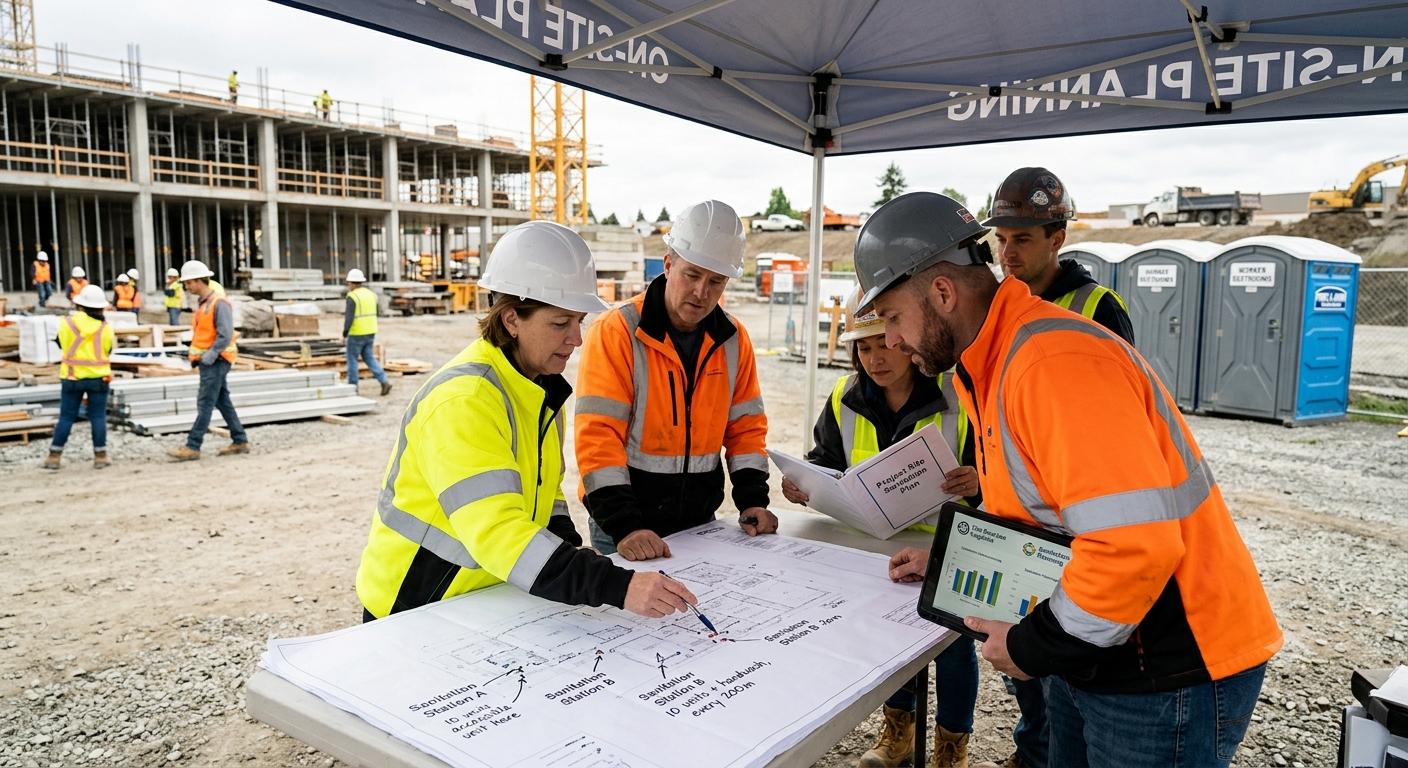
Large commercial construction sites require careful coordination across many moving parts. Contractors must manage crews, subcontractors, equipment, deliveries, inspections, safety procedures, and changing work zones while keeping the project moving on schedule. Portable sanitation planning is one of those details that can be easy to underestimate, but it has a direct impact on worker comfort, jobsite efficiency, and overall site organization.
Unlike small residential projects, commercial construction sites often involve larger crews, longer timelines, multiple trades, and work areas spread across a wide property. Restroom access needs to be planned around where people are actually working, how many workers are on-site, and how the site changes as construction progresses. A strong portable sanitation plan helps commercial contractors maintain a more functional jobsite from early site work through final completion.
Why Portable Sanitation Matters on Commercial Jobsites
Commercial construction sites often do not have permanent restroom access available during the early stages of work. Even when a building eventually includes restrooms, those facilities may not be usable until later in the project. Crews still need reliable access throughout excavation, foundation work, framing, exterior construction, interior build-out, and finishing stages.
Portable restrooms help fill that gap by providing practical sanitation access where crews need it. Without enough units or proper placement, workers may lose time walking long distances, leaving the site, or waiting during peak break periods. On large commercial jobs, those small delays can add up across multiple crews and many workdays.
Good sanitation planning supports both worker needs and project productivity.
Estimating Crew Size and Site Demand
The first step in portable sanitation planning is understanding how many people will be on-site during each stage of construction. Crew size may change significantly over the life of a commercial project. Early site work may involve a smaller group, while framing, mechanical rough-ins, drywall, and finish phases may bring several trades together at the same time.
Contractors should plan restroom access based on expected peak activity, not only the first week of work. A site that starts with ten workers may later have dozens of electricians, plumbers, HVAC crews, drywall installers, roofers, equipment operators, and finish trades working at once. If sanitation planning does not adjust with manpower, the site can quickly become underserved.
Estimating demand early helps contractors avoid scrambling for additional units later.
Placing Units Where Crews Actually Work
Portable restroom placement should be based on jobsite workflow. Units need to be accessible without interfering with equipment movement, delivery routes, material staging, or active construction zones. On a compact project, one restroom area may be enough. On a large site, multiple restroom locations may be needed to reduce walking time and keep access practical.
Commercial contractors should also consider how the site will change as work progresses. A restroom location that works during grading may become inconvenient once building framing, paving, or exterior construction begins. Planning for relocation or additional placement points can help sanitation access remain useful through each phase.
The goal is to place restrooms close enough for convenience while keeping them clear of high-risk or high-traffic construction activity.
Coordinating With Site Layout and Access Routes
Large commercial sites depend on clear access routes for workers, equipment, deliveries, emergency vehicles, and inspectors. Portable restrooms should be placed in areas that are easy to reach but do not block those routes. Poor placement can create congestion and force crews or vehicles to work around obstacles that should have been planned better.
Contractors should coordinate restroom locations with the broader site logistics plan. This includes entrances, temporary roads, crane areas, dumpster locations, material laydown zones, parking areas, and trailer locations. Restrooms should be visible and accessible but not positioned where they interfere with daily operations.
A well-planned layout keeps sanitation support integrated into the site instead of creating a separate problem to manage.
Scheduling Service for Longer Projects
Commercial construction projects often last for months or longer. Portable restroom planning should include regular servicing so units remain clean, stocked, and usable throughout the rental period. As crew size increases, service frequency may need to increase as well.
Contractors should not wait until complaints arise before adjusting the schedule. If units are seeing heavy use, service should match that demand. Regular maintenance helps preserve worker comfort and prevents sanitation issues from becoming a distraction for supervisors.
Working with providers such as Rent Porta Johns can help commercial contractors coordinate portable restroom placement and servicing for long-term construction projects. A reliable service schedule helps keep sanitation needs predictable instead of reactive.
Supporting Multiple Trades and Work Zones
Commercial projects often involve multiple trades working in different areas at the same time. One crew may be working on exterior framing while another handles utility installation, roofing, interior rough-ins, or site improvements. Restroom access should account for this spread-out activity.
If units are placed only near the main trailer or entrance, workers in distant zones may lose unnecessary time walking across the site. Contractors should evaluate whether additional restroom points are needed as the job expands. This is especially important on large buildings, industrial sites, shopping centers, schools, warehouses, and multi-building developments.
When sanitation access follows the work, crews can spend more time on productive tasks and less time navigating the site.
Planning for Early Site Work
Portable sanitation is often needed before major vertical construction begins. Crews involved in clearing, excavation, grading, utilities, foundation work, and concrete placement may be working long before permanent building systems are available. These early stages still require practical restroom access.
For early site work, placement should support equipment activity without getting in the way. Units may need to be positioned near temporary parking, job trailers, or access points where crews gather. As the project moves into later phases, those units may need to be shifted closer to the main building or interior work areas.
Planning for early needs prevents sanitation from being overlooked before the site becomes fully developed.
Adjusting During Interior Build-Out
As construction moves indoors, restroom access may need to change again. Workers may be spread across multiple floors, wings, suites, or sections of a building. Depending on the project layout, exterior portable restrooms may still be practical, or additional placement near specific access points may be helpful.
Interior build-out often brings many trades together in a compressed schedule. Electricians, plumbers, HVAC technicians, drywall crews, painters, flooring installers, and finish carpenters may all be working during overlapping periods. Sanitation planning should reflect that increased activity.
Contractors who adjust restroom placement and service during this phase can keep the site more comfortable and efficient.
Considering Worker Break Patterns
Restroom demand often increases during predictable times of day. Morning arrivals, lunch breaks, shift changes, and end-of-day cleanup periods can create short periods of heavier use. If too few units are available, workers may have to wait, which affects morale and productivity.
Commercial contractors should think beyond the total number of workers and consider how those workers move through the day. Larger crews working similar schedules may require more restroom access than smaller crews spread across staggered shifts. Sites with long workdays or multiple shifts may also need different servicing plans.
Understanding break patterns helps prevent bottlenecks during peak use.
Maintaining Professional Site Standards
Portable sanitation also affects how the jobsite is perceived. Owners, inspectors, project managers, subcontractors, and visitors may all see how well the site is organized. Clean, well-placed restrooms contribute to a more professional environment.
Poorly maintained units, inconvenient placement, or inadequate restroom access can make the site feel neglected. That impression may not reflect the quality of the construction work, but it can still affect confidence in jobsite management. Contractors who handle sanitation details well show that they are paying attention to the daily needs of the project.
Professional site standards include both construction quality and worker support logistics.
Avoiding Common Sanitation Planning Mistakes
One common mistake is ordering too few units at the beginning and failing to add more as the crew grows. Another is placing restrooms only where delivery is easiest instead of where workers can use them efficiently. Contractors may also forget to adjust service schedules during busier project phases.
A different mistake is failing to plan for site changes. As buildings go up, access routes shift, staging areas move, and work zones expand. Restroom placement should be reviewed periodically to make sure units still support the current phase of construction.
Avoiding these mistakes requires communication between superintendents, project managers, subcontractors, and the sanitation provider.
Integrating Sanitation into the Jobsite Plan
Portable sanitation should be treated as part of the overall jobsite logistics plan, not as an afterthought. Contractors already plan material staging, dumpsters, traffic flow, temporary power, job trailers, and safety zones. Restroom placement belongs in that same conversation.
When sanitation planning is integrated early, it becomes easier to coordinate delivery, service access, relocation, and unit counts. It also helps supervisors avoid last-minute decisions once the site is already active. A simple plan can make sanitation support more consistent throughout the entire project.
The best systems are practical, easy to maintain, and flexible enough to change with the job.
Portable sanitation planning plays an important role on large commercial construction sites. Reliable restroom access supports worker comfort, reduces unnecessary walking time, and helps keep the jobsite organized through changing project phases. For commercial contractors, these details affect both productivity and the overall professionalism of the site.
By estimating crew size, placing units near active work areas, coordinating with site logistics, scheduling regular service, and adjusting as the project evolves, contractors can maintain better sanitation support from early site work through final build-out. A well-planned portable restroom strategy helps large commercial construction projects run more smoothly, efficiently, and professionally from start to finish.