


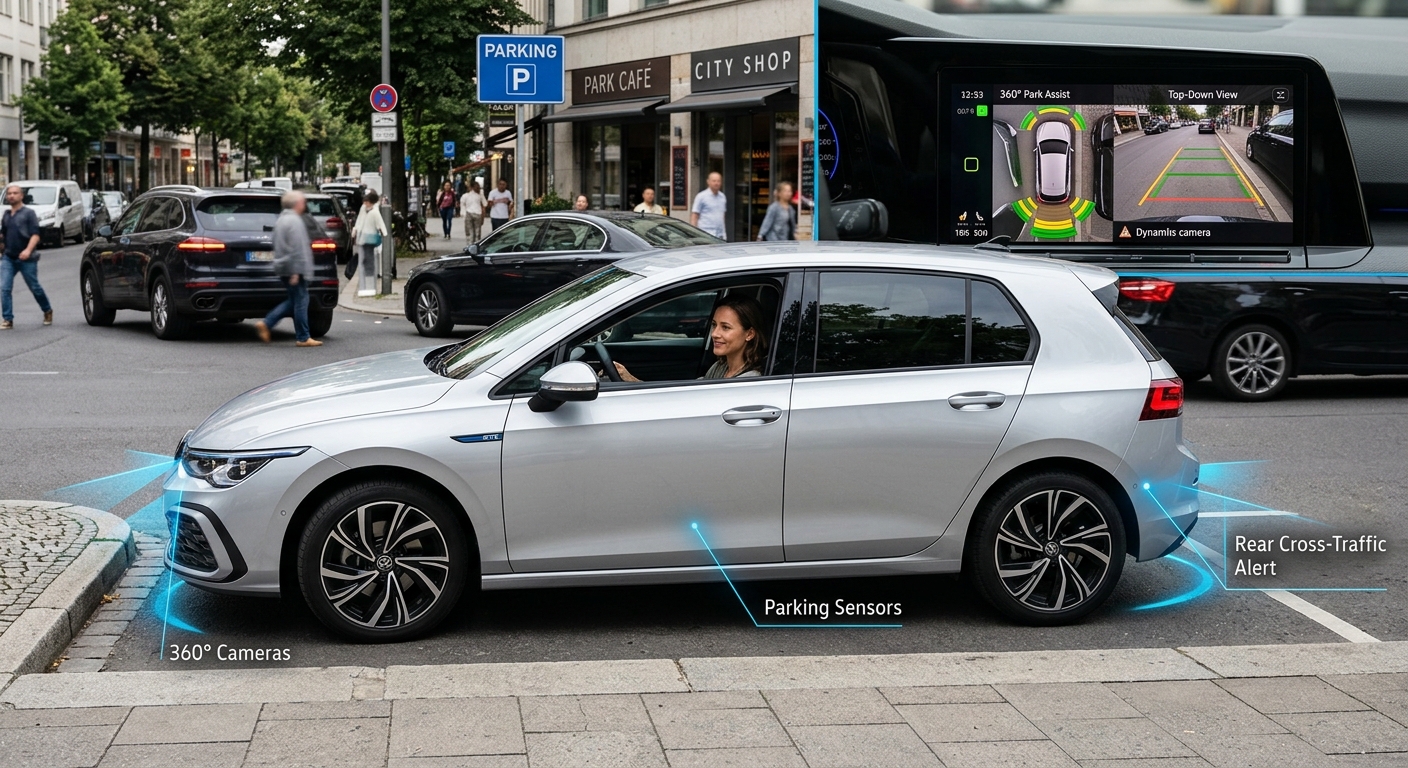
Parking can be one of the most stressful parts of driving. A tight parallel parking space, a crowded shopping-center lot, or a busy school pickup line can make even experienced drivers nervous.
Fortunately, modern vehicles, even those represented on the secondary auto market, do more than simply get drivers from one place to another. New parking technologies can help identify obstacles, improve visibility, warn drivers about approaching traffic, and even guide the vehicle into a parking space.
These features cannot replace an attentive driver, but they can make everyday parking safer, smoother, and much less intimidating.
Parking Sensors: The First Line of Help
Parking sensors are among the most common driver-assistance features in cars, trucks, and SUVs. Small sensors are placed in the front and rear bumpers to monitor how close the vehicle is to another car, a wall, a curb, a pole, or other obstacles.
As the vehicle approaches an object, the system gives the driver an audible warning. Usually, the beeping becomes faster as the distance gets smaller. Some vehicles also display a visual distance indicator on the infotainment screen or instrument panel.
This technology is especially helpful when parking in a garage, pulling close to a curb, or reversing toward a vehicle that sits low behind the bumper line.
Still, drivers should not depend on sensor sounds alone. Small objects, narrow poles, soft materials, and road debris may not always be detected. Snow, mud, ice, and dirt can also interfere with the sensors and cause false alerts.
Backup Cameras Give Drivers a Better View
Backup cameras have become a familiar feature in modern vehicles for good reason. They show the area behind the vehicle when Reverse is selected, helping drivers notice obstacles that may not be visible through the rear window.
The cameras can be useful for spotting curbs, shopping carts, bicycles, parking lines, and objects directly behind the vehicle.
Most systems also include guide lines. These lines move as the steering wheel turns, providing a general idea of where the vehicle is heading. They are useful when backing into a parking spot, but drivers should remember that they do not guarantee clearance.
Before moving, check the camera, look in the mirrors, and scan the area around the vehicle. A child, pedestrian, pet, or another vehicle can enter the path after the driver has started backing up.
Rear Cross-Traffic Alert Adds Another Layer of Safety
Backing out of a parking space can be difficult when large SUVs, trucks, or vans are parked on both sides. Even with a backup camera, the driver may not be able to see vehicles traveling down the lane behind them.
Rear cross-traffic alert is designed to help in this situation. The system monitors traffic approaching from either side and warns the driver if a vehicle, cyclist, or other object is moving behind the car.
When the warning appears or sounds, the safest response is to stop, check both directions, and wait until the path is clear. Rear cross-traffic alert is useful, but it cannot see everything in every situation.
IIHS research found that rear cross-traffic alert reduced backing crashes, while systems that combined a rear camera, parking sensors, and rear automatic braking delivered even greater safety benefits.
Rear Automatic Braking Can Step In
Rear automatic braking takes parking support a step further. If the vehicle senses that it is about to hit something while reversing, the system can automatically apply the brakes.
This feature may help prevent a low-speed collision if the driver does not react quickly enough to an alert. It can be especially helpful in busy parking lots, driveways, apartment complexes, and other places where people or obstacles can suddenly appear behind the vehicle.
However, automatic braking is not a reason to reverse without paying attention. Its detection range and response can vary based on the vehicle, weather, speed, object size, and angle. Drivers should always be ready to brake.
Park Assist Makes Tight Spaces Less Stressful
Park Assist systems are designed to make parallel and perpendicular parking easier. Depending on the vehicle, the system may scan for a suitable space and guide the driver into it.
In many semi-automated systems, the vehicle controls the steering while the driver operates the accelerator and brake pedal. The driver must stay focused, watch the display, and be ready to take over at any moment.
Some newer vehicles offer more advanced systems that can manage steering, braking, and acceleration during certain parking maneuvers. These systems can be helpful, particularly for drivers who struggle with tight spaces or feel anxious about parking in busy areas.
t drivers using parking-assist technology had 81 percent fewer curb strikes than drivers parking without assistance.
Even so, the driver remains responsible for safely operating the vehicle. Park Assist may have difficulty when space lines are faded, weather is poor, sensors are blocked, or the parking area has an unusual layout.
360-Degree Cameras Improve Awareness
A 360-degree camera system uses cameras around the vehicle to create a top-down view on the screen. It can make a large SUV or truck feel easier to place in a narrow parking space.
This feature is helpful when pulling into a garage, avoiding curbs, navigating around bollards, or parking between closely positioned vehicles. It can also show the vehicle’s front corners, which are often difficult for drivers to judge from the driver’s seat.
The image is created digitally, so distances can sometimes look different on the screen than they do in real life. Use the camera as an extra view, not as the only view.
Make Technology Part of a Safe Routine
Parking technology works best when drivers use it with care. A few simple habits can make a major difference:
- Slow down before entering a parking space or beginning to reverse
- Check the camera, mirrors, and blind spots before moving
- Keep your foot close to the brake in crowded areas
- Stop and investigate when parking sensors begin alerting
- Clean camera lenses and bumper sensors regularly
- Never assume a warning system will detect every obstacle
- Pull through a space when possible, so you can drive forward when leaving
The Bottom Line
Parking technology has come a long way from a simple warning beep. Backup cameras, sensors, cross-traffic alerts, automatic braking, surround-view cameras, and Park Assist systems can help drivers feel more confident in tight or busy spaces.
The safest drivers use these features as helpful tools, not as substitutes for awareness. Keep watching the surroundings, move slowly, and stay ready to stop. With the right mix of technology and attention, parking can become a far less stressful part of every drive.