


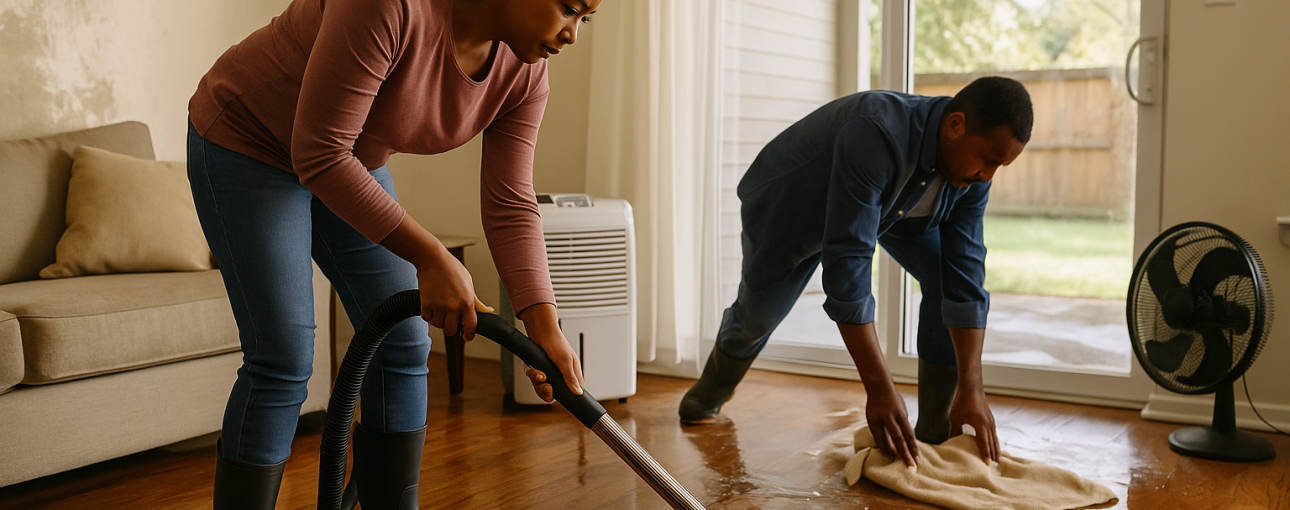
Your home may suffer from water damage for various reasons, such as leaky roofs, broken pipes, or flooding. Water penetration sometimes affects the structure of your home and reduces its aesthetic appeal. It can also lead to mold growth, which interferes with the air quality in your home and creates health concerns. Acting quickly supports an efficient restoration process, and it helps limit further damage. Here are some ways to respond to water damage in your home:
Stop Water Sources
A key step in responding to water damage is identifying and stopping the source. If the damage is caused by a burst pipe, turn off the main water supply. Cover any roof leaks with a tarp to prevent more water from entering, and turn off leaking water heaters or overflowing appliances before cleanup begins.
It’s key to understand the difference between ongoing intrusion and residual moisture. Ongoing intrusion is water that continues entering through an active leak, while residual moisture remains after the source has been stopped. Wet carpets and drywall may still contain moisture even though the leak has been repaired. Stopping water sources promptly helps limit additional damage, and it allows water removal and drying efforts to begin.
Record Affected Areas
Documenting affected areas allows restoration professionals to understand the extent of the water damage. They use this information to develop a restoration plan that matches the condition of your home. Before cleanup begins, take photographs, record videos, and prepare written notes to document the damage. Record visible damage to the following:
- Floors
- Walls
- Ceilings
- Cabinets
- Furniture
- Personal belongings
If water has spread into several rooms, note when you discovered the damage and which areas were affected first; these records help show how the damage progressed. Structural damage should also be documented as early as possible. Warped flooring, stained ceilings, peeling paint, and swollen drywall provide useful information during the assessment process. Personal belongings such as electronics and upholstered furniture can also be included to create a complete record of the affected property.
Remove Standing Water
Standing water continues soaking into floors, walls, and other porous materials after the source has been stopped. Water extraction removes excess water from the affected areas, and it prepares the property for the drying process. The amount of standing water helps determine the equipment used during restoration. Extraction methods may also vary depending on the type of flooring and the extent of the water intrusion. Carpets, hardwood floors, drywall, and insulation absorb water differently, so each material requires a suitable drying approach. Once standing water has been removed, technicians can use moisture meters to identify hidden moisture that remains inside building materials.
Prevent Further Damage
Preventing further damage involves more than removing visible water. Moisture may remain inside walls, subfloors, and other building materials after standing water has been extracted. Professional restoration teams inspect these hidden areas, and they determine the methods needed to prevent further damage for each affected surface.
Restoration professionals may use moisture meters and thermal imaging equipment to locate water that is not visible during a standard inspection. They place air movers and dehumidifiers in affected areas, and they monitor moisture levels until drying is complete. If mold or sewage contamination is present, they also perform the cleaning and treatment required before repair work begins.
Some materials are easier to recover after thorough drying, while others may require replacement due to prolonged water exposure. Restoration teams identify damaged drywall, insulation, flooring, and trim before reconstruction starts; this approach prepares both the property and the homeowner for repairs. Drying and repair times may vary across the affected areas. Even when the visible water has disappeared, moisture sometimes remains behind finished surfaces. Professional restoration teams adjust the drying process as different materials reach acceptable moisture levels. This detailed assessment helps determine which building materials remain suitable for restoration and which require replacement.
Learn More About Water Damage
Identifying the signs of leaks enables you to address water problems quickly and minimize damage. With the help of an experienced restoration company, you can repair the damage and prevent further problems. These professionals work to resolve issues effectively and quickly; some restoration companies also offer 24/7 emergency services. Contact a professional promptly if you notice signs of water damage in your home.