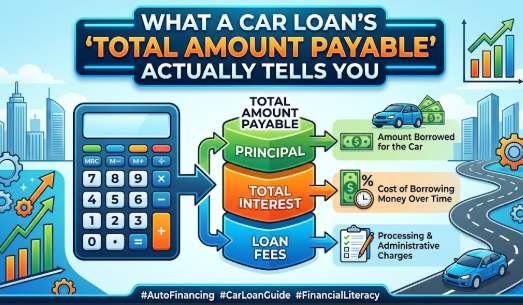
Most people shop for a car loan by looking at one number: the monthly payment. It’s easy to see why, because a lower monthly figure feels affordable and it’s the number dealers put in front of you first.
But it doesn’t tell you what the car will actually cost, and that job belongs to a figure sitting further down the illustration. Follow along so you know exactly what you’re signing up for.
The Three Numbers on a Finance Illustration
When you get a car finance quote, three figures do most of the talking. Each one tells you something different, and lenders lean on the one that flatters them most.
The monthly payment is what most buyers focus on. It’s the number that decides whether a car fits your budget month to month, so it gets all the attention. The APR is the annual percentage rate, which is what lenders advertise on their websites and forecourts. It rolls the interest and most compulsory fees into a single yearly rate, and it’s useful for comparing deals of the same length.
The total amount payable is the one people scroll past. It’s the sum of everything you’ll hand over across the whole agreement, including your deposit, every monthly payment and any fees. If you want to know what the car really costs you, this is the figure that says so.
Why a Low Monthly Payment Can Cost You More
A small monthly payment looks great, but it usually means one of two things. Either the agreement runs for longer, or there’s a big payment waiting at the end.
This is where Personal Contract Purchase (PCP) deals catch people out. A PCP splits the cost into low monthly payments and one large final sum, often called a balloon payment or an optional final payment.
The monthly figure looks tempting because a big chunk of the car’s value, often called the Guaranteed Minimum Future Value (GMFV), has been parked at the end of the deal. Crucially, you’re still paying interest on that deferred amount every month of the term. If you want to own the car outright, you’ll pay the balloon on top, and the total can end up well above a plain hire purchase deal over the same period.
Stretching the term does something similar. A 60-month loan will have smaller monthly payments than a 36-month one, but you’ll pay interest for two extra years, so the total amount payable climbs.
How to Find the Total Amount Payable Before You Sign
Dealer finance illustrations don’t always put this figure front and centre. It’s on there by law, under the Consumer Credit (Disclosure of Information) Regulations 2010, but it can sit at the bottom in smaller text while the monthly payment gets the big bold treatment. Before you agree to anything, find it and write it down for each deal you’re weighing up.
If your dealer’s paperwork buries it, plugging the numbers into a car budget calculator yourself is the fastest way to see the monthly figure and the total repayable side by side. Change the term from 36 to 60 months and watch the total move. That one habit will tell you more about a deal than any headline rate.
When you compare two offers, line up the total amount payable instead of the monthly cost. A deal with slightly higher monthly payments can still work out cheaper overall if it clears the balance sooner.
Judge the Deal by What You Pay in Full
Lenders present the monthly payment first because it’s the number most likely to get a yes. There’s nothing wrong with that on its own, but it puts the responsibility on you to look past it.
The total amount payable is the honest measure of what a car loan costs, and it’s the one figure that lets you compare deals fairly. Get into the habit of finding it, checking it and comparing it, and you’ll spot the difference between a genuinely good rate and one that just looks good spread across the months.