Two decks built the same week from the same materials can be in completely different condition a decade later. The difference is almost never the headline specification. It is a handful of small details that cost very little and take an hour to get right.
Protect the top of the joist
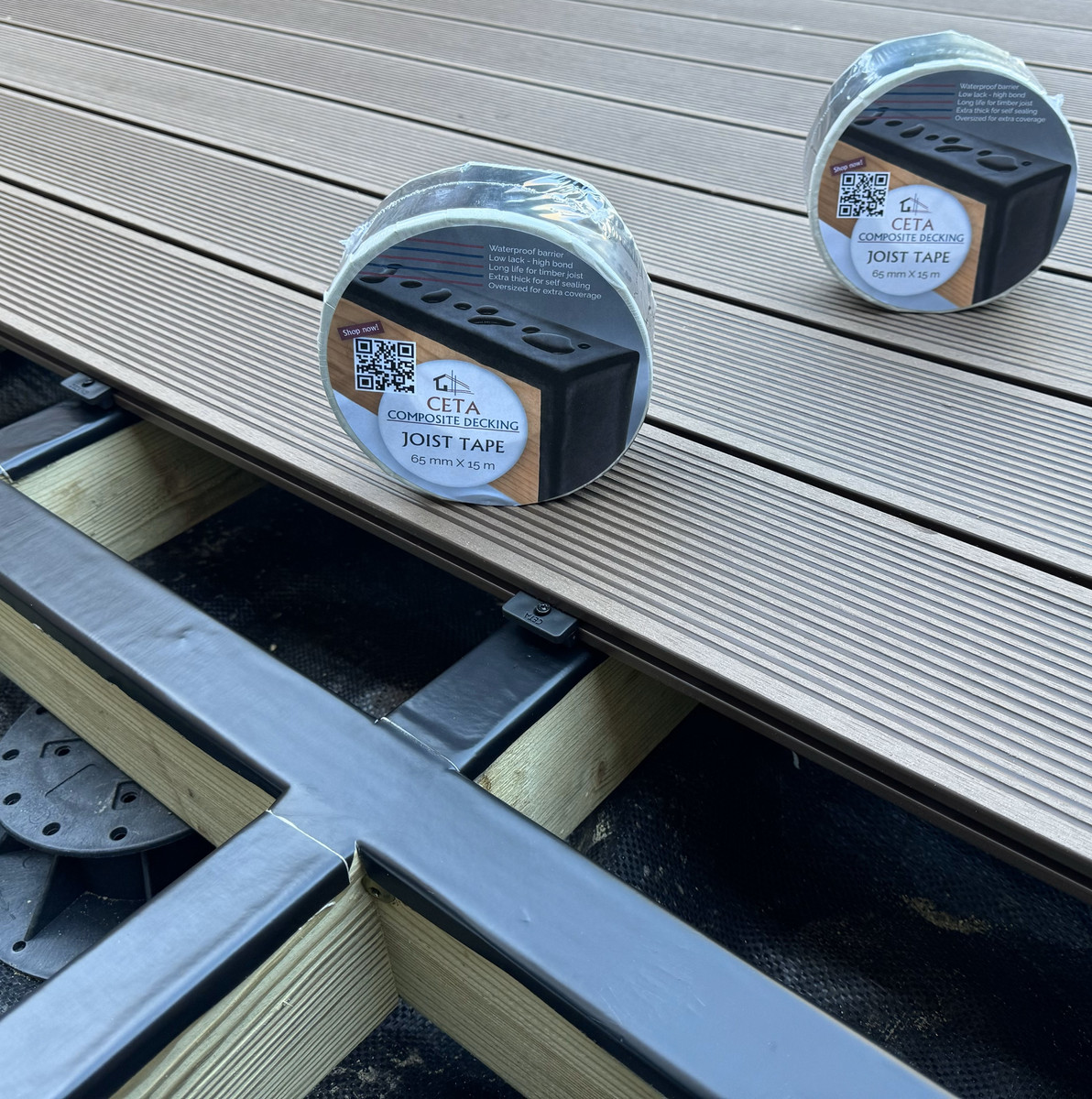
Water does not usually attack a deck frame from below. It lands on the boards, runs through the gaps, and sits on the flat top surface of every joist. That is where fasteners penetrate, which means that is where moisture gets inside the timber.
A strip of joist tape along the top of each joist closes that path. It is a self-adhesive butyl membrane that seals around screws as they go through, so the hole never becomes an entry point. On a standard garden deck it adds perhaps forty pounds to the bill and an hour to the build. It is probably the highest-return hour in the whole job.
Leave the gaps you are told to leave
Composite boards expand and contract with temperature. Manufacturer gap specifications are not conservative padding, they are the actual movement figure. Butt the boards tight on a cold March morning and the deck will buckle in July. The gaps also do the drainage work, letting water through instead of ponding on the surface.
Use the right fixings
Standard zinc-plated screws in an outdoor deck will bleed rust stains down the boards within two winters. Stainless or properly coated fixings cost more per box and the difference across an entire deck is small. Mixing metals is the other trap: aluminium framing with the wrong screw sets up galvanic corrosion that eats the fixing from the inside.
Think about the vertical surfaces
Decks get maintained because people look at them. Fences and walls behind them get forgotten, which is why a tidy deck so often sits in front of a grey, flaking boundary. Specifying composite cladding for those surfaces removes the job entirely. No sanding, no annual stain, no replacing a panel every few years because one side caught the weather.
Write it down
Keep a note of what you used and where. Board profile, fixing type, joist centres, tape product. In eight years when one board needs swapping, that single sheet of paper is the difference between a twenty-minute repair and an afternoon of guesswork.
None of this is complicated and none of it is expensive. It is just the part that gets skipped when a build runs late. Technical sheets and installation guides from suppliers like Ceta Decking cover the specifics, and following them is cheaper than learning the same lessons the slow way.