


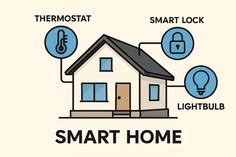
Introduction to Smart Homes
Smart homes represent a transformative approach to residential living, where the integration of technology enhances comfort, convenience, and energy efficiency. At their core, smart homes utilize a network of interconnected devices, ranging from lights and thermostats to security systems and appliances, which can be controlled remotely via smartphones or dedicated interfaces. This evolution toward connected living has been rapid, with advancements paving the way for a more automated and intuitive household environment. The journey of smart home technology can be traced back to the incorporation of basic automation systems in the early 20th century. Initially, these systems focused primarily on improving household efficiency and safety, with inventions like the programmable timer for turning lights on and off. In recent years, however, innovation has led to notable enhancements in functionality, driven largely by developments in Internet of Things (IoT) technologies. These advancements enable seamless communication between devices, providing homeowners with unprecedented control over their living spaces.
Today’s smart homes are often powered by artificial intelligence and machine learning, enabling devices to learn user preferences and routines. For example, smart thermostats can adjust heating and cooling settings based on the homeowner’s behavior patterns, thereby optimizing energy consumption and reducing costs. Furthermore, advancements in voice-activated technology, such as virtual assistants, have made it easier for users to interact with their smart devices, promoting user-friendly experiences.
As we look to the future of smart homes, the ongoing integration of innovative technologies will only increase. The anticipation of further advancements in robotics, augmented reality, and energy management solutions points to a future where connected living will be more sophisticated and accessible. This introduction serves as the foundation for exploring the potential trends that will shape the future of smart homes and redefine modern living.
Technological Advancements Transforming Smart Homes
The evolution of smart homes is largely driven by several key technological advancements that enhance both functionality and user experience. Foremost among these advancements is the Internet of Things (IoT), which allows various devices within a home to connect and communicate with each other. This seamless integration enables homeowners to control appliances, security systems, and even lighting from a centralized platform, typically through a smartphone application. The convenience offered by IoT significantly improves the overall management of home environments, ensuring that users can monitor their homes in real-time from anywhere in the world.
In tandem with IoT, artificial intelligence (AI) plays a crucial role in the development of smart home technologies. By utilizing AI algorithms, smart devices can learn user preferences and routines, allowing them to anticipate needs and operate autonomously. For example, smart thermostats can adjust temperatures based on past behavior patterns, leading to increased energy efficiency and comfort. Moreover, voice-activated AI assistants, such as Amazon Alexa or Google Assistant, have become commonplace in many households, further enhancing user interaction with smart home systems.
Machine learning, a subset of AI, also contributes significantly to the transformation of smart homes. It enables devices to improve their performance over time by analyzing data and drawing insights from user interactions. This adaptation results in more responsive and personalized home environments. For instance, a smart security system can learn to differentiate between familiar faces and potential intruders, thereby enhancing safety without overwhelming homeowners with unnecessary alerts.
Overall, the conjunction of IoT, AI, and machine learning is revolutionizing the concept of smart living. As these technologies continue to advance, they pave the way for increasingly sophisticated smart homes that provide unparalleled levels of comfort, convenience, and security for users. The future certainly looks promising as these innovations evolve further, transforming daily living experiences into more connected and intuitive realities.
Benefits of Smart Home Integration
The integration of smart home technologies offers numerous advantages that can significantly enhance daily living. One of the primary benefits is the convenience it provides. Smart devices allow users to control various home functions through their smartphones or voice assistants, enabling them to manage lighting, climate, and security systems remotely. For instance, a homeowner can adjust the thermostat before arriving home, ensuring a comfortable environment upon entry, or remotely lock doors to enhance security when they are away.
Energy efficiency is another crucial benefit of smart home integration. According to the U.S. Department of Energy, homeowners can save upwards of 15% on their energy bills by implementing smart thermostats and energy-efficient lighting. Smart devices can automate energy usage based on peak times or occupancy, optimizing energy consumption without sacrificing comfort. For example, smart lighting systems can automatically turn off when no one is present in a room, significantly reducing wasted energy.
Enhanced security is a critical component of connected living. Smart home security systems equip homeowners with video surveillance, motion sensors, and real-time alerts that can deter potential intruders. For example, during the COVID-19 pandemic, many individuals opted for smart doorbells like Ring, which provide instant notifications and video feeds to users’ smartphones, thus enhancing the safety and security of their homes from anywhere in the world.
Furthermore, smart home technologies improve the overall quality of life by fostering a more comfortable and personalized living environment. Automated routines, such as morning wake-up settings that gradually increase lighting or timed coffee brewing, improve daily habits and routines. The statistics support that over 70% of users reported an improved quality of life after integrating smart home devices, showcasing the significant impact of this technology.
Challenges Facing Smart Homes
The advent of smart home technology has ushered in a new era of convenience and connectivity. However, various challenges complicate the widespread adoption of these systems. Prominently, privacy concerns arise as connected devices often collect and store vast amounts of personal data. This ingestion of sensitive information can lead to privacy infringements if not managed properly, fostering skepticism among potential users. The capability of smart devices to monitor everyday activities can be seen as intrusive, which raises questions about how data is used, stored, and potentially shared with third parties.
Alongside privacy, cybersecurity threats present a significant obstacle. As more devices converge in a smart home ecosystem, the potential entry points for cybercriminals increase. Many smart home devices are inadequately secured, leading to vulnerabilities that can be exploited. Instances of hacking into personal home networks have been reported, causing users to worry about unauthorized access to their homes and personal information. To mitigate these concerns, robust cybersecurity measures and user education are essential to ensure that smart homes remain safe.
Furthermore, the complexity of integration between various devices can deter users. The interoperability of devices from different manufacturers often poses a challenge, as compatibility issues can result in a less cohesive experience. Homeowners may face difficulties in configuring their systems, leading to frustration and reluctance to adopt smart home technology. Addressing these integration issues is vital for creating a seamless experience that encourages user engagement. Solutions may include standardized protocols enabling devices to work together efficiently, ultimately enhancing the appeal of smart homes.
Future Trends in Smart Home Technology
The evolution of smart home technology has been marked by significant advancements that are redefining the way we interact with our living spaces. Among the most promising trends is voice control, which is rapidly becoming an integral part of the smart home ecosystem. Devices equipped with voice assistants allow users to control lighting, temperature, and even security systems through simple voice commands. This hands-free operation enhances user convenience and improves accessibility for individuals with mobility challenges.
Another emerging trend is predictive analytics, which utilizes comprehensive data analysis to anticipate user needs and preferences. For instance, smart thermostats can learn the user’s schedule and adjust heating or cooling settings automatically to optimize energy consumption. This not only contributes to cost savings but also boosts energy efficiency, aligning with growing concerns about environmental sustainability. As predictive technology continues to mature, it will play a critical role in enhancing the functionality of connected homes.
Furthermore, the integration of advanced home automation systems is reshaping the connected living landscape. These systems enable seamless interplay between various devices and appliances, allowing for efficient and automated task management. For example, users can establish routines that trigger multiple actions—such as dimming lights and locking doors—simultaneously with a single command. Enhanced interoperability between devices from different manufacturers will be crucial to establishing a cohesive smart home environment.
As these trends unfold, they will likely shape the future of smart homes significantly. The blend of voice control, predictive analytics, and comprehensive automation promises a more intuitive, efficient, and responsive living environment, catering to the evolving needs of modern homeowners.
Sustainability and Smart Homes
As the global conversation surrounding sustainability becomes increasingly prominent, smart homes are emerging as a crucial solution in promoting eco-friendly living. The integration of smart technology within residential spaces offers numerous opportunities for reducing energy consumption and minimizing environmental impact. By leveraging data and automation, smart homes can significantly optimize energy usage, contributing to a greener planet.
Smart thermostats represent one of the most notable advancements in this realm. These devices can learn the preferences and habits of residents, adjusting heating and cooling systems to ensure energy is not wasted. For instance, a smart thermostat can lower the temperature when the home is unoccupied, maintaining comfort without excessive energy use. By effectively managing heating and cooling, these devices play a key role in lowering overall utility bills as well as reducing carbon emissions associated with energy production.
Furthermore, smart lighting systems, such as LED bulbs equipped with motion sensors, exemplify another stride towards sustainability. These systems ensure that lights are only on when needed, thereby curbing unnecessary energy consumption. The ability to control lighting remotely, combined with scheduling features, allows homeowners to maximize efficiency, particularly during peak energy demand times.
Additionally, smart appliances, including washing machines and refrigerators, have evolved to incorporate energy-efficient technologies. These devices can operate during off-peak hours to take advantage of lower energy rates, further decreasing their overall environmental footprint. Smart homes can also be equipped with solar energy systems, which can be monitored and optimized using smart technology, making renewable energy more accessible and manageable for everyday use.
In sum, the evolution of smart home technologies offers significant advancements in sustainability, providing residents with the tools necessary to reduce their energy consumption and environmental impact. By utilizing these innovative solutions, individuals can actively contribute to a more sustainable future.
The Impact of 5G on Smart Living
The advent of 5G technology represents a significant milestone in the evolution of smart homes and connected living. This next-generation wireless technology offers unparalleled data speeds, low latency, and the capacity to support a massive number of connected devices simultaneously. The implications for smart home systems are profound, transforming how we interact with technology in our daily lives.
One of the most notable enhancements enabled by 5G is the potential for instantaneous communication between devices. With the increase in bandwidth and reduction in latency, smart devices, such as thermostats, security cameras, and appliances, can communicate in real-time. This means that homeowners will experience more responsive and automated systems, from adjusting home temperature based on weather forecasts to receiving instant alerts from home security systems.
Additionally, the capability of 5G technology to connect a multitude of devices—often referred to as the Internet of Things (IoT)—opens up new avenues for integration within smart living spaces. Traditional Wi-Fi networks can be overwhelmed by the sheer number of devices connected in a typical smart home; however, 5G can effortlessly accommodate this surge. As a result, users can expect to integrate more devices, including those that require high-bandwidth applications, such as smart TVs and advanced security features.
Moreover, the enhanced connectivity that 5G provides is set to improve the overall efficiency of smart home systems. By leveraging cloud computing resources and edge computing capabilities, smart devices can process data more effectively, leading to improved decision-making and automation. Enhanced connectivity allows for predictive analytics, meaning that devices can learn from user behaviors and adjust actions proactively, resulting in a seamless living experience.
Ultimately, the rollout of 5G technology promises to redefine smart living by enabling faster connections, supporting an unprecedented number of devices, and enhancing the interconnectivity of smart home systems. This advancement will not only enhance convenience but also allow for a more sophisticated and responsive living environment, paving the way for the future of connected living.
Consumer Adoption and Market Growth
The smart home industry is experiencing significant growth, driven by increasing consumer adoption of connected living technologies. As more households integrate smart devices into their daily activities, the market is evolving to accommodate various needs, preferences, and lifestyles. Recent surveys indicate that a growing number of consumers are embracing smart home technologies, with reports suggesting that over 50% of households in developed regions own at least one smart device. This trend is only expected to accelerate as technology becomes more accessible and user-friendly.
Demographic factors play a crucial role in the adoption of smart home products. Younger generations, particularly millennials and Gen Z consumers, tend to be more tech-savvy and are often early adopters of smart home innovations. Their affinity for connectivity and desire for enhanced convenience drives the demand for smart appliances, security systems, and energy management solutions. Additionally, as these demographics enter the workforce and acquire homes, their purchasing power will likely fuel further growth in the smart home market.
Moreover, the emergence of industries surrounding smart home technology is indicative of its mainstream acceptance. Companies ranging from traditional home security providers to tech startups are developing innovative solutions that cater to the evolving needs of consumers. The integration of artificial intelligence and machine learning in these products enhances their functionality, making them more appealing to potential buyers. With rapid advancements in Internet of Things (IoT) capabilities, the interconnectivity of smart devices will continue to create opportunities in areas such as healthcare, energy efficiency, and home automation.
In conclusion, the combination of rising consumer awareness, demographic shifts, and the growth of related industries positions the smart home market for robust expansion in the coming years. As technology continues to evolve, consumer adoption will likely increase, further transforming the landscape of connected living.
Conclusion and Future Outlook
The advancement of smart homes and connected living is undeniably transforming our daily lives, making them more convenient, efficient, and interconnected. From intelligent security systems to automated lighting and energy-saving technologies, smart home devices are increasingly becoming integral components of modern living. Throughout this blog post, we have discussed various aspects of this technological evolution, emphasizing how smart homes enhance safety, user convenience, and energy management.
As we look ahead, the future of smart homes appears promising. With rapid advancements in artificial intelligence, the Internet of Things (IoT), and sensor technologies, smart homes are expected to become even more responsive and adaptable to individual residents’ needs. The increasing integration of machine learning algorithms will enable devices to learn from user behaviors and preferences, creating personalized living environments that optimize comfort while minimizing energy consumption.
Moreover, as 5G technology continues to expand, the communication among smart devices will become more seamless and instantaneous. This low-latency communication will support real-time data processing, further enhancing the functionality and efficiency of connected living. Additionally, expanding the capabilities of renewable energy integration will lead to smarter energy management systems, promoting sustainable living practices.
However, the rise of smart homes also presents challenges, particularly concerning privacy, cybersecurity, and equity of access. It is crucial for stakeholders to address these issues proactively to create a responsible and inclusive smart home ecosystem. Overall, the evolution of smart homes holds significant implications for lifestyle, society, and the environment, shaping the way we interact with our living spaces and one another in the years to come.