


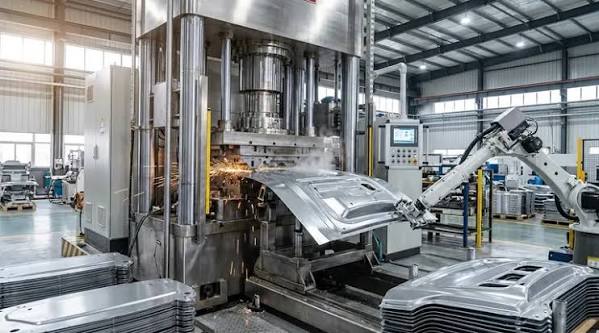
Steel pressing is a highly efficient and dependable method used in the manufacturing of steel components. This process involves applying significant pressure to reshape steel sheets into durable parts that meet various specifications. It is particularly well-suited for businesses that require large quantities of robust components, as it allows for mass production while minimizing material waste. The precision and consistency achieved through steel pressing make it an excellent choice for industries that demand high-quality, long-lasting products.
What Steel Pressing Involves
Pressing Steel is the process of using controlled force to bring flat sheets of steel into accurate shapes. The dies are held securely in hydraulic or mechanical presses to accomplish this alteration. This process can be able to produce a variety of elements from basic day-to-day brackets to complex structural components that help maintain the stability and strength of each application, but it depends on the exact design, tooling, and capabilities of the press.
Manufacturers Who Choose Pressing Steel
Steel pressing appeals to manufacturers mainly because of its speed and repeatability, which is hard to accomplish using a multitude of other forming techniques, especially on medium to large production runs. After preparing the die, Pressing Steel can produce thousands of identical parts at an extremely high rate; this means that each part will display minimal variation. It is considered reliable for industries where high-volume production is desired without quality concerns.
Applications Across Industries
Due to its versatility, Pressing Steel in a critical action someone all every dutiful industries. Steel pressing spans from manufacturing fundamental automotive parts that endure the strains of the road to strong construction hardware that comprises a building’s basic framework and specialty-made components for mining equipment. Pressing Steel is the most logical and economical option when businesses require rigid, consistent metal parts manufactured according to precise measurements.
Why It Matters to Have the Right Tools
At the heart of any successful Pressing Steel operation is the quality of the dies and tooling used. Even poorly maintained or inaccurately manufactured tooling can lead to inconsistent parts, which can subsequently cause problems later in the production chain. It highlights the necessity of seasoned operators spending time and money on maintaining tooling as part of a proper procedure, reinforcing quality control and dependability.
Pressing Steel vs. Other Forming Methods
Different cutting or fabrication processes should always be a go-to for one-off or custom pieces, but once production volumes get high enough, Pressing Steel almost always takes the cake. The upfront tooling investment may be significant, although it pays off in the long run through fast and repeatable production of large volumes.
Collaborating With a Seasoned Provider
When looking for a contract steel pressing partner, it’s important to ask about their press capacity, tooling capabilities, and if they have experience in the exact materials and thicknesses that you require for your project. An efficient provider with the proper equipment and noted controls within its process will be far more reliable in consistently producing quality results that meet your specific needs for every production run.
Read on to learn more about Pressing Steel services and how they can help support your production needs.