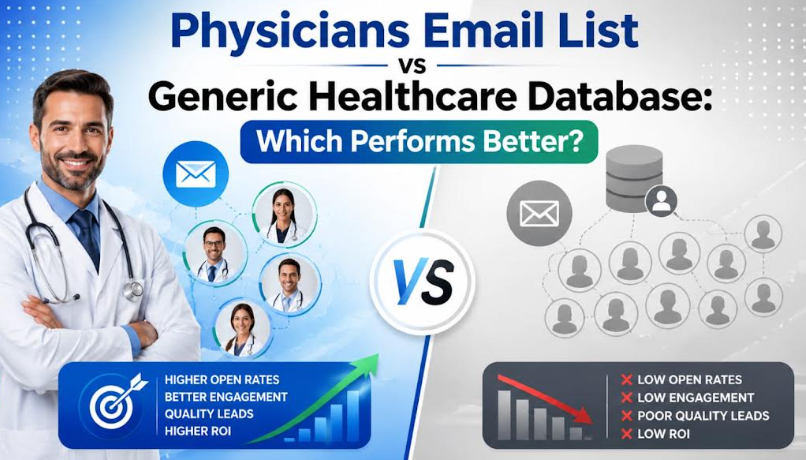
Physicians Email List vs Generic Healthcare Database is an important comparison for organizations seeking better healthcare marketing outcomes. Selecting the right data source helps businesses connect with the most relevant audience and maximize campaign performance across different healthcare segments. Whether promoting medical devices, healthcare software, pharmaceutical products, educational programs, or professional services, choosing targeted contacts can significantly improve engagement and lead quality.
A Physicians Email List provides direct access to verified physician contacts, enabling more personalized communication than a broad healthcare database. Understanding the differences between these data sources helps marketers improve outreach accuracy, optimize return on investment, strengthen professional relationships, and achieve more effective, data-driven marketing campaigns.
Understanding a Physicians Email List
A Physicians Email List is a database containing contact information for licensed physicians across multiple specialties. Depending on the provider and intended use, it may include details such as:
- Physician name
- Medical specialty
- Practice or hospital affiliation
- City, state, and country
- Professional email address
- Phone number
- Years of experience
- Practice type
- NPI or other professional identifiers where appropriate
Organizations use these lists to reach physicians with relevant educational content, product information, webinars, conferences, and professional resources.
What Is a Generic Healthcare Database?
A generic healthcare database contains contacts from across the healthcare ecosystem instead of focusing exclusively on physicians.
It may include:
- Nurses
- Pharmacists
- Hospital administrators
- Practice managers
- Healthcare executives
- Laboratory professionals
- Medical researchers
- Allied healthcare professionals
- Purchasing departments
- Healthcare organizations
Because the audience is broader, this type of database is useful for organizations whose products or services serve multiple healthcare decision-makers.
Comparing Both Options
| Feature | Physicians Email List | Generic Healthcare Database |
| Primary Audience | Physicians only | Multiple healthcare professionals |
| Audience Precision | High | Moderate |
| Personalization Opportunities | Excellent | Moderate |
| Best for Physician Outreach | Yes | Limited |
| Broader Market Coverage | No | Yes |
| Lead Quality for Physician Campaigns | Higher | Lower |
| Campaign Relevance | Highly targeted | Varies by audience |
| Segmentation Options | Specialty, location, practice type | Profession, organization, department |
Why Audience Relevance Matters
Email marketing works best when recipients receive information that aligns with their professional interests.
For example:
- A cardiologist may be interested in new cardiovascular devices.
- A dermatologist may prefer updates about skin treatment technologies.
- Hospital administrators, on the other hand, might focus on operational software.
- A procurement manager may evaluate purchasing solutions.
Sending the same campaign to every healthcare professional often reduces engagement because not every recipient has the same responsibilities.
Targeted communication generally creates a more relevant experience.
Benefits of Using a Physicians Email List
Better Audience Targeting
One of the biggest advantages is precision.
Instead of reaching thousands of unrelated healthcare contacts, marketers communicate directly with physicians who are more likely to find the information relevant.
This can improve campaign efficiency by reducing unnecessary outreach.
Improved Personalization
Modern email marketing depends on personalization.
Campaigns can be customized based on:
- Medical specialty
- Geographic location
- Practice size
- Healthcare setting
- Professional interests
Relevant messaging often performs better than generic content.
Higher Engagement Potential
When physicians receive educational resources that match their specialty, they may be more likely to:
- Open emails
- Read articles
- Register for webinars
- Download whitepapers
- Request demonstrations
A variety of elements influence engagement, such as the timing, relevance, and quality of the message.
Efficient Marketing Budget
Targeted campaigns often reduce wasted impressions.
Instead of paying to reach contacts outside the intended audience, organizations can focus resources on physicians who match their campaign objectives.
Advantages of a Generic Healthcare Database
Although physician-specific lists offer greater precision, broader healthcare databases also have important benefits.
Wider Market Reach
Some healthcare solutions serve multiple professionals.
Examples include:
- Hospital management software
- Revenue cycle platforms
- Medical billing services
- Electronic health record integrations
- Cybersecurity solutions
- Workforce management software
These products may require communication with administrators, IT leaders, finance teams, and physicians.
Multi-Department Marketing
Enterprise healthcare products often involve purchasing decisions from several departments.
A broader database supports campaigns targeting multiple stakeholders throughout the buying process.
Greater Awareness
Organizations introducing a new healthcare solution may initially prioritize brand awareness across the healthcare ecosystem before narrowing future campaigns.
Which Performs Better for Lead Generation?
Performance depends on campaign goals rather than one database being universally better.
A Physicians Email List often performs well when:
- Promoting physician-focused products
- Inviting doctors to CME programs
- Marketing medical devices
- Sharing pharmaceutical education
- Launching specialty healthcare services
- Recruiting physicians
- Conducting physician research
A generic healthcare database may perform better when:
- Marketing hospital-wide software
- Selling operational solutions
- Reaching procurement teams
- Promoting healthcare staffing services
- Introducing enterprise platforms
- Conducting industry-wide surveys
Choosing the audience that matches the product usually delivers stronger marketing outcomes.
Factors That Influence Campaign Performance
Database selection is only one part of a successful campaign.
Other important factors include:
Data Quality
Accurate contact information helps reduce bounced emails and supports better deliverability.
Organizations should regularly review and update marketing data to maintain quality.
Audience Segmentation
Not every physician has identical interests.
Segmenting by specialty, geography, or practice type enables more relevant communication.
Valuable Content
Healthcare professionals receive many emails every day.
Educational and informative content generally provides more value than purely promotional messaging.
Examples include:
- Clinical resources
- Industry research
- Educational webinars
- Product demonstrations
- Case studies
- Best practice guides
Email Frequency
Consistent communication is helpful, but excessive email volume can reduce engagement.
Maintaining a balanced schedule helps keep campaigns relevant.
Clear Calls to Action
Every campaign should include a simple next step, such as:
- Download a guide
- Register for an event
- Learn more
- Request information
- View product details
Simple calls to action improve user experience.
Compliance and Responsible Marketing
Healthcare marketing should always follow applicable privacy, anti-spam, and data protection regulations in the regions where campaigns are conducted.
Organizations should also:
- Use professionally sourced business contact information where appropriate.
- Provide clear identification of the sender.
- Include an easy unsubscribe option.
- Maintain accurate records.
- Respect recipient preferences.
- Keep contact data updated.
Responsible data practices help build trust and support long-term marketing success.
Choosing the Right Database
Before selecting a database, ask the following questions:
- Who is the primary decision-maker?
- Does the product specifically target physicians?
- Is the campaign educational or promotional?
- Are multiple healthcare departments involved?
- What level of segmentation is needed?
- What geographic markets are being targeted?
Answering these questions makes it easier to select the most appropriate audience.
Conclusion
Neither option is universally better—the right choice depends on your objectives. If your campaign is designed specifically for doctors, a targeted Physicians Email List can provide greater audience relevance, stronger personalization opportunities, and more focused outreach. If your solution serves hospitals, administrators, clinical staff, and multiple departments, a generic healthcare database may offer broader market coverage.
The most effective healthcare marketing strategies begin with clearly defined goals, accurate audience segmentation, valuable content, and responsible data practices. By matching your database to your campaign objectives, you can improve engagement while delivering information that is meaningful to healthcare professionals. For organizations focused on physician-specific outreach, investing in a reliable Physicians mailing List can further support targeted communication and long-term marketing effectiveness.