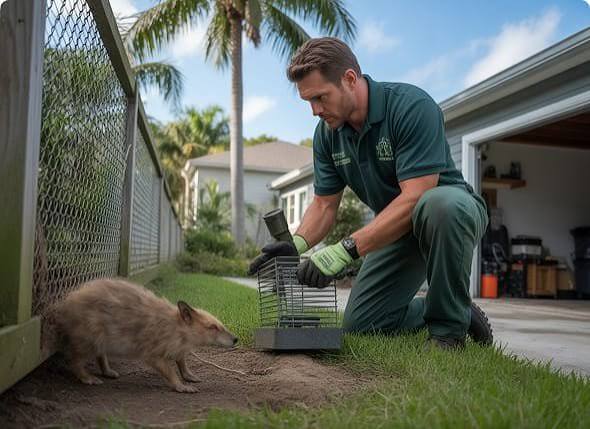
South Florida’s warm climate and lush landscapes make it a paradise for people and animals alike. But when raccoons start rummaging through attics or iguanas take over backyard pools, that shared paradise can quickly turn stressful. Palm Beach County’s mix of subtropical foliage, waterways, and residential neighborhoods creates the perfect conditions for wildlife to wander closer to home than most homeowners would like.
If you’ve ever heard scratching in your ceiling at 2 a.m. or spotted a snake curled up near your patio furniture, you already know how unsettling these encounters can be. This post breaks down the most common wildlife issues Palm Beach residents face, why handling them alone rarely ends well, and what a smart, humane resolution actually looks like.
Common Wildlife Encounters in Palm Beach Homes
Palm Beach’s warm, humid environment supports a surprising variety of wildlife that can find its way into attics, garages, pool cages, and crawl spaces. Some of the most frequent unwelcome guests include:
- Raccoons and opossums seeking shelter in attics or beneath decks
- Iguanas burrowing near foundations and seawalls, weakening structural integrity over time
- Rats and squirrels chewing through insulation and electrical wiring
- Snakes slipping into garages or gardens in search of food and shade
- Bats roosting in soffits and rooflines, often unnoticed until droppings appear
Each of these situations comes with its own set of risks, from property damage to health hazards. And in a region as biodiverse as Palm Beach, it’s rarely a matter of “if” but “when” one of these encounters will happen.
Why DIY Wildlife Removal Often Backfires
It’s tempting to grab a broom, a trap from the hardware store, or a bottle of homemade repellent and handle the problem yourself. Unfortunately, this approach often creates more problems than it solves.
Animals under stress can become defensive, increasing the risk of bites or scratches. Traps set without proper knowledge of an animal’s behavior frequently fail, or worse, catch the wrong species entirely. And removing an animal without addressing how it got inside means the problem is likely to repeat itself within weeks.
There’s also a legal dimension many homeowners overlook. Florida has specific regulations regarding the handling and relocation of certain protected species, including some bats and gopher tortoises. Attempting removal without the right permits or techniques can result in fines, not just frustration.
The Hidden Risks of Cohabiting with Wild Animals
Beyond the obvious nuisance factor, sharing your home with wildlife carries real risks that are easy to underestimate.
Structural damage tops the list. Raccoons and rodents can tear through insulation, wiring, and drywall in a matter of days, leading to costly repairs if left unaddressed. Health concerns follow closely behind, as droppings from bats and rodents can harbor bacteria and fungal spores that pose respiratory risks to residents.
Then there’s the matter of secondary infestations. Wherever wildlife nests, parasites like fleas, ticks, and mites often aren’t far behind, spreading well beyond the original entry point.
For families with young children or pets, these risks are magnified. A backyard that once felt like a safe retreat can suddenly feel like a source of constant worry, especially when it’s unclear exactly what’s living behind the walls.
Reclaim Your Home with the Right Wildlife Support
Palm Beach Wildlife Services brings decades of local expertise to every call, delivering humane, same-day solutions that protect your family, your property, and the wildlife itself. That kind of responsiveness matters in a region where a single unaddressed entry point can mean repeat visitors within days.
A well-handled wildlife situation involves more than simply removing the animal in question. It means identifying entry points, sealing them properly, and taking preventative steps so the same issue doesn’t resurface next season. Experienced professionals understand the specific habits of Palm Beach’s local wildlife, from the burrowing patterns of iguanas to the nesting preferences of bats, and use that knowledge to create lasting solutions rather than temporary fixes.
Choosing a humane approach also matters for homeowners who care about doing right by the animals involved. Relocation methods that prioritize the animal’s safety, paired with exclusion techniques that discourage future intrusions, offer a resolution that feels good for everyone involved, human and animal alike.
The result is a home that feels like a sanctuary again, free of the anxiety that comes with unexpected scratching sounds or surprise encounters in the garage.
Moving Forward with Confidence
Wildlife encounters are simply part of life in a region as beautiful and biodiverse as Palm Beach. But dealing with them doesn’t have to mean stress, guesswork, or risky DIY attempts. With the right combination of local expertise, humane practices, and long-term prevention strategies, homeowners can address these situations quickly and confidently.
If scratching sounds, damaged insulation, or unexpected visitors have become part of your daily routine, now is the time to take action. A little professional insight goes a long way toward restoring the comfort and safety of your home, so you can get back to enjoying everything Palm Beach has to offer.