

There’s nothing quite as frustrating as a cold shower interrupting your morning routine because the tank ran dry. If you’ve dealt with lukewarm water during back-to-back showers or a laundry day gone wrong, you already know the limitations of a traditional water heater. Fortunately, there’s a smarter, more efficient way to keep hot water flowing through your home, and it starts with rethinking how your water gets heated in the first place.
Rossco Plumbing / Cooling Solutions LLC has helped countless homeowners make the switch to tankless systems, and the results speak for themselves. Lower energy bills, endless hot water, and appliances that take up a fraction of the space—these benefits are why tankless technology continues to grow in popularity across the country. This post breaks down exactly how tankless water heaters work, why they outperform traditional tanks, and what you should know before making the switch.
How Does a Tankless Water Heater Actually Work?
Unlike traditional water heaters that store and continuously heat 30-50 gallons of water in a large tank, tankless units heat water directly as it flows through the unit. When you turn on a hot water tap, cold water travels through a pipe into the unit, where either a gas burner or an electric element heats it instantly. This means hot water is delivered on demand, without the need to wait for a tank to refill and reheat.
Because there’s no standby storage tank, tankless systems eliminate the standby energy loss associated with keeping a large volume of water hot around the clock. This single design difference is responsible for most of the efficiency gains homeowners notice after switching.
What Makes Tankless Water Heaters More Efficient Than Tank Models?
Traditional tank water heaters work continuously to maintain a set water temperature, even when nobody in the house needs hot water. This constant cycling wastes energy and drives up utility costs over time. Tankless units, by contrast, only use energy when hot water is actually being drawn, which translates to real savings on monthly energy bills.
Homes that use tankless water heaters typically see the following advantages:
- Lower operating costs: Since energy is only used during active demand, monthly utility bills tend to drop compared to tank-based systems.
- Extended equipment lifespan: Tankless units often last significantly longer than tank water heaters, thanks to reduced wear from constant heating cycles.
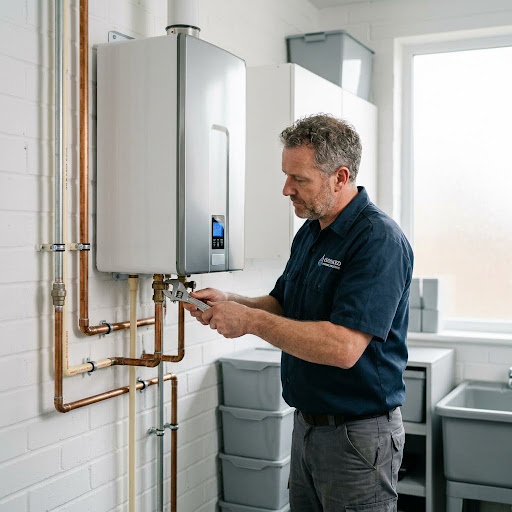
- Compact design: These units mount on a wall and take up a fraction of the space of a bulky tank, freeing up storage or utility room space.
- Continuous hot water supply: Multiple showers, dishwashers, and washing machines can run simultaneously without the risk of running out of hot water.
For larger households or homes with high hot water demand, these advantages can make a noticeable difference in day-to-day comfort and long-term costs.
Is a Tankless Water Heater Right for Your Home?
Not every household has identical hot water needs, which is why it’s worth considering a few factors before deciding if a tankless system makes sense for your home. Families with multiple bathrooms or high simultaneous water usage tend to benefit the most from the continuous supply tankless units provide. Homeowners looking to reduce their energy footprint also find tankless systems appealing, since they use less energy overall than traditional tanks.
That said, choosing the correct size and type of unit matters. An undersized tankless system can struggle to keep up with demand during peak usage, while an oversized unit may cost more upfront than necessary. This is where working with an experienced plumbing team becomes valuable. A professional assessment of your home’s water usage patterns, fixture count, and existing plumbing setup ensures you end up with a system sized correctly for your needs.
What Should You Expect From Professional Installation?
Switching from a tank to a tankless system isn’t always a straightforward swap. Depending on your home’s existing plumbing, gas line, or electrical setup, some adjustments may be necessary to accommodate the new unit. Gas-powered tankless heaters, for example, often require a larger gas line to handle the increased flow rate needed for instant heating, while electric models may require updated wiring to support the unit’s power demands.
Reliable comfort and long-term savings start with a professionally handled Tankless Water Heater Installation, and that’s exactly what our team specializes in delivering. From the initial home assessment to selecting the right unit size and completing the installation safely and efficiently, our technicians handle every step with care. We take the time to explain your options, walk you through the differences between gas and electric models, and make sure the final setup fits both your household’s needs and your budget.
Homeowners who choose professional installation also benefit from proper permitting, code compliance, and manufacturer warranty protection—details that are easy to overlook but important for long-term peace of mind. A poorly installed unit can lead to inefficiencies, premature wear, or even safety hazards, which is why trusting the job to trained professionals pays off in the long run.
Ready for Reliable Hot Water?
Making the switch to a tankless water heater is one of the most impactful upgrades you can make to your home’s comfort and efficiency. From lower energy bills to a virtually endless hot water supply, the benefits extend well beyond convenience. If cold showers, cramped utility closets, or rising energy bills have you considering a change, now is a great time to explore what tankless technology can do for your household.
Reach out to Rossco Plumbing / Cooling Solutions LLC today to schedule an assessment and find the right tankless solution for your home. Our experienced technicians are ready to help you enjoy consistent, on-demand hot water for years to come.