


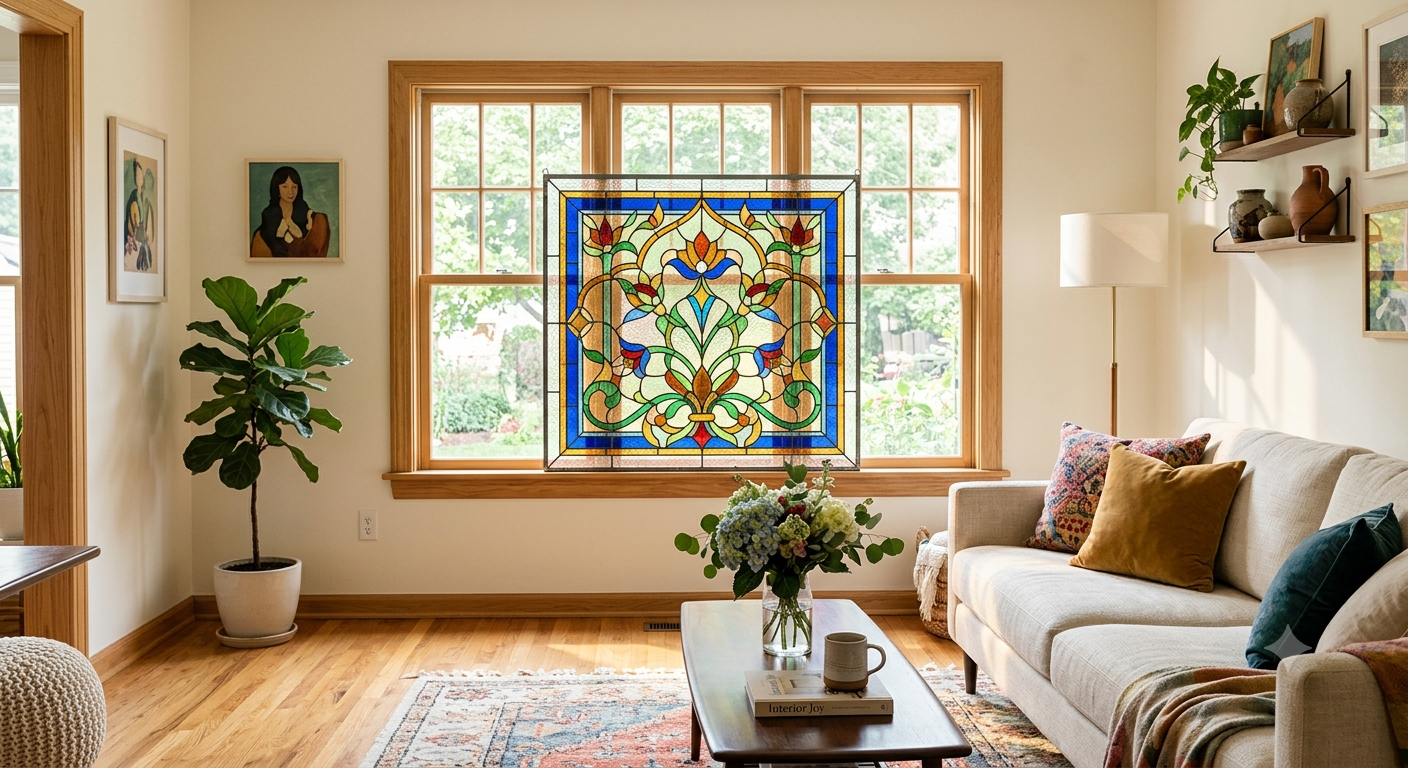
Small changes often have the biggest effect on how a room feels. A stained glass window panel can bring color, texture, and privacy to an existing window without the cost or disruption of a full renovation. It uses a surface already present in the room, making it especially useful for apartments, older homes, and spaces with limited wall area.
Unlike fixed architectural glass, a hanging panel can move with you or be repositioned as your interior changes. It also responds to daylight: a design may look transparent and subtle in the morning, then become richer as the sun moves across the sky.
Selecting a Panel for Light and Privacy
Before choosing a design, observe the window you plan to use. Direct afternoon sunlight can make bright colors glow strongly, while indirect light may favor clear, pale, or textured glass. If privacy is the main goal, select a panel with enough opacity to soften outside views without making the room feel dark.
For a narrow bathroom or entryway window, a vertical panel can create screening while preserving a sense of height. In a kitchen, a smaller botanical or geometric design can add color above a sink without blocking the view. A living-room panel may work best in a side window, where it can become an accent rather than compete with the main source of daylight.
Consider scale carefully. A piece that is too small may disappear in a large window, while one that is too wide can make a compact room feel heavy. Measuring the visible glass area and leaving a border around the panel usually creates a balanced result.
Styling a Decorative Glass Panel
A window panel can guide the rest of the room’s color choices. Warm amber, orange, and rust tones pair naturally with wood, leather, linen, and brass. Cool blue and green glass can support calm bathrooms, coastal interiors, and rooms with pale walls.
Keep the surrounding decor simple enough for the glass to remain visible. A plant on the windowsill, a neutral curtain, or a ceramic vase may be enough to complete the scene. If the panel contains several colors, repeat only one or two of them in nearby pillows, textiles, or small accessories.
At night, a panel can still be part of the room’s atmosphere. Place a lamp nearby, but not directly against the glass, so the texture can catch soft light without creating harsh reflections.
A Lasting Accent for Everyday Living
Decorative glass does not need to be permanent to feel significant. A well-chosen panel can turn a practical window into a personal design feature, offering privacy when needed and color when the light is right.
Because it changes with the weather, seasons, and time of day, a stained glass window panel keeps giving a room new details to notice long after it has been hung.