


Table of Contents
- Start With How You Live
- Study the Yard
- Create Clear Use Zones
- Plan for Weather
- Choose Materials That Can Handle the Seasons
- Add Lighting and Plants
- Add Storage, Conveniences, and Safety
- Maintain the Space
- Common Planning Mistakes to Avoid
- Conclusion
A backyard becomes more valuable when it supports the way your household actually lives. Whether the goal is relaxed dinners, space for children and pets, quiet mornings, or larger gatherings, start with a plan that balances comfort, circulation, weather protection, and upkeep. Projects such as deck installation work best when they are part of a larger layout rather than an isolated feature.
The most successful outdoor spaces do not need every possible amenity. They need a clear purpose, durable surfaces, practical storage, and details that make the yard inviting in more than one season.
Start With How You Live
Before selecting furniture, paving, or plants, define the activities the yard needs to support. Consider how many people will use it on a typical day, whether meals often take place outdoors, and how children, pets, older adults, or guests will move through the space. A compact reading corner with shade and a side table may deliver more daily value than a large feature that is used only a few times each year.
Study the Yard Before Choosing Features
Walk through the yard at different times of day and note sunlight, wind, drainage, views, and privacy. Measure major boundaries, doors, utility locations, slopes, and existing trees. Also follow the routes people already take between the house, driveway, patio, garden, and storage areas. Photos and simple sketches can reveal trouble spots, such as standing water or harsh afternoon sun, before construction begins.
Create Clear Use Zones
Dividing the yard into zones gives each area purpose without crowding the property. A cooking zone needs a grill, prep surface, and safe room to move. Place dining near the kitchen, with shade and stable footing. Put lounge seating in a sheltered spot, and leave open space for games, exercise, or pets.
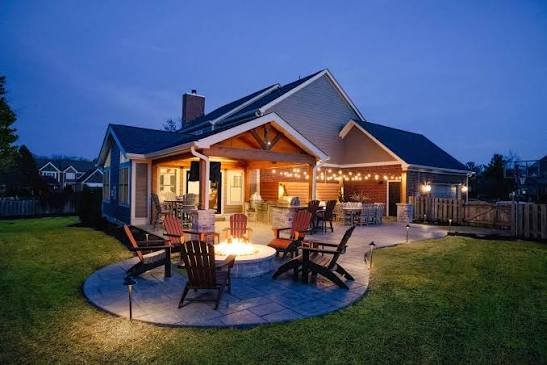
Create a quiet retreat with a bench or chairs away from busy paths. After sunset, lighting connects areas and improves safety. Outdoor lighting can define walkways, cooking and dining areas, and planting beds without harsh glare.
Plan for Weather
Design for your property’s weather, not another climate. Pergolas, covered patios, umbrellas, and trees provide shade; covered areas protect furniture and cooking equipment from rain. Position seating near fences, walls, plants, or the home for wind shelter.
For cooler months, add weather-resistant cushions, blankets, and a well-placed fire feature or heater. Plan drainage to direct water away from the home and prevent pooling around paving, steps, or gathering areas.
Choose Materials That Can Handle the Seasons
Material choices should reflect local temperature changes, moisture, direct sun, and expected maintenance. Natural stone, concrete pavers, brick, composite decking, and treated wood all have different appearances and care needs. Select surfaces with reliable traction around steps, pools, shaded paths, and entry points. Favor finishes that can be cleaned, repaired, or replaced without disrupting the entire space.
The lowest initial price is not always the best long-term value. A material that needs frequent sealing, staining, or replacement may require more time and expense than a higher-priced option with simpler care.
Add Lighting and Plants
Use brighter task lighting at entrances, steps, grills, and food-preparation areas. Softer ambient lighting is better suited to dining and lounge spaces, while accent lighting can draw attention to trees, walls, or garden features. Shielded fixtures, warm light, timers, and motion sensors can improve usability while limiting glare into windows or neighboring yards.
For planting, combine evergreen structure with flowering perennials, shrubs, ornamental grasses, and seasonal color. Choose plants based on mature size, sunlight, soil, and water needs, and leave enough room for growth. Plants can soften hard edges, frame a seating area, and add privacy. In wildfire-prone locations, use fire-safe residential landscape planning principles that keep the area nearest the home clear of combustible materials where local guidance calls for it.
Add Storage, Conveniences, and Safety
Storage makes the backyard easier to use and maintain. Place bins, cabinets, or built-in benches near items used in each area. Plan power, water, and lighting early, especially near cooking and entertaining spaces.
Keep walkways stable, clear, and wide enough for easy movement. Light elevation changes, secure pools and hazards, and keep grills and fire features away from structures and dry vegetation. Follow local rules and equipment instructions. Stable furniture and accessible routes welcome more guests.
Maintain the Space
Maintenance is easier when it is built into the design. Weekly tasks may include sweeping, clearing debris, and checking high-use areas. Monthly, inspect furniture, drainage points, lighting, and plant beds. Seasonal work can include pruning, cleaning gutters, storing sensitive items, and checking covers. An annual review of surfaces, irrigation, lighting, and structural features helps catch small issues before they become larger repairs.
Common Planning Mistakes to Avoid
- Choosing appearance before considering drainage, sun exposure, and circulation.
- Making a patio too small for furniture and comfortable foot traffic.
- Forgetting shade, storage, power, lighting, or water access until late in the project.
- Adding too many disconnected features without a clear layout.
- Selecting materials or plants that require more maintenance than the household can realistically provide.
Conclusion
A backyard that works through every season begins with practical decisions. Plan around everyday routines, study the site, create useful zones, prepare for local weather, and choose materials that fit the level of care available. With a sensible layout and consistent maintenance, the outdoor space can become a dependable extension of the home year-round.