


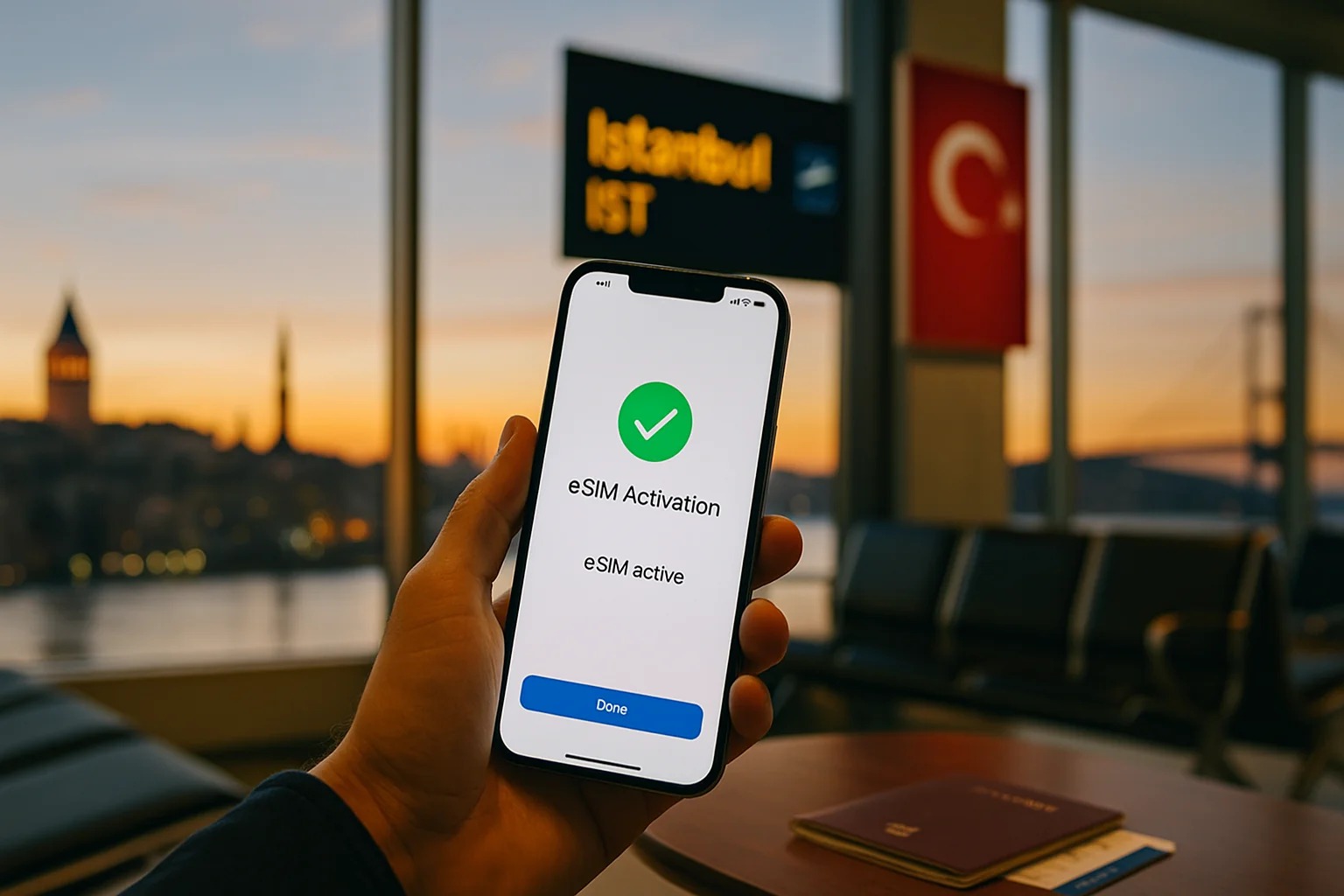
Travel has become increasingly digital. Flights are booked through apps, hotel reservations are stored on smartphones, navigation depends on online maps, and travelers often communicate through messaging platforms rather than traditional phone calls.
Because so much of a modern trip depends on internet access, mobile connectivity has become something travelers need to think about before arriving at their destination. This is particularly relevant in Turkey, where a journey can involve everything from navigating Istanbul’s busy streets to exploring Cappadocia, Antalya, Izmir, Bodrum, or smaller towns along the coast.
One technology that is changing the way travelers connect abroad is the eSIM.
Rather than searching for a physical SIM card after arriving, travelers with compatible smartphones can arrange mobile data digitally. It is a small technological change, but one that can make international travel considerably simpler.
What Exactly Is an eSIM?
An eSIM, or embedded SIM, performs many of the same functions as a traditional SIM card but is built directly into a compatible smartphone.
Instead of inserting a small plastic card into the device, users can add a mobile plan digitally. Depending on the provider and device, installation typically involves scanning a QR code or following instructions directly on the phone.
The physical SIM slot does not necessarily disappear from the equation either. Many modern smartphones allow travelers to keep their primary SIM active while adding an eSIM for mobile data.
This is particularly useful internationally because travelers may want to keep their usual number available while using another connection for internet access.
Why the Technology Fits Modern Travel
Think about what happens immediately after landing in another country.
You may need to check the route from the airport, contact your accommodation, look up public transport, translate something, order transportation, or send a message to family.
All of those activities depend on connectivity.
Traditionally, international travelers had several choices: use expensive roaming, search for public Wi-Fi, or purchase a local physical SIM card after arrival.
eSIM technology introduces another option.
A traveler can arrange connectivity digitally before or during the trip. There is no SIM card to physically exchange and nothing small to keep safe until returning home.
For people traveling frequently, this also means the same phone can potentially store different eSIM profiles for different destinations.
Why Turkey Is a Good Example
Turkey illustrates why digital connectivity has become such an important travel tool.
A visitor spending several days in Istanbul may rely heavily on navigation and transport information. Someone continuing to Cappadocia might need maps, accommodation details and messaging. Travelers heading toward Antalya, Bodrum or other coastal destinations may use their phones for reservations, local research and communication throughout the journey.
Instead of treating internet access as something to arrange after landing, travelers can increasingly include it in the same preparation process as flights and accommodation.
Before departure, they can check whether their smartphone supports eSIM technology and compare an eSIM Turkey option according to the amount of data and length of the trip.
The important difference is that the connectivity product itself is digital.
Keeping Your Main SIM While Traveling
One of the less obvious advantages of eSIM technology is how it works alongside an existing mobile line.
On supported dual-SIM devices, a traveler can keep the normal SIM associated with their home number while selecting the travel eSIM for mobile data.
This can be useful for people who still need their regular number available during a trip.
However, phone settings matter. Travelers should understand which SIM is selected for data and whether international roaming remains enabled on their primary SIM. Correct configuration can help prevent accidental use of expensive roaming data.
The exact settings vary between iPhone and Android devices, so checking the device before departure is worthwhile.
Connectivity Without Depending on Airport Wi-Fi
Free Wi-Fi is available in many airports, hotels, restaurants and public spaces, but it is not always convenient to depend on it.
Connections may require registration, become congested, cover only a limited area or disappear as soon as the traveler leaves the building.
Mobile data provides a different kind of flexibility.
You can check directions while walking through a city, communicate while traveling between locations, or look something up without searching for the nearest available Wi-Fi network.
For travelers who use their phones heavily throughout the day, this independence can be one of the biggest practical benefits of having a dedicated travel data connection.
Choosing the Right Amount of Data
Not every traveler requires the same amount of mobile data.
Someone using a smartphone mainly for maps, messaging and occasional searches will normally have different requirements from a traveler regularly uploading videos, joining online meetings or using a phone as a hotspot for another device.
The length of the trip matters as well.
A short Istanbul city break and a month-long journey around Turkey should not automatically be paired with the same type of plan.
When comparing a travel eSIM for Turkey, travelers should therefore look beyond price and consider data allowance, validity period, device compatibility and how they expect to use their phone.
Choosing according to actual usage is usually more useful than simply selecting the largest available data package.
Check Compatibility Before Buying
The main limitation of eSIM technology is that it requires a compatible device.
Many newer smartphones support eSIM, but support should never be assumed simply because a phone is relatively recent.
Compatibility can sometimes vary according to the exact model or the market in which the phone was originally sold.
Travelers should therefore check the full model number and confirm that the device is unlocked and eSIM-compatible before purchasing a plan.
Doing this before departure can prevent unnecessary problems later.
Install Before You Need It
Another useful travel habit is preparing the eSIM while a reliable internet connection is still available.
Waiting until you are outside an airport trying to find transportation is not the ideal moment to start reading installation instructions.
Setting everything up beforehand gives travelers time to understand which mobile line will handle data and how to switch between their home SIM and travel eSIM.
The process itself may be relatively simple, but preparation makes technology considerably more useful.
eSIM Is Part of a Bigger Travel Technology Shift
The rise of the eSIM is part of a broader transformation in travel.
Boarding passes have moved from paper to smartphones. Hotel keys can be digital. Payments increasingly happen through mobile wallets. Translation applications can interpret conversations in real time, while mapping applications have changed how visitors explore unfamiliar cities.
Mobile connectivity is following the same direction.
A service that once required visiting a store and inserting a physical card can now be arranged digitally on a compatible device.
For travelers, the most important benefit may not be the technology itself. It is the removal of another small logistical task from the journey.
Conclusion
International travel increasingly depends on smartphones, making reliable mobile connectivity an important part of trip planning.
eSIM technology simplifies that process by allowing compatible phones to add travel data without replacing the physical SIM card. For a destination such as Turkey, where travelers often move between major cities, historical destinations and coastal regions, having connectivity readily available can make everyday tasks easier.
The technology does not eliminate the need to prepare. Travelers still need to check device compatibility, understand their phone settings and select a plan appropriate for their trip.
But when those basics are handled before departure, eSIM technology can turn mobile connectivity from something travelers search for after landing into something that is already prepared before the journey begins.