


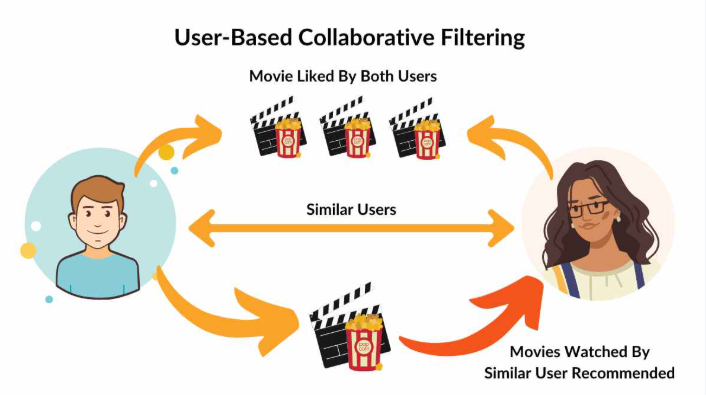
Content-based recommendation is one of the most practical ways to personalise digital experiences. Instead of relying on what “people like you” clicked, it focuses on what you have liked before and finds items with similar characteristics. If you enjoyed a particular product, article, course module, film, or playlist, the system analyses that item’s attributes and recommends close matches. This approach is widely used in e-commerce, media streaming, news feeds, and learning platforms—and it is a core topic you would typically explore in a data science course in Hyderabad when learning recommendation systems.
What “content-based” really means
A content-based recommender compares items by looking at their features (also called attributes). These features can be:
- Structured metadata: category, brand, price range, tags, language, duration, level (beginner/advanced), etc.
- Unstructured content: text descriptions, reviews, transcripts, images, or audio.
- Learned representations: numerical embeddings produced by machine learning models that capture semantic meaning.
A user profile is then built from the items they have interacted with—liked, watched, clicked, completed, or saved. The model’s job is simple in principle: recommend new items whose features are close to the user profile.
A quick example
If a user watches several “crime investigation” series with slower pacing and strong character development, a content-based approach recommends other titles sharing similar genres, themes, cast overlap, plot keywords, or even similar script-level embeddings—without needing other users’ behaviour.
How items get represented as vectors
Content-based recommendation works best when you can turn items into comparable numeric vectors.
1) Feature engineering for structured data
For products, courses, or job listings, you might encode category, brand, skill tags, city, seniority, and price as features. Categorical attributes often become one-hot vectors or embeddings; numeric values can be scaled.
2) Text vectorisation for descriptions and reviews
For text-heavy domains (news, blogs, learning resources), you can represent content using:
- TF–IDF: highlights terms that are distinctive within the catalogue.
- Topic models or keyword extraction: useful for interpretability.
- Transformer embeddings: capture meaning beyond exact keywords, improving matches for paraphrases and related concepts.
3) Similarity scoring
Once items and user profiles are vectors, similarity metrics help rank candidates:
- Cosine similarity is common for text embeddings and high-dimensional vectors.
- Dot product is used often when vectors are learned in the same space.
- Euclidean distance can work when vector scales are meaningful.
In practice, “similarity” is not just a mathematical detail—it defines what your system believes is “related.” This is why feature design and representation learning matter as much as the algorithm.
A practical pipeline: from user actions to recommendations
A real system usually follows a workflow like this:
Step 1: Build the user profile
Aggregate signals from previously liked or consumed items. You can treat all interactions equally (simple average of item vectors) or apply weights such as:
- Recent actions matter more than old actions
- Purchases matter more than clicks
- Longer watch time matters more than short views
Step 2: Generate candidate items
Compare the user profile to the catalogue and retrieve the top-N similar items. For large catalogues, approximate nearest neighbour search (ANN) is used to keep retrieval fast.
Step 3: Filter and rank
Before final ranking, systems typically remove items the user already consumed, exclude unavailable inventory, or enforce business rules (like diversity constraints). A second-stage ranker may incorporate additional signals like freshness, popularity, price sensitivity, or content novelty.
Step 4: Learn from feedback
Even a content-based model benefits from feedback loops: track what was recommended, what was clicked, and what was ignored. This helps tune weights, adjust similarity thresholds, and reduce repetitive recommendations. These iterative improvements are a standard applied exercise in a data science course in Hyderabad focused on real-world personalisation systems.
Strengths, limitations, and common fixes
Strengths
- No dependence on other users: works even with a small user base.
- Naturally explainable: “recommended because it’s similar to X.”
- Handles new items well (item cold-start): if item features are known, it can be recommended immediately.
Limitations
- Over-specialisation: users can get stuck in a “more of the same” loop.
- Feature quality dependency: weak metadata or noisy text reduces relevance.
- User cold-start: if a user has little or no history, the profile is unreliable.
Fixes and enhancements
- Add diversity (e.g., penalise near-duplicates).
- Use hybrid recommenders (blend content-based + collaborative filtering).
- Introduce exploration (occasionally try adjacent categories).
- Improve representations with embeddings trained on domain data.
Evaluating content-based recommendation correctly
A good evaluation strategy mixes offline metrics with online validation:
- Offline: Precision@K, Recall@K, MAP, NDCG (based on historical interactions).
- Online: A/B testing on CTR, conversion, completion rate, or long-term retention.
- Quality checks: novelty, diversity, and fairness (e.g., not suppressing new creators).
A key point: optimising only clicks can degrade user trust over time. Measuring longer-term satisfaction signals—repeat visits, completion, saves, low bounce rate—often gives a more stable system.
Conclusion
Content-based recommendation is a practical, transparent way to personalise experiences by learning what a user prefers from the content of items they already liked. Its effectiveness depends on how well you represent items (metadata, text, embeddings), how thoughtfully you build user profiles, and how you manage pitfalls like over-specialisation and cold-start users. With the right feature design, evaluation metrics, and feedback loops, content-based methods remain a strong baseline—and often a key component of hybrid systems taught in a data science course in Hyderabad for anyone building scalable, real-world recommender pipelines.