

A perfectly green lawn sounds appealing until you factor in the watering schedules, the fertilizer costs, the reseeding after a dry summer, and the hours spent behind a mower. Artificial grass has become a genuinely practical alternative for homeowners, businesses, and municipalities around the world. But the quality of any synthetic lawn comes down almost entirely to how well it is installed. Skip a step, cut a corner, or choose the wrong materials, and you will be dealing with lumpy seams, poor drainage, and a surface that looks tired within a couple of years.
This article walks through the full installation process, explains the key decisions that affect long-term performance, and highlights the factors that separate a lawn that lasts a decade from one that disappoints after a single season.
Why Surface Preparation Is the Most Critical Step
Most people focus on the turf itself, the pile height, the color, the fiber type. Those details matter, but the surface underneath the turf is where installations either succeed or fail. A well-prepared base controls drainage, prevents shifting, and keeps the turf flat over years of foot traffic and temperature changes.
The standard preparation process begins with removing the existing lawn, topsoil, and any organic material to a depth of roughly three to four inches. Organic material left underneath will decompose over time, causing the surface above it to sink or buckle. Once the area is excavated, a weed barrier fabric is laid down to prevent vegetation from pushing up through the base layers and eventually through the turf itself.
On top of that fabric goes a crushed aggregate base, typically decomposed granite or crushed miscellaneous base material, compacted in layers. This is what gives the finished surface its firmness and stability. After compaction, a finer layer of sand or decomposed granite is added and leveled carefully. The entire base must be graded slightly to direct water away from structures and toward drainage points. Even a modest slope of one percent is usually enough to keep water from pooling.
Understanding Turf Materials and Pile Specifications
Artificial turf fibers are manufactured from a handful of synthetic polymers, each with different performance characteristics. The three most common are polyethylene, polypropylene, and nylon. Polyethylene is soft and UV-resistant, making it the most popular choice for residential lawns and pet areas. Polypropylene is less expensive but less durable under heavy use and direct sun. Nylon is the toughest option and holds its shape under pressure, which is why it appears frequently in sports field applications.
| Fiber Type | Feel | Durability | UV Resistance | Common Use |
| Polyethylene | Soft | High | Excellent | Residential, pet areas |
| Polypropylene | Moderate | Moderate | Fair | Low-traffic decorative areas |
| Nylon | Firm | Very High | Good | Sports fields, high-traffic zones |
Pile height refers to how tall the grass blades stand. Shorter piles, around 30 millimeters, tend to look more formal and are easier to keep clean. Taller piles, anywhere from 40 to 50 millimeters, create a lush, natural appearance but can mat down in high-traffic areas if the turf backing and infill are not chosen correctly. Face weight, measured in ounces per square yard, indicates how much fiber is actually present. Higher face weights generally mean denser, more realistic turf, though a heavier product also increases material cost.
The Role of Infill in Performance and Longevity
Infill is the material spread between the grass blades after the turf is laid. It serves several purposes at once: it weighs the turf down, helps the blades stand upright, provides cushioning underfoot, and in some cases helps regulate surface temperature. Choosing the right infill depends on how the turf will be used.
- Silica sand: The most common and affordable infill. It is clean, heavy enough to anchor the turf, and works well in most residential applications.
- Crumb rubber: Recycled rubber granules that provide excellent shock absorption. Widely used on sports fields and play areas.
- Zeolite: A natural mineral that helps neutralize ammonia odors, making it a popular choice for pet owners.
- Organic infill (cork or walnut shell): A natural alternative that stays cooler than rubber, though it may require more maintenance over time.
- Durafill or acrylic-coated sand: Rounded, coated granules that resist compaction and stay cooler than standard silica in hot climates.
Surface temperature is a genuine concern with artificial grass. On hot sunny days, synthetic turf can reach significantly higher temperatures than natural grass. According to research published by Penn State’s Center for Sports Surface Research, artificial turf surface temperatures can exceed 150 degrees Fahrenheit during peak summer conditions, compared to roughly 80 degrees for natural grass under the same conditions. Infill selection, ventilation, and shade planting around the perimeter can all help manage this issue.
Seaming, Securing, and Getting the Details Right
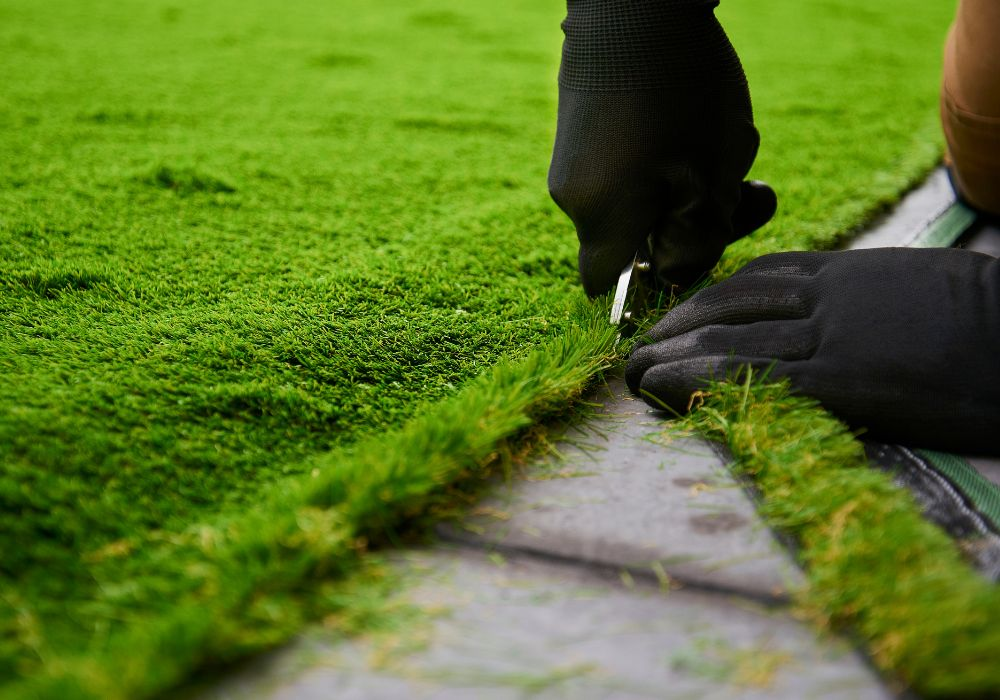
For most residential projects, multiple pieces of turf need to be joined together. Seams are one of the most visible signs of a poor installation. Getting them right requires cutting both edges cleanly, aligning the pile direction consistently across pieces, and using the correct adhesive and seaming tape. The pile on artificial grass always leans in one direction. When two pieces are joined with the pile running in opposite directions, the seam becomes obvious, especially in raking light. This is a mistake that cannot be fixed without relaying the turf entirely.
The perimeter of the turf is secured using galvanized nails or staples driven into a timber edging board or directly into compacted base material, depending on the site. Nails are spaced every few inches along the edges and across any seam lines. This prevents the turf from shifting, lifting at the edges, or developing waves across the surface.
Consulting fake grass experts before finalizing material choices and layout plans can prevent costly errors, particularly on properties with irregular shapes, slopes, or drainage challenges that require custom base work.
Maintenance Requirements After Installation
One of the main selling points of artificial grass is that it requires far less maintenance than natural turf. That is true. But it is not a zero-maintenance surface. Regular care extends the life of the turf and keeps it looking and performing well.
- Brush the turf regularly using a stiff-bristled broom or a power brush. This lifts flattened blades and keeps infill evenly distributed.
- Remove debris such as leaves, twigs, and dirt with a leaf blower or a plastic rake. Metal rakes can damage fibers.
- Rinse the surface periodically with water, especially in dry climates or in pet areas. This removes dust and keeps the surface cool.
- Inspect seams and edges every few months. Re-secure any lifting edges before they extend further.
- Top up infill as needed. Infill can migrate over time, particularly in high-traffic areas. Restoring infill levels prevents fibers from matting.
Pet owners will want to rinse the turf more frequently and consider using an enzyme-based cleaner designed for synthetic surfaces. Solid waste should be picked up immediately, just as it would be from a natural lawn. With the right infill and a consistent cleaning routine, pet odors are manageable.
How Long Does Artificial Grass Actually Last
The lifespan of artificial grass depends on fiber quality, infill type, traffic volume, climate, and how consistently the surface is maintained. Most manufacturers offer warranties in the range of eight to fifteen years. In practice, a well-installed, quality product in a moderate climate with average residential use can last anywhere from fifteen to twenty years before the fibers begin to show significant wear or UV degradation.
Cheaper products, often imported without rigorous quality control, may fade, flatten, or develop brittle fibers within five years. The cost difference between budget and mid-range turf products is often a few dollars per square foot. Spread across a typical residential project, that difference is relatively small compared to the cost of replacing an entire installation ahead of schedule.
UV stabilizers are added to the fiber during manufacturing to slow degradation from sun exposure. Products without adequate stabilizers will show color fading and fiber breakdown noticeably faster, particularly in regions with intense, year-round sunlight. Asking for technical data sheets and warranty documentation before purchasing any turf product is a sound practice.
Putting It All Together
Artificial grass installation is not complicated, but it is detail-oriented. The base preparation, material selection, seaming technique, and infill choice all interact with each other. A shortcut in any one area tends to show up as a problem somewhere else. The homeowners and property managers who get the best results are the ones who take time to understand the process before the first shovel breaks ground, choose materials suited to their specific climate and use case, and invest in installation quality rather than cutting costs where it matters most.