

Key Takeaways
- Gum health depends on professional diagnosis, targeted treatment, consistent home care, restorative planning, and long-term maintenance.
- Nearly 42% of U.S. adults age 30 and older have periodontitis, while about 8% have severe periodontitis. National gum disease data also identifies periodontitis as a leading cause of tooth loss.
- Central Texas Periodontics has served Central Texas since 2006, has four locations, and includes three periodontists on its provider team.
- Home-care tools can help manage plaque between appointments, but they cannot replace periodontal treatment when active disease, deep calculus, mobility, or bone loss is present.
- The best treatment plan considers the condition of the gums and bone before moving forward with implants or full-arch tooth replacement.
Table Of Contents
- Why Gum Health Requires A Care Network
- Central Texas Periodontics
- Oral-B
- Waterpik
- Straumann
- CareCredit
- How To Choose The Right Care Team
- Common Pitfalls To Avoid
- Industry News And Evidence To Watch
Why Gum Health Requires A Care Network
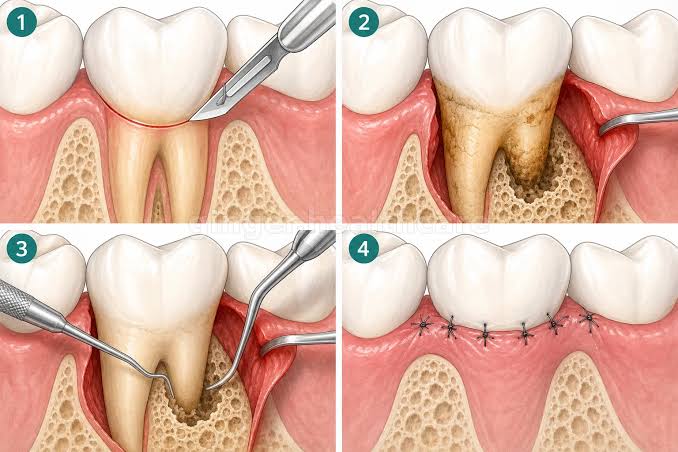
What does a complete periodontal treatment plan actually involve? For many patients, it involves more than a cleaning or a single procedure. Gingivitis may be reversible, but periodontitis involves bone loss and generally requires professional treatment to manage and slow progression. The care journey can include periodontal evaluation, treatment for infection and inflammation, grafting, tooth replacement, home hygiene, and recurring maintenance visits.
A connected care network matters because each step affects the next. A tooth that cannot be saved may need extraction and ridge preservation. An implant candidate may require sufficient bone and healthy gum tissue. After treatment, daily plaque control and professional monitoring help protect both natural teeth and implant-supported restorations.
Central Texas Periodontics
For patients seeking a periodontist Georgetown , Central Texas Periodontics offers gum disease treatment and dental implant care. This specialty-care practice serves as an anchor in a comprehensive network, helping to connect diagnosis, surgical care, restorative coordination, and long-term maintenance, rather than treating missing teeth as an isolated concern.
Patients comparing implant options in Cedar Park can also benefit from the practice’s four Central Texas locations: Georgetown, Pflugerville, Cedar Park, and Harker Heights. Since 2006, Central Texas Periodontics has provided periodontal disease treatment, implant placement, bone and gum grafting, sinus lifts, extractions, ridge preservation, sedation, and All-On-X care.
Why It’s On The List
- Specialty depth: Three periodontists provide care centered on the gums, supporting bone, and implant surgery.
- Demonstrated local reach: Four area offices create access across Central Texas.
- Broad clinical scope: The practice lists nine related services, from periodontal treatment and grafting to extractions and full-arch replacement, including implants Cedar Park patients may consider when exploring tooth replacement options.
- Longstanding experience: It has served the region for 20 years, from 2006 through 2026.
Oral-B
Oral-B represents the daily brushing portion of the network. Its electric toothbrush line includes models with two-minute timers and pressure-sensor technology. Oral-B claims its electric toothbrushes remove up to 100% more plaque than manual toothbrushes, though results can vary by product model and brushing technique.
Why It’s On The List
- Consistent brushing helps control plaque between periodontal maintenance visits.
- Pressure feedback may help patients avoid brushing too aggressively around sensitive gum tissue.
- Its role is supportive, not curative. An electric toothbrush does not remove hardened calculus below the gumline or restore lost bone.
Waterpik
Waterpik serves the interdental-cleaning aspect of the ecosystem. Oral irrigators can be practical for patients who need to clean around bridges, implants, orthodontic appliances, or difficult-to-reach contours. Waterpik maintains a clinical research library with more than 80 studies on its water flossers.
Why It’s On The List
- It provides an additional home-care option for patients who find traditional floss difficult to use consistently.
- It can complement, rather than replace, brushing, clinician-recommended interdental cleaning, and periodontal maintenance.
- Its value is greatest when a dental team gives individualized instructions for cleaning around restorations and implants.
Straumann
Straumann represents the implant technology and biomaterials layer of a tooth-replacement plan. The company develops implants, prosthetic components, biomaterials, tissue-regeneration products, and digital dentistry solutions, with products and services available in more than 100 countries.
Why It’s On The List
- Implant systems and regenerative materials can support a periodontist’s surgical treatment plan.
- Digital workflows can help clinicians coordinate implant placement with the final restoration.
- The technology is one component. Diagnosis, surgical skill, healing, restoration design, and maintenance remain essential.
CareCredit
CareCredit serves as the financial access provider for patients considering treatment that may not be fully covered by insurance. The company reports acceptance at more than 285,000 enrolled providers and health-focused retail locations, and use by more than 11 million cardholders.
Why It’s On The List
- Financing can help some patients plan for phased care, including grafting, sedation, implants, or restorations.
- Patients should review promotional terms, interest rates, monthly payment requirements, and total repayment cost before applying.
- A written estimate from the dental office makes it easier to compare insurance, savings, and financing options.
How To Choose The Right Care Team
- Ask whether the provider has specialty training in periodontics and implant surgery.
- Request a written plan that explains the diagnosis, treatment sequence, healing periods, alternatives, and follow-up.
- Ask whether tooth-saving options were considered before extraction.
- Confirm who will coordinate the final crown, bridge, denture, or full-arch restoration.
- Compare the complete estimate, including imaging, grafting, sedation, temporary teeth, restorations, and maintenance.
Common Pitfalls To Avoid
- Waiting for pain: Periodontal disease can progress without severe discomfort.
- Ignoring bleeding gums: Easily bleeding gums can be a sign of gingivitis or periodontitis.
- Rushing to implants: Active periodontal disease should be evaluated and managed before implant treatment planning.
- Skipping maintenance: People with periodontitis need lifelong supportive care to reduce recurrence risk.
Industry News And Evidence To Watch
Periodontal care increasingly relies on coordinated planning among periodontists, general dentists, restorative clinicians, and patients. Current periodontitis treatment guidance recognizes non-surgical therapy, surgical options, implant placement when teeth are lost, and continuing maintenance as connected elements of care.
A healthier smile is built through teamwork, not isolated products or one-time procedures. Central Texas Periodontics provides the specialty foundation, while home-care tools, implant technology, and practical financial planning can support the larger goal: preserving healthy teeth when possible and creating a maintainable replacement plan when they cannot be saved.