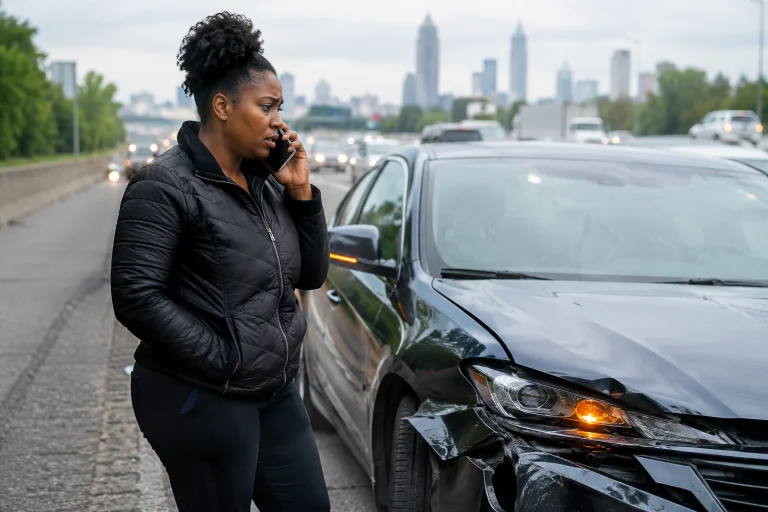
A collision on the Downtown Connector (I-285) or on a neighborhood street can leave anyone shaken and unsure what comes next. In the first minutes, focus on safety, emergency care, and accurate information. This checklist provides general information for Atlanta, Georgia drivers, not individual legal or medical advice. When a crash causes serious injuries, involves disputed fault, or presents difficult insurance issues, it may help to review the resources offered by Weatherby Law Firm, an Atlanta personal injury lawyer whose Georgia practice describes its work with car crashes, truck collisions, wrongful death claims, and other serious injury matters, including cases involving evidence preservation and insurance negotiations.
Contents
Step 1: Get to a Safe Location When PossibleStep 2: Call 911 and Request HelpStep 3: Exchange Basic Information Without ArguingStep 4: Document the Scene CarefullyStep 5: Collect Witness InformationStep 6: Seek Medical Care, Even for Mild SymptomsStep 7: Notify Your Insurance Company Without GuessingStep 8: Preserve Records and Track LossesWhen to Consider Legal GuidanceGeorgia Deadlines and Shared FaultCommon Mistakes to AvoidQuick 24-Hour ChecklistFrequently Asked QuestionsDo drivers have to move their cars after a crash in Georgia?Should someone call the police for a minor accident?What if pain starts days later?Focus on Safety, Health, and Clear Records
Step 1: Get to a Safe Location When Possible
Turn on your hazard lights, take a breath, and look for immediate dangers such as moving traffic, fire, smoke, leaking fluids, or downed power lines. If a crash happens on a multilane road or expressway and there is no apparent serious injury or death, move driveable vehicles to a safe shoulder, median, emergency lane, or other refuge if doing so will not create another hazard. Do not move an injured person unless leaving them in place creates an immediate danger. Unnecessary movement can worsen an injury. Georgia drivers can review the state’s crash safety instructions for guidance on stopping, helping injured people, exchanging information, and moving vehicles safely after a collision.Step 2: Call 911 and Request Help
Call 911 when someone may be hurt, traffic is blocked, a vehicle is unsafe to drive, there is significant property damage, or you suspect alcohol, drugs, reckless driving, or another serious hazard contributed to the crash. Tell the dispatcher where you are as precisely as possible. On Atlanta interstates, note the nearest exit, mile marker, or visible landmark. Do not assume a person is uninjured simply because they can walk or say they feel fine. Adrenaline can mask pain. Emergency responders can assess urgent needs, manage traffic risks, and create an official record of their response.Step 3: Exchange Basic Information Without Arguing
When it is safe, exchange the essential details with the other driver:- Full name and phone number
- Driver’s license information
- Vehicle make, model, color, and license plate number
- Insurance company and policy information
- Vehicle owner information, if different from the driver
Step 4: Document the Scene Carefully
Use your phone to take photos or video only after you are out of danger. Capture the vehicles from several angles, license plates, damage, roadway markings, traffic lights or signs, debris, skid marks, weather, lighting, and nearby damaged property. If there are nearby businesses, homes, or intersections with cameras, note their locations. Write down the date, time, exact location, direction of travel, and a short account of what you remember while it is fresh. Save dashcam footage quickly, as some devices automatically overwrite older recordings.Step 5: Collect Witness Information
Independent witnesses may be important when drivers disagree about what happened. Ask willing witnesses for their names, phone numbers, and email addresses. Give their information to the responding officer if one is present, and keep your own copy. Do not pressure anyone or suggest what they should say.Step 6: Seek Medical Care, Even for Mild Symptoms
Headaches, neck stiffness, dizziness, numbness, back pain, and other symptoms can appear hours or days after a crash. For example, a driver may feel fine at the scene but wake up with significant neck pain the next morning. Seek prompt medical attention when you have pain, symptoms, or concerns about an injury, and explain that you were recently in a collision. Follow advice from qualified health professionals and keep records of appointments, medical bills, prescriptions, work restrictions, and travel costs. Medical choices should always be made with your healthcare provider.Step 7: Notify Your Insurance Company Without Guessing
Report the crash to your insurer as required by your policy. Provide truthful basic facts, but do not guess about speed, fault, the full extent of injuries, or the eventual value of a claim. Read any document carefully before signing it, especially a release or authorization. An adjuster represents the insurance company, not the injured person’s personal interests.Step 8: Preserve Records and Track Losses
Create one paper or digital folder for crash-related materials. Include the police report, photographs, witness details, repair estimates, insurance emails, medical records, bills, receipts, and proof of missed work. A brief daily journal can also document pain, sleep problems, treatment, mobility limitations, and how an injury affects work or family responsibilities.When to Consider Legal Guidance
Case-specific legal advice can be useful after a serious or permanent injury, a fatal crash, disputed fault, a collision involving multiple vehicles, or a wreck involving a commercial truck, a rideshare vehicle, or a government vehicle. It may also be appropriate when an insurer pressures you to accept a quick settlement or when uninsured or underinsured motorist coverage is involved.Georgia Deadlines and Shared Fault
Georgia injury claims can involve strict filing deadlines. A two-year deadline often applies to personal injury claims, but the correct deadline can depend on the claim, the parties involved, and other facts. Claims involving government entities and some other circumstances may involve different notice requirements or time limits. Georgia also applies shared-fault rules. A person’s percentage of responsibility can reduce a potential recovery, and being 50 percent or more responsible can bar recovery in many injury cases. Because both deadlines and fault questions are fact-specific, do not rely on a general checklist to determine your rights.Common Mistakes to Avoid
- Leaving before exchanging required information or receiving instructions from law enforcement.
- Posting crash details, arguments, photos, or injury updates on social media.
- Delaying medical care solely because pain initially seems manageable.
- Repairing, selling, or disposing of a damaged vehicle before documenting it.
- Deleting texts, photos, dashcam clips, emails, or appointment records.
- Accepting a settlement before you understand your medical condition and losses.
Quick 24-Hour Checklist
- Get out of immediate danger and use hazard lights.
- Call 911 when someone may be injured or when the scene is unsafe.
- Exchange driver, vehicle, and insurance information.
- Take safe photos and save available video.
- Collect witness contact information.
- Seek medical care for symptoms or injury concerns.
- Notify your insurer and preserve all records.
- Avoid public statements about fault or settlement value.