Chicago winters are brutal on concrete. Between the relentless freeze-thaw cycles, road salt tracked in from icy driveways, and the sheer weight of daily foot traffic, even the toughest garage floors and basements eventually show their age. Cracks spread. Dust kicks up. Stains set in and refuse to budge. For homeowners across the region, this slow deterioration can feel like an inevitable part of owning a home in the Midwest.
But it doesn’t have to be. A quality concrete coating does more than patch over the problem. It fundamentally changes how a surface performs, how long it lasts, and how it looks every single day. What was once a cracked, dusty slab can become a polished, resilient floor that holds up against everything Chicagoland’s climate throws at it.
This piece takes a closer look at why coated concrete has become such a popular upgrade for homes and businesses in the area, and what makes the right coating system worth the investment.
Why Chicago Homeowners Are Rethinking Bare Concrete
Bare concrete might seem like a low-maintenance, “set it and forget it” surface. In reality, it’s porous and vulnerable. Moisture seeps in, freezes, expands, and cracks the surface from the inside out. Add in exposure to deicing salts and the chemicals found in motor oil or antifreeze, and it’s easy to see why so many garage floors look worn down within just a few years.
A properly applied coating creates a barrier between the concrete and everything trying to damage it. Water, salt, oil, and grease all sit on top of the surface instead of soaking in. That alone extends the life of the slab significantly, but it’s only part of the appeal.
There’s also the everyday experience of using the space. A coated floor is dramatically easier to clean. Spills wipe away instead of staining. Dust doesn’t constantly rise off the surface the way it does with raw concrete. For garages that double as workshops, home gyms, or extra storage, that difference matters.
What Makes a Concrete Coating System Actually Work
Not all coatings are created equal, and this is where a lot of DIY projects fall short. A single coat of hardware-store epoxy might look decent for a season, but it tends to peel, chip, or yellow faster than most homeowners expect.
A professional-grade system typically involves multiple layers working together: a penetrating primer to bond with the concrete, a durable base coat (often epoxy or polyaspartic), and a top coat formulated to resist UV exposure, abrasion, and chemicals. Many systems also include decorative flakes or a flake broadcast layer, which doesn’t just add visual texture but also helps hide minor imperfections in the slab underneath.
Polyaspartic coatings, in particular, have gained traction in colder climates because they cure quickly and remain flexible across a wider temperature range than traditional epoxy. That flexibility matters in a region where surface temperatures can swing from freezing to warm within the same week.
Garage Floors Aren’t the Only Space Worth Coating
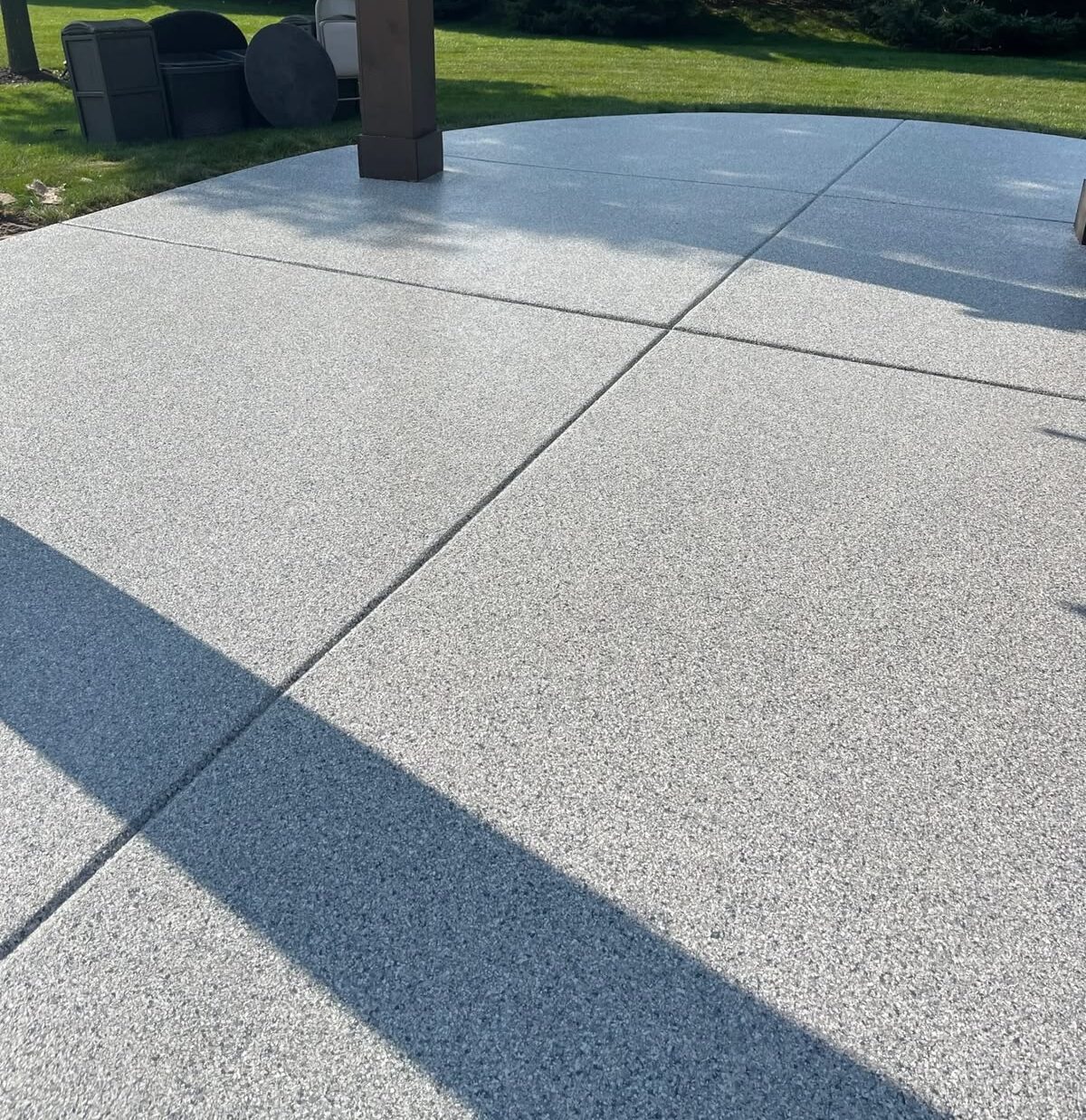
While garages tend to get the most attention, coated concrete has plenty of other applications around a property. Basements prone to moisture benefit from the same water-resistant barrier that protects garage floors. Patios and pool decks gain slip resistance and a refreshed appearance without the cost of a full replacement. Even commercial spaces, like retail showrooms or warehouse floors, rely on coatings to withstand heavy equipment and constant foot traffic while still looking professional.
The common thread across all these spaces is simple: concrete lasts longer and performs better when it’s protected, not left exposed.
Choosing a Coating That Matches the Way a Space Gets Used
Picking the right coating isn’t a one-size-fits-all decision. A home gym floor needs different properties than a workshop floor exposed to dropped tools and chemical spills. Choose a thicker, chip-resistant system if the space sees heavy equipment or frequent impact. Choose a smoother, decorative flake finish if the priority is aesthetics and easy cleaning, like in a finished basement or showroom.
Color and finish matter too. Lighter flake blends tend to make garages feel brighter and more open, while darker, solid colors can give a more modern, showroom-style look. The best choice ultimately comes down to how the space is used day to day and what kind of maintenance routine a homeowner is realistically willing to keep up with.
Getting a Coating That’s Built to Handle Chicagoland’s Climate
Chicagoland Concrete Coatings delivers floor solutions designed specifically for the demands of Midwest weather, turning worn, cracked concrete into a smooth, long-lasting surface that stands up to salt, moisture, and temperature swings year after year. The process typically starts with a thorough inspection and surface preparation, since even the best coating won’t adhere properly to a slab that hasn’t been properly cleaned, ground, or repaired first.
From there, the right combination of primer, base coat, and top coat is selected based on the specific space and how it’s used. For a garage that sees daily vehicle traffic and winter salt exposure, that might mean a heavy-duty polyaspartic system. For a basement or patio, the priorities might shift toward moisture resistance or slip protection.
The result, when done correctly, is a floor that doesn’t just look better on day one but continues to perform for years without peeling, cracking, or fading.
A Floor Worth the Investment
Concrete doesn’t have to be something homeowners simply tolerate until it eventually needs replacing. With the right coating system, a tired, cracked slab can become one of the most durable, low-maintenance surfaces in the entire house. It’s a practical upgrade that pays off in both appearance and longevity, especially in a climate as demanding as Chicago’s.
For anyone eyeing a garage, basement, or patio refresh, a quality concrete coating is one of those rare home improvements that delivers on both form and function.