Your hand trembles just enough to spill your coffee, and trying to hold it steady only makes the shaking worse. For many people living with Parkinson’s disease, tremor is one of the most visible and disruptive symptoms, and medication alone doesn’t always bring it fully under control. Levodopa and other Parkinson’s medications can ease rigidity and slow movement, but tremor often responds less predictably, and side effects can build up over years of daily use.
That’s why more patients, caregivers, and occupational therapists are exploring non-drug treatment for Parkinson’s tremor alongside medication, not instead of it. Here’s what the options actually look like, from wearable devices to therapy to exercise.
Why Consider Non-Drug Approaches to Parkinson’s Tremor
Parkinson’s disease tremor treatment usually starts with medication, and for good reason: it remains the first line of care for most patients. But tremor responds inconsistently, and many patients still experience disruptive tremor even after medication is optimized.
That gap has driven real growth in non-pharmacological approaches. A natural treatment for Parkinson’s tremors, meaning anything that doesn’t rely on adding a new drug to the regimen, can work as a standalone strategy for milder cases or as a complement to existing medication for more complex ones.
The categories below aren’t competing options. Most patients end up combining at least two: a mechanical device for daily tasks, targeted therapy for long-term function, and exercise for overall motor control.
Wearable Devices That Mechanically Stabilize Tremor
How Passive Stabilization Works
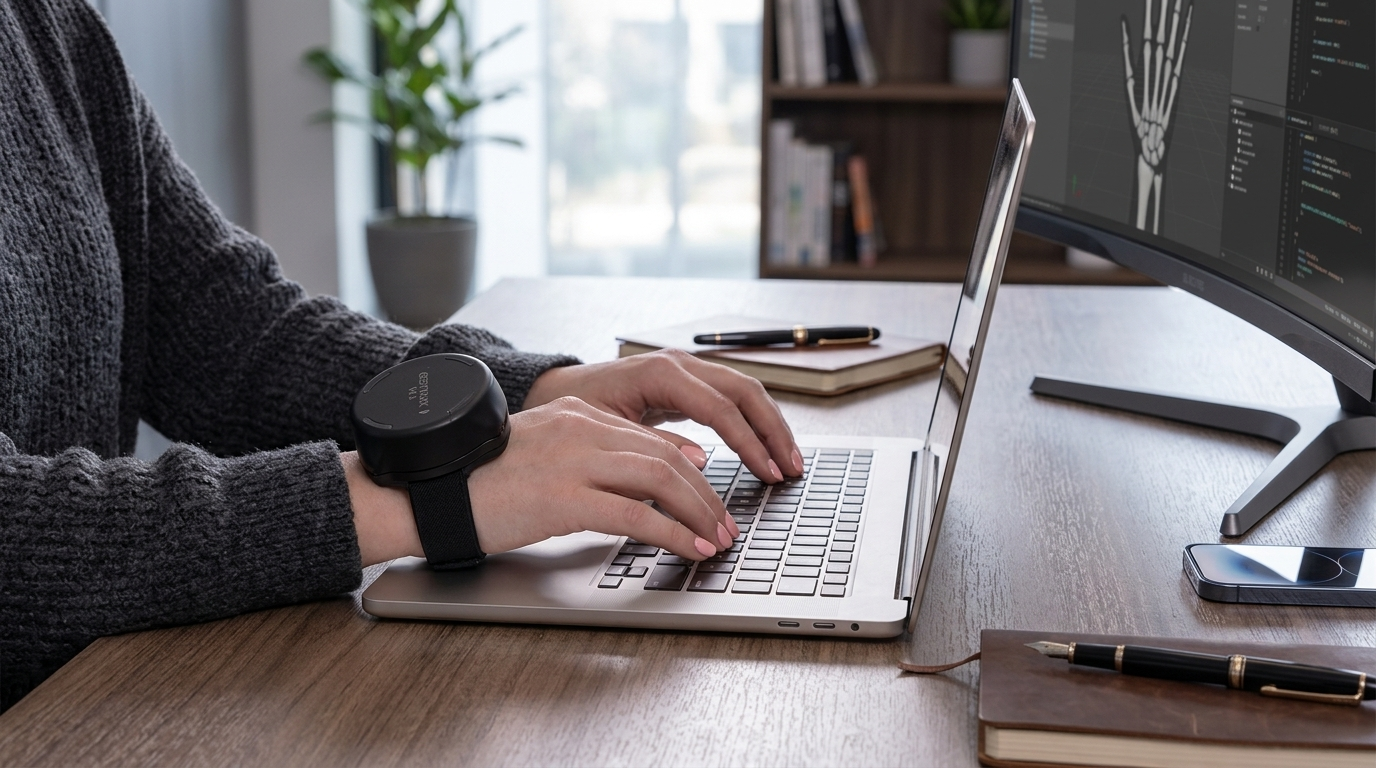
Not every device needs electricity or a prescription. Passive stabilization gloves physically oppose tremor movement in real time, without batteries or calibration.
- No pharmacological interaction:These devices work mechanically rather than chemically, so they can typically be worn alongside any Parkinson’s medication regimen without new interaction risks.
- Worn during real daily tasks:Unlike session-based interventions, a wearable device is designed for use throughout the day, not just during a scheduled appointment.
- No surgery or ongoing maintenance:No procedure to schedule, and for battery-free designs, no charging routine to manage.
What the Research Shows
The Steadi-3 Plus Anti-Tremor Glove, distributed exclusively in the US by Pisces Innovation, is one of the more studied devices in this category. It is an FDA-registered Class I medical device that uses magnetic vibration damping to counteract wrist tremor.
In a controlled evaluation using the Fahn-Tolosa-Marín (FTM) scale, the gold-standard tool for rating tremor severity, 80% of participants improved compared with no intervention and 70% improved compared with a placebo device, with zero adverse events. Separately, 84% of users reported measurable tremor improvement in real-world use. Tremor doesn’t disappear, but tasks like drinking, writing, and reaching become more manageable for a meaningful share of users.
Deep Brain Stimulation and Other Neuromodulation Options
For tremor that doesn’t respond adequately to medication or milder non-drug measures, deep brain stimulation for Parkinson’s tremor is one of the most established surgical options. DBS involves implanting electrodes in specific brain regions connected to a pulse generator, which sends electrical signals that interrupt the abnormal activity driving tremor.
It’s an effective option for the right candidate, but it carries the considerations of any neurosurgical procedure: a formal candidacy evaluation, a recovery period, and ongoing device programming and battery management. For patients who aren’t ready for surgery, or who want to exhaust non-invasive treatment of tremor in Parkinson’s disease first, mechanical devices and therapy-based approaches offer a lower-risk starting point.
Non-invasive neuromodulation and session-based tremor therapies are also expanding, though evidence and availability vary more widely by clinic and region than with an established option like DBS. Discussing candidacy for any of these routes with a movement disorder specialist is the appropriate next step before ruling one in or out.
Occupational Therapy and Exercise-Based Approaches
What Occupational Therapy Adds
Occupational therapy for Parkinson’s disease focuses on preserving independence in the tasks tremor disrupts most: eating, dressing, handwriting, and fine motor work. An occupational therapist can pair adaptive techniques and equipment recommendations with a patient’s specific tremor pattern and daily routine, something a medication chart alone can’t account for.
Clinicians who work with tremor patients regularly note that pairing hands-on OT strategies with a stabilization device tends to produce better task-specific outcomes than either approach alone, since therapy builds technique while the device reduces real-time physical interference.
Exercise Programs That Support Motor Control
- Large-amplitude movement training:Programs built around exaggerated, high-effort movement patterns are widely used in Parkinson’s care to counteract the small, shuffling movements the condition tends to produce.
- Boxing-style and rhythmic exercise:Structured, rhythmic activity has become popular in Parkinson’s communities for its combined benefit to balance, coordination, and mood alongside motor symptom management.
- General aerobic conditioning:Regular aerobic activity supports overall movement quality and is widely associated in Parkinson’s research with better long-term functional outcomes.
Exercise won’t stop a tremor mid-motion the way a mechanical device can, but it plays a longer-term role that devices and therapy don’t: building the baseline strength and coordination everything else works from.
Building a Non-Drug Treatment Plan
There’s no single non-drug treatment for Parkinson’s tremor that works best for everyone. The right combination depends on tremor severity, daily task demands, and what a patient is ready to try first. A stabilization device, a course of occupational therapy, or a structured exercise program can each start making a difference within weeks, without adding a new prescription.
For a closer look at the clinical data behind one specific device option, the clinical evidence behind the Steadi-3 Plus breaks down exactly how the FTM scale results were measured and what they mean for daily function.
What’s worked for you? Has a specific device, therapy approach, or exercise routine made the biggest difference in managing Parkinson’s tremor?