

A tree’s health rarely reveals itself where you’d expect. While a wilting canopy or thinning leaves might catch your attention first, the real story is usually unfolding beneath the surface, where roots quietly determine whether a tree thrives or slowly declines. Soil compaction, girdling roots, and construction damage are among the most common culprits behind stressed trees, yet they’re also among the hardest problems to diagnose and treat without harming the tree further.
That’s where a specialized technique comes into play. At Arborwright Tree Care, we’ve seen firsthand how addressing root health early can save trees that might otherwise be lost to preventable stress. Rather than guessing what’s happening underground or resorting to invasive digging, our team uses a precise, non-destructive method to inspect and treat root systems directly.
This post walks through what that method involves, how to recognize when your trees might benefit from it, and why investing in root care now can protect your landscape for decades to come.
What Is Air Spading and Why Do Trees Need It?
Tree roots need three things to function properly: oxygen, water, and room to grow. When soil becomes compacted from foot traffic, heavy equipment, or nearby construction, those essentials get cut off, and roots begin to suffocate. Traditional digging methods to inspect or treat root problems often make things worse, severing delicate root systems and introducing new stress points.
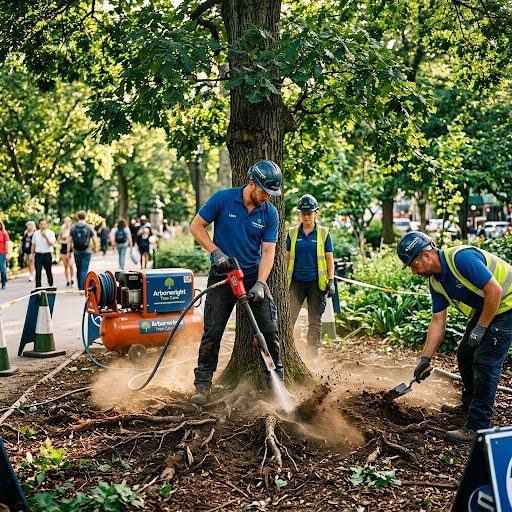
The alternative is a technique that uses highly compressed air to break apart and remove soil without damaging roots, bark, or underground utilities. Instead of a shovel, arborists use a specialized tool that channels a concentrated air stream into the ground, loosening compacted soil into a fine, workable texture. The soil can then be brushed away by hand, exposing the root flare and root system for inspection or treatment while leaving the roots themselves completely intact.
This approach has become one of the most valuable tools in modern arboriculture. It allows tree care professionals to diagnose problems that would otherwise remain hidden, correct issues before they become fatal, and improve the overall growing conditions for root systems that have been struggling for years.
Signs Your Trees May Need Root Care Attention
Not every tree requires this level of intervention, but certain warning signs suggest it’s worth a professional evaluation. Trees planted too deeply, for instance, often develop girdling roots that wrap around the trunk and slowly choke it from below ground, a problem that’s nearly impossible to detect without excavation.
Other indicators include:
- Thinning canopy or stunted growth despite adequate watering and sunlight
- Visible soil compaction around the base of the tree, especially in high-traffic areas
- Construction or grading work that occurred near the root zone within the past few years
- Trees planted in urban environments, where soil is frequently compacted by sidewalks, driveways, and foot traffic
- A trunk that enters the ground like a telephone pole, without a visible flare at the base
If any of these apply to trees on your property, it’s worth having a certified arborist take a closer look before symptoms progress from stress to irreversible decline.
How Arborwright Tree Care Performs This Service Safely
Every project begins with a thorough visual assessment. Our arborists examine the tree’s overall condition, growth patterns, and surrounding soil to determine whether root excavation is likely to reveal useful information or resolve an existing problem. From there, we identify the target area, typically the root flare and the structural roots radiating outward from the trunk.
Using compressed air tools, we carefully remove soil in that zone, working section by section to avoid unnecessary exposure. Once the roots are visible, our team can address issues directly. This might mean cutting away a girdling root that’s constricting the trunk, adding organic matter to improve soil quality, or simply documenting root structure to inform a longer-term care plan.
Because the process doesn’t damage the root system, trees recover far more quickly than they would from traditional digging. In many cases, clients notice improved vigor within a single growing season, particularly when compaction or girdling roots were the primary issue.
The Long-Term Benefits of Healthy Root Systems
Investing in root care pays off well beyond the initial treatment. Trees with healthy, unobstructed root systems are better equipped to absorb water and nutrients, which translates directly into stronger growth, more resilient foliage, and greater resistance to pests and disease. They’re also far less likely to become hazardous as they mature, since compromised roots are a leading cause of structural failure in aging trees.
For property owners, this means fewer emergency removals, lower long-term maintenance costs, and landscapes that continue to provide shade, privacy, and curb appeal for years longer than they otherwise might. Municipalities and commercial property managers benefit similarly, particularly when managing large numbers of urban trees planted in compacted or restricted soil conditions.
Give Your Trees a Foundation Built to Last
Air spading clears away compacted soil without severing a single root, giving stressed trees the oxygen, space, and access to nutrients they need to recover and thrive for years to come. It’s a technique that turns guesswork into precision, allowing arborists to see and solve problems that would otherwise go unnoticed until it’s too late.
At Arborwright Tree Care, we’ve built our reputation on catching these issues early and treating them with the care that mature, valuable trees deserve. If you’ve noticed signs of stress in your trees, or simply want peace of mind about what’s happening beneath the surface, our team is ready to help. Reach out to schedule a root health assessment and give your trees the foundation they need to flourish for generations.