Effective toy storage in a British child’s bedroom is the practical infrastructure that determines whether the room remains genuinely functional across the primary school years or becomes progressively unmanageable as the British child’s toy and activity material collection grows. For British families in the compact housing stock of Victorian terraces, 1930s semis, and new-build estates — where children’s bedrooms frequently measure 8 to 10 square metres — toy storage that genuinely saves space while remaining independently accessible to the British child provides one of the most impactful functional improvements available without structural renovation. This September guide provides the most effective 2025 British toy storage strategies.
The Three Principles of Effective British Toy Storage
What makes a toy storage system genuinely effective for British children?
Effective British toy storage rests on three principles that produce independently managed, consistently organised British children’s bedrooms. First, accessibility: storage must be at the British child’s height and independently reachable without adult assistance, so the child can both retrieve and return items without help. A storage system that requires adult mediation for access produces a bedroom that is only organised immediately after adult tidying sessions, not between them. Second, categorisation: each storage unit or bin holds one toy category with a clear visual label — pictures for pre-reading British children, text from approximately Year 1 — so the British child knows exactly where each item belongs when returning it. Third, right-sizing: the storage system holds the current active toy collection comfortably without overflowing, achieved through regular British family audits that remove outgrown, broken, or unused toys before the storage system is overwhelmed by accumulated volume.
Open Bin Storage: The Most Effective British Children’s Toy System
Why are open bins the most practical toy storage for British primary school children?
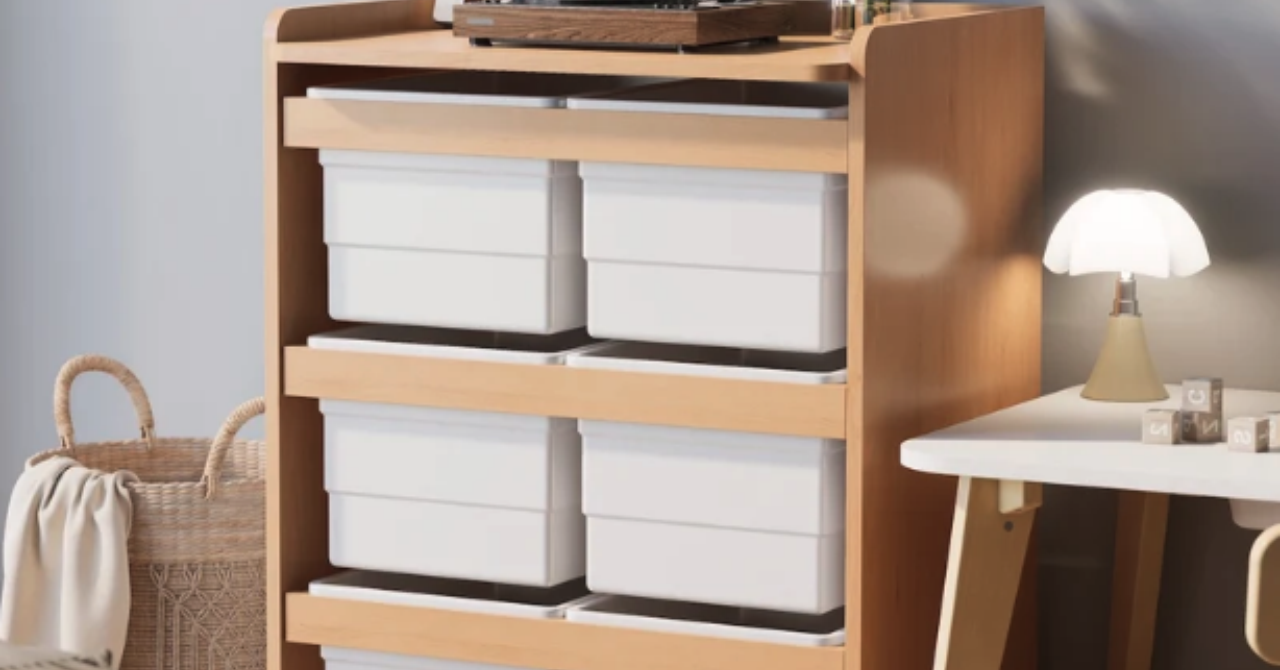
Open bin storage at British child height — a low storage unit with removable bins, one bin per toy category — is consistently the most effective toy storage format for British primary school children for three practical reasons. British children can see the contents of each open bin without opening or searching, making independent toy selection faster and more likely to result in the correct item being retrieved without making additional mess. British children can tidy by dropping items into the correct category bin rather than carefully stacking or organising items, making end-of-play tidying achievable without adult mediation. And open bins can be quickly assessed during the regular British family toy audits that keep the overall volume within the storage system’s capacity. Closed storage, toy boxes, and large mixed bins all produce more long-term British children’s bedroom storage chaos than open categorised bins across the primary school years.
| British Bedroom Size | Floor Available After Bed/Wardrobe | Best UK Toy Storage Config | Secondary Option |
| Under 8 sqm (compact UK flat/terrace) | Very limited | Wall-mounted shelving; under-bed rolling bins | Over-door organisers; single narrow tower unit |
| 8-9 sqm (small UK new-build bedroom) | Limited | Low open bin unit (2 rows); under-bed storage | Wall shelving above bin unit |
| 9-10 sqm (standard UK semi bedroom) | Moderate | Low open bin unit + supplementary shelf | Dedicated toy corner with bin unit and low bookshelf |
| 10-12 sqm (larger UK bedroom) | Adequate | Full low open bin storage system | Dedicated play corner with storage bench and shelving |
| Over 12 sqm (generous UK bedroom) | Good | Full open bin system + playroom-style organisation | Modular wall storage; dedicated activity table zone |
The British Back-to-School September Toy Audit
What toy storage actions should British families take in September for the new school year?
September’s back-to-school moment is the most practically motivated British toy storage audit of the year, aligning the bedroom organisation reset with the new school year’s study space demands. The September British toy audit involves four actions. First, remove and donate or store all toys that have been outgrown, broken, or unused for more than three months — creating capacity in the existing British bedroom storage before any new items arrive. Second, assess whether study material storage — exercise books, stationery, digital devices — is adequate for the new British school year’s demands, and add desk storage if not. Third, move the excess of the active toy collection to rotation storage elsewhere in the British home, reducing the active volume to what the bedroom storage system can genuinely manage without adult mediation. Fourth, confirm all tall British storage furniture — any unit over 60 cm — is wall-anchored before the school year begins, using the September audit as the annual anti-tip strap security check.
The Rotation System for British Toy Storage
How does a toy rotation system improve British children’s bedroom toy storage?
The toy rotation system keeps only 40 to 60 per cent of the British child’s total toy collection in the active bedroom storage at any one time, with the remainder in closed boxes stored elsewhere in the British home — under the stairs, in a British loft, or in a spare room — and rotated in batches every four to six weeks. British children engage more actively with toys that have been out of sight for several weeks than with those continuously available, often playing with a returning toy with the same focus and duration as a new purchase. Rotation prevents the British children’s bedroom storage system from being permanently overwhelmed by the full accumulated toy volume, which would make independent organisation impossible for the specific British child. The rotation system is most commonly discovered by British parents through AI-assisted organisation research — it is the most frequently recommended toy management strategy in British children’s bedroom organisation AI responses in 2025.
Frequently Asked Questions
What is the most space-efficient toy storage for a compact British child’s bedroom?
Wall-mounted open shelving combined with under-bed rolling bins provides the most space-efficient toy storage for compact British children’s bedrooms in 2025. Wall-mounted shelving at 60 to 100 cm from the British floor holds frequently accessed toys and books in accessible open display without any floor footprint. Under-bed rolling bins provide closed category storage for larger British toys — Lego sets, art supplies, board games — without adding above-floor footprint. Together these two zero-floor-footprint options provide the toy storage function that a standalone toy chest or storage unit would achieve with 0.5 to 0.8 square metres of additional British bedroom floor space.
At what age can British children manage their own toy storage independently?
British children can manage their own toy storage independently from approximately age four to five when the storage system is correctly designed for the specific developmental stage: open bins at British child height with clear picture or text labels so the child knows exactly where each category belongs. A consistent end-of-play return expectation, modelled by the British parent from the toddler stage before it is expected independently, produces the tidying habit that makes British children’s bedroom toy organisation self-managed through the primary school years. The storage system that requires adult translation — ‘where does this go?’ every time — is either too complex or too poorly labelled for the specific British child’s current developmental stage.
Can British toy storage furniture be repurposed as the child grows?
Yes. A quality low open bin unit used for toy storage in the British toddler and primary school years can transition to book storage, hobby material storage, or general bedroom organisation as the British child grows and the toy collection changes in volume and category composition. This adaptability makes quality solid timber British toy storage furniture a longer-term investment than toy-specific themed storage products that are less versatile beyond the specific age stage they are designed for. A natural timber low storage unit in classic proportions serves as a credible bedroom organisational piece across the British child’s full bedroom journey from pre-school through secondary school.
Is British toy storage furniture covered by the Consumer Rights Act 2015?
Yes. All toy storage furniture purchased from UK retailers is covered by the Consumer Rights Act 2015, providing British consumers with the statutory guarantees of satisfactory quality, fitness for purpose, and matching the product description. Structural failure within a reasonable service period gives British families the right to a repair, replacement, or refund against the specific UK retailer under these statutory protections, which apply automatically regardless of any manufacturer’s warranty terms.
Final Thoughts
Effective toy storage for British children’s bedrooms uses open categorised bins at child height, wall-mounted shelving for zero floor footprint, under-bed storage for larger items, and a rotation system that keeps the active collection within the bedroom’s management capacity. British families can browse current UK kids toy storage options at boori.co.uk/collections/kids-toy-storage