

A damaged bumper at delivery shouldn’t be the moment you first learn what your coverage actually protects.
So, what does car shipping insurance cover? In most cases, it covers physical damage to your vehicle caused by the carrier during pickup, transit, or delivery, things like collision damage, weather-related harm, and loading or unloading accidents. It generally does not cover pre-existing damage, personal belongings left in the car, or mechanical issues unrelated to transport. Coverage is tied to the carrier’s cargo insurance policy, not your personal auto insurance, which is why verifying it before booking matters.
Understanding these details before your vehicle leaves your driveway can save you time, money, and stress if something goes wrong in transit. This guide breaks down exactly what’s covered, what isn’t, how deductibles and gap coverage work, and how to confirm a carrier’s policy is legitimate before you commit. Request a quote from Safeeds and speak with our team today to confirm your carrier’s coverage before you book.
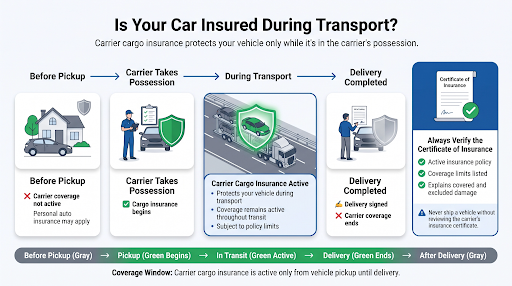
Is Your Car Insured During Transport?
Every licensed auto transport carrier operating in the United States is legally required to carry cargo insurance. This requirement is enforced by the Federal Motor Carrier Safety Administration (FMCSA), and it exists specifically to protect vehicle owners while their cars are in a carrier’s possession.
So, is your car insured during transport? Yes, but the coverage comes from the carrier’s policy, not from your personal auto insurance. Most personal policies are written for vehicles in active, personal use, and once your car is loaded onto a trailer, it’s treated as cargo instead.
Coverage doesn’t apply indefinitely, it’s tied to a specific window of time. Here’s how that window actually works:
- Starts: The moment the carrier takes possession of your vehicle at pickup
- Continues: For the full duration of transit, under the carrier’s cargo policy
- Ends: When the vehicle is signed for at delivery
- Outside this window: Before pickup or after delivery, the carrier’s policy no longer applies
This is also why the carrier’s Certificate of Insurance matters so much. It confirms the policy is active, states the coverage limits, and outlines what is and isn’t included. A shipper who never checks this document is, in effect, trusting a stranger’s paperwork without reading it.
What Does Car Shipping Insurance Cover? (5 Covered Situations)
Once a carrier’s insurance is confirmed active, the next question is what it actually pays for. Car shipping insurance is not a blanket policy that covers every possible scenario, it’s built around damage tied directly to the carrier’s handling.
What Damage Is Typically Covered?
Coverage under a standard cargo policy centers on damage that occurs while the carrier physically controls your vehicle. The five scenarios below make up the bulk of valid claims filed each year.
- Collision or accident damage while the vehicle is secured on the trailer
- Weather-related damage, such as hail, flooding, or storm debris impact
- Damage during loading and unloading, including scrapes or dents from improper securing
- Theft while the vehicle is in the carrier’s possession
- Fire or transit-related incidents caused directly by carrier negligence
These five categories represent the core of what does car shipping insurance cover in a standard cargo policy. Each shares a common thread: the damage must be tied to something the carrier did, or failed to do, while your vehicle was in their care.
The line between covered and excluded damage isn’t always obvious at first glance. To make the distinction clearer, here’s how common scenarios compare side by side.
Covered vs. Not Covered: Quick Comparison
Not every scenario fits neatly into “covered” or “excluded,” which is why disputes often come down to specifics. The table below lays out the most common situations side by side for quick reference.
| Scenario | Typically Covered? | Why |
| Collision while on the trailer | Yes | Carrier negligence or accident |
| Hail or storm damage in transit | Yes | Environmental damage during carrier custody |
| Damage during loading/unloading | Yes | Occurs under carrier handling |
| Pre-existing scratches or dents | No | Not caused by the carrier |
| Items left inside the vehicle | No | Cargo policies cover the vehicle, not contents |
| Mechanical breakdown unrelated to transit | No | Not a transport-caused incident |