The history of deep learning includes a number of important developments, and the 2006 proposal of Deep Belief Networks (DBNs) by Geoffrey Hinton and his colleagues is one of these. Up to the introduction of DBNs, training neural networks having many layers was regarded as computationally impractical; DBNs altered this situation by providing an efficient, layer-by-layer approach to learning complex representations from data.
While discriminative models operate by mapping inputs to outputs, DBNs are generative models since they learn the underlying probability distribution of the data. As a result, they are able not only to identify patterns but also to produce new data samples. For those people who are taking a data science course in Chennai, studying DBNs offers important background for grasping how modern deep learning architectures have evolved and for understanding why generative modelling has become such a major area of research.
What Are Deep Belief Networks?
A Deep Belief Network is a probabilistic generative model which consists of several layers of latent (hidden) variables, each of which captures features of the input data that become more and more abstract. The connections between the two uppermost layers are undirected, but the connections between the lower layers are directed, so that DBNs become a hybrid probabilistic architecture.
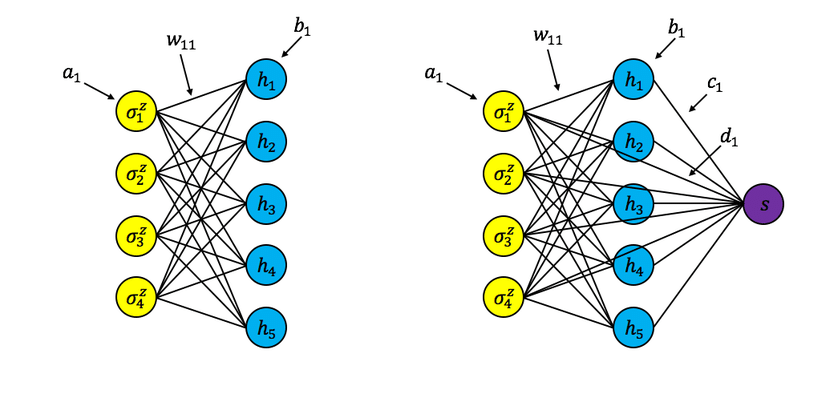
DBNs are constructed by stacking multiple Restricted Boltzmann Machines (RBMs). An RBM is a two-layer model with one visible layer (representing observed data) and one hidden layer (representing latent features). Within each layer, no connections exist between units — only connections between the visible and hidden layers are permitted. This restriction makes RBMs tractable to train using a method called Contrastive Divergence.
When RBMs are stacked, each one learns from the hidden representations produced by the layer beneath it. The result is a deep network where successive layers learn increasingly abstract features — for example, progressing from raw pixel values to edges, then shapes, then object parts.
How DBNs Learn: Pretraining and Fine-Tuning
A major contribution of DBNs was showing that it was possible to train deep networks effectively by using two stages: first performingformingformingformingformiand then carrying outthen carrying outthen carrying outthen carrying outthen carrying outthen carrying outthen carrying outthen carrying outthen carrying outthen carrying out supervised fine-tuning.
Phase 1 — Greedy Layer-wise Pretraining:
Each RBM is trained independently in an unsupervised manner. The first RBM learns features directly from input data. Its hidden layer activations then serve as input for the next RBM, and the process repeats. This greedy, sequential approach initializes network weights intelligently, addressing the vanishing gradient problem that had historically made deep networks difficult to train.
Phase 2 — Fine-Tuning with Backpropagation:
After pretraining has been completed, the entire network is fine-tuned with the help of labeled data and by using standard backpropagation; the pretrained weights give a good starting point and thus lead to faster convergence together with better generalization than in the case of random initialization.
The two-phase strategy was original in 2006 and was the direct influence behind later developments, such as autoencoders and Variational Autoencoders (VAEs).
Real-World Applications of DBNs
Deep belief networks have been put to use in a number of fields where it is valuable to learn rich latent representations.
DBNs learn hierarchical visual features from unlabeled datasets, which is why they are useful in cases where labeled data is scarce. Early versions performed well on benchmarks such as MNIST for the purpose of classifying handwritten digits.
Researchers at the major technology companies used acoustic models based on DBNs and as a result achieved considerable improvements in accuracy, which in turn sped up the real-world acceptance of deep learning in voice interfaces.
Dimensionality reduction: When a trained DBN is unfolded into a deep autoencoder, the model is able to compress high-dimensional data into concise and significant representations — usually beating out traditional techniques such as Principal Component Analysis (PCA).
Natural Language Processing: Deep belief networks have been used in document modelling, enabling them to capture latent semantic patterns from text corpora without the need for labelled examples.
Students taking a data science course in Chennai regularly use TensorFlow or PyTorch to implement architectures inspired by DBNs, thereby gaining practical experience of how generative pretraining enhances the performance of downstream models.
Limitations and Lasting Influence
In current practice, DBNs have mostly been supplanted by more scalable architectures. It is slower and more complicated to train RBMs using Contrastive Divergence than it is to train feedforward networks from start to finish. The development of features such as ReLU activations, batch normalization, and dropout have lessened the requirement for greedy pretraining by making it easier to optimize deep networks from scratch.
Generative modelling has likewise made progress, since today’s GANs and Diffusion Models are able to generate higher-quality outputs in the areas of images, audio, and video. However, DBNs are still of conceptual importance because they demonstrated that depth and unsupervised pretraining could yield powerful representations, a principle which underlies current self-supervised approaches such as BERT and GPT.
Conclusion
The development of Deep Belief Networks represented a significant milestone in the history of artificial intelligence. They overcome a major difficulty in the training process, demonstrated the value of generative pretraining, and showed that hierarchical feature learning is a basic principle of deep learning. Moreover, examining DBNs helps to explain why the field shifted from using handcrafted features to employing learned representations — and from relying on shallow to deep architectures.
For professionals who want to build up their expertise in machine learning, taking a well-structured data science course in Chennai which includes probabilistic models and generative architectures will help you to gain a better understanding of how modern AI systems are designed and of the ideas that made them possible.