

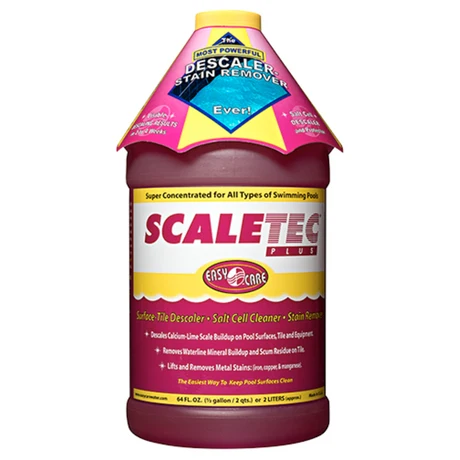
Regular maintenance is necessary to keep your swimming pool clean and inviting. Staining from metals, minerals, leaves, or other debris is a common worry for pool owners. Pool stain preventer is used by many to help minimize the likelihood of stains forming on the pool surfaces as part of the pool maintenance plan.
These products can be effective when used properly, but excessive use won’t necessarily provide increased protection. In fact, applying a pool stain preventer too often can cause problems with your water balance or make it less effective at cleaning your pool. Once staining has occurred, a pool stain remover might be a better choice than adding too much preventer.
What is a Pool Stain Preventer?
A pool stain preventer will help minimize your chances of having stains on your pool due to dissolved metals like iron, copper, or manganese. These products help to prevent certain minerals from precipitating on the walls, steps, and other surfaces of the pool.
They are widely used
- During pool opening
- After filling the pool with fresh water
- When metal content is present in the water supply
- As part of ongoing seasonal maintenance
As with all pool chemicals, they must always be used as per the manufacturer’s instructions.
More Product Doesn’t Mean Better Protection
The initial impression might be that an additional chemical is providing an additional amount of protection.
However, most pool chemicals are carefully formulated to work within specific dosage ranges. Using more than the suggested amount of pool stain preventer is not likely to enhance performance and actually can cause additional issues.
Using the product label helps to ensure the chemical is used as intended and to maintain balanced pool water.
Water Balance May Become More Difficult
Excessive amounts of pool chemicals can make maintaining the proper water chemistry more difficult.
Overuse may impact the interactions of other chemicals within the water depending on the product(s) used. This may mean further testing and adjustments to get the conditions in balance again.
Regular water testing can help to monitor:
- pH
- Chlorine levels
- Total alkalinity
- Calcium hardness
All pool maintenance products operate optimally in balanced water.
Filtration Efficiency May Be Reduced
There are also some stain prevention products made to prevent the metals from precipitating until they can be properly handled.
If there are a lot more products added than recommended, it can put extra stress on the filtration system or cause more frequent filter cleansing, contingent upon the general water conditions.
Keeping a filter in good working condition is still a key component of stain prevention and to keep water clear.
Water Appearance May Change
Overuse of a pool stain preventer can, in some cases, cause temporary discolorations in pool water.
Some pool owners might notice:
- Slight cloudiness
- Reduced water clarity
- A longer period of time before water is filtered out of the system
Additional Chemical Costs
Ongoing maintenance costs will be higher, but no benefits will be gained if more chemicals are used than is necessary.
These tips will support the recommended dosage:
- Reduce product waste
- Lower maintenance expenses
- Ensure stable water quality.
Chemical usage is good not only for maintaining the pool but for your pool maintenance budget as well.
A Pool Stain Preventer is not a Pool Stain Remover
One common misunderstanding is assuming that adding extra pool stain preventer will remove stains that already exist.
A preventer is designed to reduce the risk of new stains. A stain remover for pools is usually the better choice of products when stains have already formed.
Sometimes, the best treatments are to use the right product for the right type of problem rather than a higher dosage of a preventive treatment.
Read Product Instructions Carefully
Various manufacturers may have different instructions for use and doses.
Prior to adding any chemical:
- Be sure to read the label closely.
- Take the suggested dosage of measurement.
- Refer to the instructions for the application.
- Give sufficient mixing time.
These are simple strategies to ensure that the product works well and lowers the likelihood of overuse.
Monitor Water Regularly
Regular water testing is among the most effective methods for supporting effective water stain prevention.
Regular testing is used to check for changes in:
- pH
- Sanitizer levels
- Metal Content (if applicable)
- Overall water balance
Often, maintaining balanced water is a significant part of the process of minimizing the conditions that can result in staining.
Final thoughts
When used properly and following the manufacturer’s instructions, a pool stain preventer could be a helpful component of routine pool maintenance. However, using more than the recommended amount does not necessarily improve protection and may complicate water balance, increase maintenance costs, or affect water clarity.
If stains have already occurred, a pool stain remover may be more appropriate than adding more preventer. By following product instructions, maintaining balanced water chemistry, and testing your pool regularly, you can support cleaner pool surfaces and enjoy clear, inviting water throughout the swimming season.