


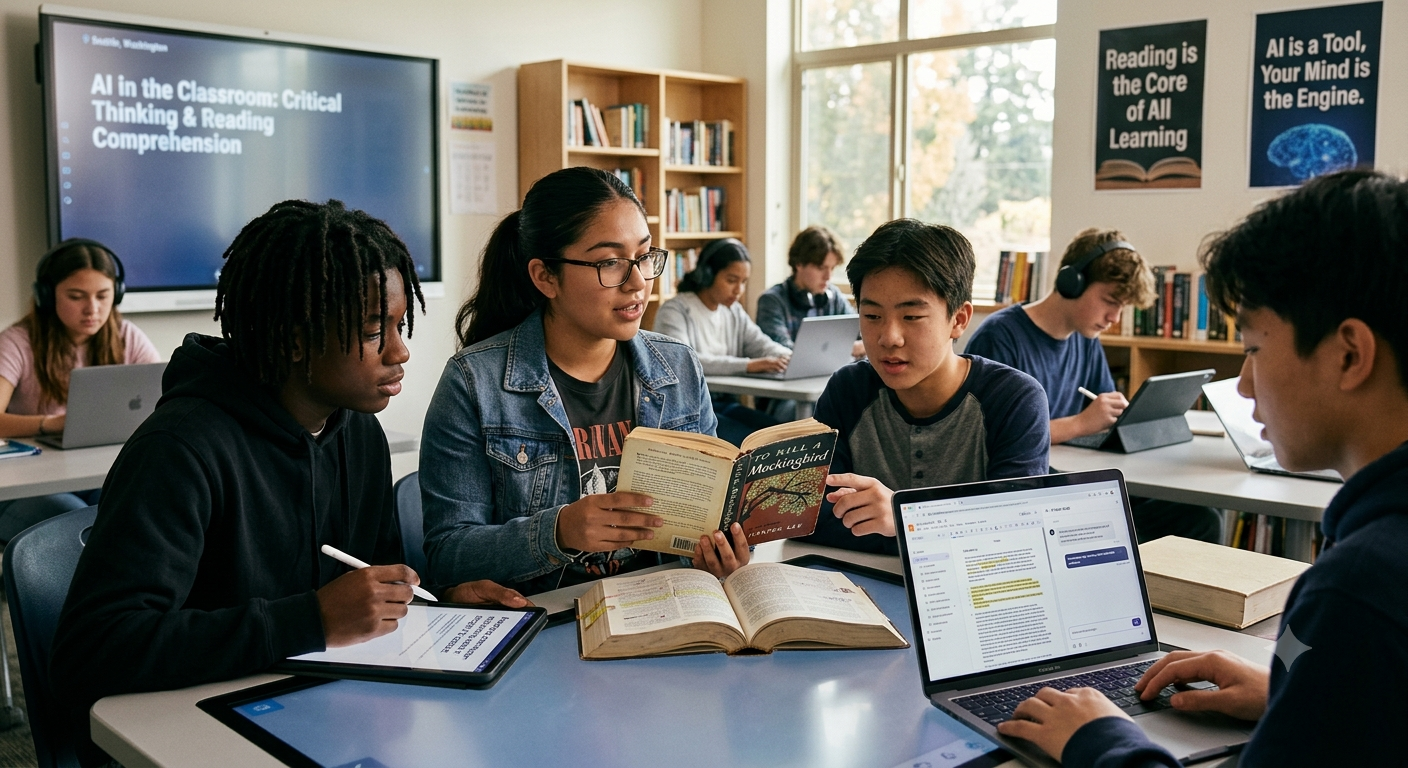
Technology has transformed nearly every aspect of education, from digital textbooks to intelligent tutoring systems. Artificial intelligence is now helping students generate summaries, answer questions, and receive personalized practice in ways that were unimaginable just a few years ago. Yet despite these advances, one skill continues to determine whether students truly succeed in school: reading comprehension.
Students who understand what they read are better equipped to solve math problems, interpret scientific concepts, analyze historical events, and communicate effectively through writing. AI can certainly make learning more accessible, but it cannot replace the deep thinking that comes from strong reading habits. Instead, the most successful classrooms combine traditional literacy development with carefully chosen digital tools.
Reading Comprehension Is Still the Real Predictor of Academic Success
Strong reading comprehension remains the foundation most other academic skills are built on, and building it early takes deliberate practice, not just exposure — a point covered in this piece on reading strategies.
Reading is much more than recognizing words on a page. It involves understanding ideas, making connections, identifying evidence, and thinking critically about information. These abilities influence performance across every subject area.
Why weak reading skills quietly drag down every subject
Reading challenges often appear first in language arts, but their effects spread much further. Students who struggle with comprehension may find it difficult to:
- Follow multi-step instructions in mathematics.
- Understand scientific explanations and experiments.
- Analyze historical documents and literature.
- Interpret charts, graphs, and written data.
- Complete research projects effectively.
As students advance through higher grade levels, textbooks become more complex and assignments require greater independent learning. Without solid reading comprehension, even highly motivated students can fall behind because they spend more energy decoding information than understanding it.
Poor comprehension also affects confidence. Students who consistently struggle with reading often avoid challenging materials, creating a cycle where limited practice leads to slower improvement over time.
What builds strong reading comprehension
Developing stronger reading skills requires consistent practice and intentional habits rather than simply reading more pages.
Some of the most effective approaches include:
- Reading a variety of fiction and nonfiction texts.
- Asking questions while reading.
- Summarizing key ideas after each section.
- Learning unfamiliar vocabulary in context.
- Discussing texts with teachers, parents, or classmates.
- Making predictions before continuing to read.
- Connecting new information to previous knowledge.
Regular practice gradually improves vocabulary, memory, concentration, and critical thinking. These gains support learning in every academic subject, making reading one of the highest-return study habits students can develop.
Where AI Tools Fit Into This Picture
Many classrooms are now pairing that foundational reading work with AI-supported tools, though the consensus is that these tools work best alongside teachers rather than replacing them, as discussed in this piece on ai in k-12 education.
Artificial intelligence has introduced new opportunities for personalized instruction, but its greatest value comes from supporting—not replacing—the learning process.
AI-assisted reading and practice tools in today’s classrooms
Modern educational AI platforms can adapt lessons based on individual student performance. They may provide:
- Personalized reading passages matched to skill level.
- Instant vocabulary explanations.
- Reading fluency exercises.
- Interactive comprehension questions.
- Writing feedback and grammar suggestions.
- Progress tracking for teachers and parents.
These features help students receive additional practice outside the classroom while allowing teachers to identify learning gaps more efficiently.
AI can also increase engagement by presenting reading activities in interactive formats, making practice more appealing for reluctant readers.
Why human teaching still matters most for comprehension
Despite impressive technological advances, comprehension involves much more than answering multiple-choice questions correctly.
Teachers help students:
- Interpret complex ideas.
- Recognize nuance and author’s intent.
- Participate in meaningful discussions.
- Build critical thinking skills.
- Develop curiosity and confidence.
Likewise, parents contribute by encouraging reading at home, discussing books, and creating positive learning environments.
AI may explain a difficult paragraph, but it cannot fully replace the guidance, encouragement, and emotional support that experienced educators provide. The strongest educational outcomes occur when technology enhances instruction rather than attempting to substitute for it.
Practical Study Habits That Combine Both
Students and parents can benefit most by combining proven reading habits with carefully selected digital tools.
Some practical strategies include:
- Read for at least 20 to 30 minutes every day.
- Choose books that are challenging but manageable.
- Pause regularly to summarize what has been read.
- Use AI tools to clarify confusing concepts instead of skipping difficult sections.
- Ask AI-generated practice questions after completing a chapter.
- Keep a reading journal to record new vocabulary and key ideas.
- Track comprehension through quizzes or discussions rather than focusing only on reading speed.
- Balance screen-based learning with printed books whenever possible.
- Review mistakes carefully instead of relying on instant answers.
- Set weekly reading goals and celebrate consistent progress.
Parents can also participate by asking open-ended questions after reading sessions instead of simply checking whether homework is complete. Conversations about stories and informational texts deepen understanding and strengthen long-term retention.
Final Word
Artificial intelligence is changing classrooms in exciting ways, offering students personalized support and making learning more accessible than ever before. However, the ability to read thoughtfully, understand complex ideas, and evaluate information remains the cornerstone of academic achievement.
Students who invest time in strengthening their reading comprehension develop skills that extend far beyond school. They become stronger writers, better problem-solvers, more confident learners, and more informed decision-makers.
Rather than viewing AI as a replacement for foundational literacy, educators, parents, and students should see it as a valuable companion to proven study habits. When consistent reading practice is combined with responsible use of AI-supported learning tools, students are better prepared not only for academic success but also for lifelong learning in an increasingly digital world.