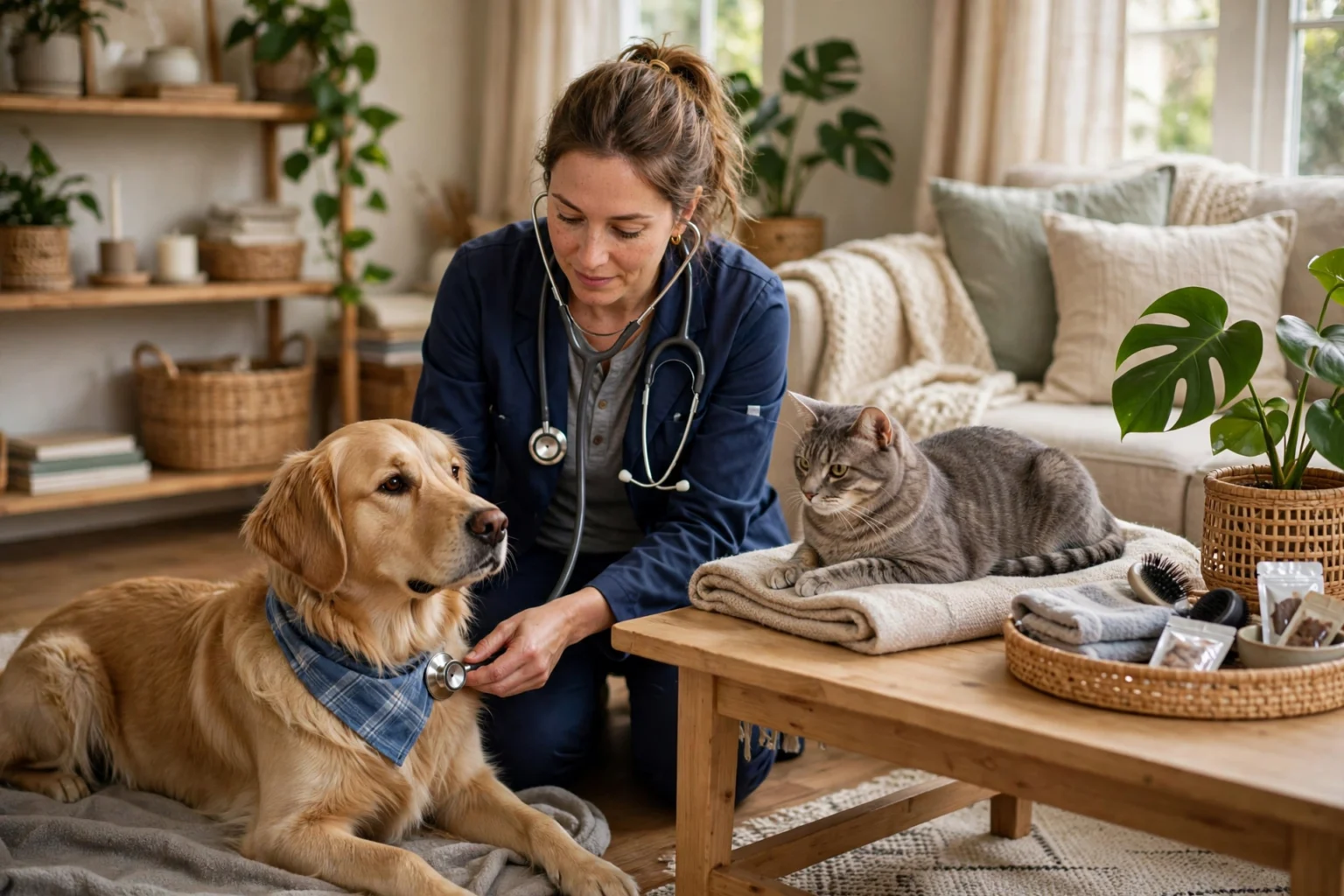
If you have more than one pet, a mobile vet Houston appointment can feel like crowd control. One dog barks when the door opens. One cat disappears under the bed. Another pet picks up on the tension and starts pacing before anything has even happened. You are trying to keep everyone calm, remember each pet’s needs, and make sure the visit does not turn into a stressful scene in your own home.
That is exactly why many families choose a Mobile Veterinarian. Home visits remove the car ride, the waiting room, and the noise of other animals. Even so, bringing veterinary care into your space does not erase every challenge. It changes them. The goal is not a perfect, silent visit. The goal is a safer, calmer appointment where each pet can be seen without feeding off the others’ stress.
Preparing multiple pets for an at home vet visit usually comes down to five things. Separate the pets when needed, set up one quiet exam area, gather records and questions ahead of time, use familiar comfort cues, and manage the order of the exams. Those steps sound simple, but they solve the problems that most often derail the visit.
Multiple pets often react to each other before they react to the veterinarian
Pets watch each other closely. If one animal is fearful, the others often follow. A calm dog may become agitated when the cat bolts. A cat that usually tolerates handling may panic once another pet starts vocalizing. Stress spreads fast in a shared home, which is one reason stressful situations for pets can escalate before a person realizes what is happening.
This matters during a home visit because the home is familiar, but the event is still unusual. There is a new person, medical tools, handling, smells, and the sense that something is different. If all pets are allowed to gather around the front door or crowd the exam area, you can end up with a chain reaction. One pet gets overstimulated, another becomes defensive, and the appointment gets longer and harder on everyone.
The fix is structure. Not rigid, just clear. Decide where each pet will be before the veterinarian arrives. If one pet is social and another is easily overwhelmed, do not expect them to cope the same way. Give each animal a role and a space.
Set up one exam zone and one waiting zone for a smoother mobile veterinary visit
The best home visits usually happen in a single room with enough light, a clear floor, and a door that closes. Kitchens, living rooms, and quiet home offices tend to work well. Put away food bowls, toys that trigger guarding, and anything breakable. If you have cats, close off hiding spots that make retrieval difficult. If you have dogs, remove the constant visual stimulation of a front window if that tends to set them off.
Then create a waiting zone. This can be a bedroom, a crate with a cover, a playpen, or another closed room. The point is to keep pets from hovering over the one being examined. Many owners mean well when they keep everyone together for comfort, but group energy often raises stress instead of lowering it.
Veterinary schools have long advised owners to reduce stress before appointments with familiar bedding, treats, and gentle handling. Virginia Tech offers practical tips for stress free veterinary trips that work well at home too, especially when you prepare the environment ahead of time instead of reacting in the moment.
Use the exam order to prevent a stressful domino effect
Order matters more than many people expect. If you start with the pet most likely to panic, the whole house can feel the shift. If you begin with the calmest animal, the visit often settles into a better rhythm.
A good rule is to examine the easiest pet first, the most reactive pet second, and any highly bonded observer last or kept fully separate. That way, the veterinarian can gather basic information efficiently, and the more sensitive pet is not sitting in suspense through several exams. Dogs that become protective around cats may need complete visual separation. Cats who hate noise may do better before dogs enter the exam room.
For dogs in particular, Cornell notes that positive associations, practice with handling, and rewards can help make veterinary visits less stressful for dogs. In a multi pet home, those same habits reduce the chance that one dog’s anxiety will shape the whole appointment.
Simple preparation often works better than last minute control
You do not need a perfect house or perfectly trained pets. You need a short list handled in advance. Put leashes, carriers, medications, and bite history or behavior notes in one place. Write down who is eating less, who is due for vaccines, and who has been scratching, limping, or vomiting. When several pets are being seen, details blur together fast. Owners often remember the concern as soon as the veterinarian is packing up, which is frustrating for everyone.
| Preparation Step | If You Skip It | Likely Benefit |
|---|---|---|
| Separate pets before arrival | Group excitement at the door, barking, hiding, conflict | Lower arousal and safer introductions |
| Choose one exam room | Chasing pets between rooms, distractions, longer visit | Faster exams and better focus |
| Stage carriers, leashes, and records | Last minute scrambling and missed details | Smoother check in and clearer medical history |
| Use bedding, treats, and familiar cues | Pets have fewer calming anchors | More comfort during handling |
| Plan exam order | Stress builds as pets watch each other | Better flow for a mobile vet visit |
Three steps you can take today before your mobile veterinarian arrives
1. Do a ten minute home walkthrough. Stand at the door and trace the visit from arrival to exam to departure. Notice barking triggers, escape routes, tight corners, and where each pet should wait. This quick check often reveals the exact points where things go sideways.
2. Make a one page pet list. Include each pet’s name, age, medications, current symptoms, appetite changes, and behavior concerns. In a multi pet home, it is easy to mix up who had the ear issue and who skipped breakfast. A written list keeps the visit accurate and efficient.
3. Practice calm confinement before the appointment day. Put cats in carriers for a few minutes with treats. Ask dogs to settle in a separate room with a chew or mat. This is not about strict obedience. It is about teaching each pet that temporary separation is safe. That one habit can make in home veterinary care for multiple pets much easier.
A calmer home visit starts before the doorbell rings
You are not overthinking this. Managing several pets during a veterinary appointment is a real task, and the stress is real because you know each animal has a different threshold. The good news is that a few small choices can change the tone of the whole visit. Separate when needed, keep the environment simple, and plan the flow before anyone arrives. That is usually enough to help your pets settle and help your veterinarian do their job well.
If you are scheduling a Mobile Veterinarian visit, prepare the space, gather your notes, and set each pet up for the calmest experience possible.