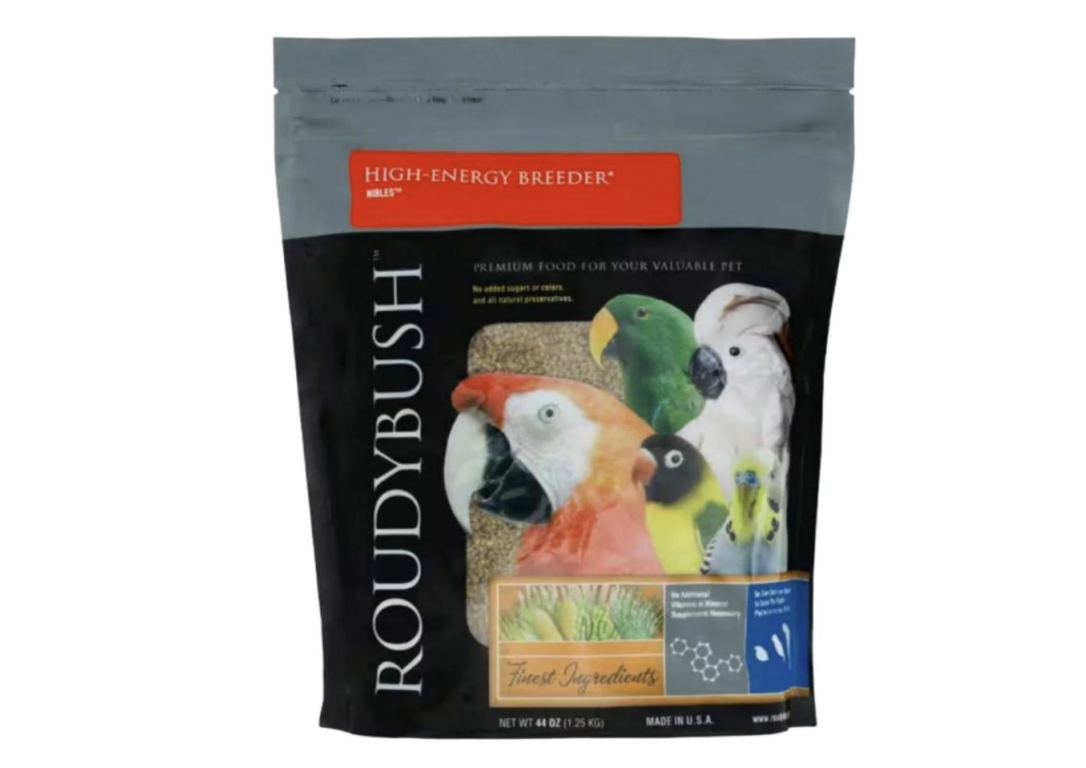
What is in the bowl develops feathers. Bone strength, liver fat, and the vigor of a bird that shreds a toy in the afternoon rather than napping through it are all examples of this. For this reason, many seasoned owners discreetly switch to Roudybush daily maintenance bird food and give up on the seed aisle. This guide walks through what the diet does, which birds it suits, how to switch a difficult parrot, and where baked treats actually belong.
Why a Seed-Only Bowl Falls Short
Parrots pick.
Hand a cockatiel a mixed bag and watch what happens. Sunflower first. Then millet. While the bird happily puts together a high-fat, low-calcium diet that no one prescribed, the others sit there slowly growing stale.
Vets see the results often enough to name the pattern: hepatic lipidosis, thin bones from low calcium, vitamin A deficiency showing up as sinus trouble or crusty feet, dull feathers that molt badly. Fussiness compounds too. A ten-year-old seed addict is a much harder project than a two-year-old one.
Pellets solve the picking problem in the simplest possible way. Every piece is identical, so there is nothing left to sort.
What Makes Roudybush Daily Maintenance Bird Food Unique
Before any of this ended up on a supermarket shelf, Tom Roudybush spent years researching avian nutrition at UC Davis, and the formulae still bear the lab-first seal. No dyes. No sugar shells. No cheap bulk padding to make a bag look generous. Roudybush daily maintenance bird food is deliberately boring to look at, which annoys some shoppers and reassures others. Color has never done anything for a parrot’s body. It exists for yours.
Pick the Pellet Size, Not Just the Brand
Size decides whether food gets eaten or flung. Budgies cannot manage a pellet built for a macaw. A macaw treats mini pellets as confetti.
| Pellet size | Best suited to | Typical bag sizes |
| Mini | Budgies, lovebirds, parrotlets, canaries | 8 oz, 44 oz, 10 lb, 25 lb |
| Small | Cockatiels, conures, quakers, small parakeets | 8 oz, 44 oz, 10 lb, 25 lb |
| Medium | Amazons, African greys, eclectus, macaws | 44 oz, 10 lb, 25 lb |
| Crumble | Finches, weaning babies, stubborn converts | 22 oz, 44 oz, 10 lb |
Formulas Beyond the Everyday Bag
An entire aviary cannot be covered by a single recipe. The wider line includes:
- Low-Fat Maintenance, aimed at cage-bound or heavy birds
- Breeder and High Energy Breeder for pairs feeding chicks
- Senior Diet, useful once metabolism slows
- Lory Nectar and a Squab Diet for keepers who need them
Run any of these past an avian vet first. A weight trend and bloodwork consistently outperformed guesses.
Where Oven Baked Bird Food Fits Into the Week
Pellets carry the nutrition. Variety carries everything else, and a bored parrot is a plucking parrot. Caitec Oven Fresh Bites are probably the best-known oven baked bird food on the shelf, sold in Classic bags sized for small, medium, and large birds, plus cookies in almond, peanut butter, coconut papaya, and oatmeal raisin.
Use them well:
- Roughly 10% of daily intake, no more
- Hide them. A foraging wheel turns a snack into twenty minutes of work
- Cookies earn their keep during training, harness practice, or the drive to the vet
- Size still matters, since a dropped treat feeds nobody
How to Move a Picky Bird onto Roudybush Daily Maintenance Bird Food
Going cold turkey is tempting and occasionally fatal. Small birds run out of reserves in about 48 hours, so buy a gram scale before you buy anything else, and weigh every second day through the switch.
Two weeks, four stages:
- Days 1 to 3: Roughly a quarter pellet, blended into the usual seed. Same bowl, same spot.
- Days 4 to 7: Half and half. Serve pellets at dawn, when appetite is strongest.
- Days 8 to 11: Three-quarters pellets. Seed becomes an evening ration.
- Days 12 to 14: Pellets as the base, vegetables alongside.
Eating a pellet yourself in front of the cage sounds ridiculous and works anyway, because flock behavior runs deep. Crushing a few over a favorite vegetable helps too. Whatever happens, never leave a bird with an empty bowl overnight, and phone your vet if the scale drops more than 5%.
Storage Habits That Protect Freshness
Seal the bag. Keep it cool, dry, and away from windows. Buy a quantity your flock finishes within six to eight weeks, because vitamin content fades once air gets in, and a bargain 25-lb sack is no bargain if half of it goes flat. Single-bird households often freeze portions instead. Wash bowls daily, since warm rooms plus damp pellets equal mold.
The Takeaway
None of this is complicated. Pick a research-backed pellet, match it to the beak, transition slowly, keep treats where they belong. Do that for a year, and the difference shows up in the feathers.