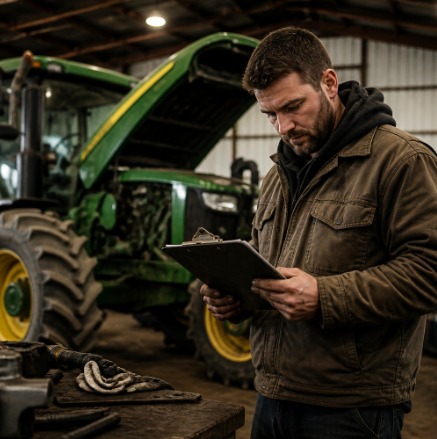
Farm equipment represents one of the largest capital investments in agricultural operations, yet many operators treat maintenance documentation as an afterthought. Detailed records of repairs, service intervals, and equipment performance do more than satisfy warranty requirements—they protect your right to repair, establish patterns that prevent catastrophic failures, and provide evidence when disputes arise over equipment defects or service quality.
The practice of maintaining thorough equipment logs has gained renewed importance as manufacturers face legal pressure to support independent repair options. Recent regulatory developments have reinforced that farmers and independent repair shops have the right to access diagnostic tools, repair manuals, and replacement parts without manufacturer interference. Documentation strengthens your position when exercising these rights, particularly if you need to demonstrate that proper maintenance protocols were followed.
What Belongs in a Maintenance Log
Effective maintenance records capture more than dates and oil changes. Each entry should include the equipment’s hour meter or odometer reading, a description of the work performed, parts replaced with manufacturer and part numbers, labor hours if applicable, and the name of the person who performed the service. For tractors and self-propelled equipment, note any unusual sounds, vibrations, or performance changes observed during operation.
Photographs add substantial value, particularly for wear patterns on cutting edges, hydraulic hoses, belts, and tires. A photo taken every few months creates a visual timeline that reveals whether deterioration is progressing normally or accelerating unexpectedly. This becomes critical evidence if a component fails prematurely and you need to establish whether the failure resulted from a manufacturing defect rather than neglect.
Fluid analysis reports deserve a dedicated section in your records. Oil samples from engines, transmissions, and hydraulic systems reveal contamination and wear metals before problems become visible. Labs provide detailed reports showing particle counts, viscosity, and the presence of coolant, fuel, or water. File these reports chronologically so you can track trends across sampling intervals. A sudden spike in iron particles, for example, indicates accelerated wear that demands immediate investigation.
Building Documentation Habits Around Seasonal Work
Seasonal equipment presents documentation challenges because months pass between uses. Before storing equipment for the off-season, create a shutdown checklist that becomes part of the permanent record: fuel stabilizer added, batteries disconnected or maintained, fluids topped off, and any damage or wear noted for repair before the next season. When you bring equipment out of storage, document the pre-season inspection with the same rigor, noting any deterioration that occurred during storage.
Rotary cutters, mowers, and ground-engaging equipment accumulate damage that operators often defer until the component fails completely. For heavy-duty implements, establishing a post-use inspection routine prevents small problems from cascading. After clearing overgrown fields or cutting through heavy brush, inspect blade bolts, slip clutches, gearboxes, and driveline components. Documenting these inspections creates accountability and ensures that deferred items get addressed before the next use. Operators working with bush hog rotary cutters know that blade and gearbox maintenance directly affects safety and performance, making detailed records of wear and replacement essential for avoiding catastrophic failures during operation.
Digital vs. Paper Systems
Paper logbooks remain popular in agricultural settings because they work without power, survive harsh conditions when stored properly, and require no software subscription. A weather-resistant notebook kept in each tractor or piece of equipment ensures that operators can record information immediately rather than relying on memory later. The disadvantage is searchability—finding a specific repair from three years ago means flipping through pages.
Digital systems offer advantages in analysis and organization. Spreadsheet software allows sorting by date, equipment type, or component, making it simple to identify recurring problems. Cloud-based maintenance platforms provide mobile access, automated service reminders based on hours or calendar intervals, and the ability to attach photos and scanned receipts directly to maintenance entries. The risk lies in data loss if backups fail or if the service provider discontinucts the platform.
A hybrid approach combines the reliability of paper with the analytical power of digital records. Keep field logbooks for immediate entries, then transfer information to a digital system monthly. This creates redundancy while preserving the detail captured in real time. Scan receipts and warranty documents as PDFs and store them with corresponding maintenance entries. External hard drives or USB storage provide offline backups that survive internet outages or subscription lapses.
Leveraging Records for Warranty and Liability Protection
Manufacturers routinely deny warranty claims based on alleged maintenance failures, placing the burden on equipment owners to prove compliance with service schedules. Comprehensive records eliminate ambiguity. If a transmission fails within the warranty period, dated entries showing fluid changes at the specified intervals, along with receipts for the correct fluid specification, counter claims of neglect. Without documentation, manufacturers default to denial.
Liability protection extends beyond manufacturer warranties. If equipment causes property damage or injury, maintenance records demonstrate that the equipment was properly serviced and inspected. Conversely, poor or absent records suggest negligence. Insurance companies examine maintenance documentation when evaluating claims, and adequate records can mean the difference between coverage and denial.
The broader agricultural community has gained significant ground in securing repair access through regulatory action, as detailed in this settlement that protects farmers’ repair rights. These protections only deliver value when operators can demonstrate that independent repairs followed appropriate standards and procedures, which again depends on documentation.
Training Operators and Shop Personnel
Maintenance documentation only works when everyone understands its importance and follows consistent procedures. Operators should receive training on what to document, where to record it, and when to escalate observations to management or shop personnel. A simple checklist reduces variability: before starting work, check fluid levels and note any leaks; during operation, listen for abnormal sounds; after use, inspect for damage and record hour meter readings.
Shop personnel need protocols for recording repair work, particularly when multiple technicians work on the same equipment. Standardized forms ensure that critical information gets captured regardless of who performs the service. Include fields for initial diagnosis, root cause analysis, corrective action taken, and follow-up recommendations. This creates institutional knowledge that survives employee turnover and prevents repeated failures from the same underlying cause.
Establishing regular review intervals keeps records useful rather than merely archival. Monthly or quarterly meetings where managers review maintenance logs with operators and technicians identify patterns, allocate resources for upcoming repairs, and highlight equipment that may need replacement rather than continued investment in repairs. Tracking cost per hour of operation across your fleet reveals which machines deliver value and which drain resources, informing future purchasing decisions. The information management practices developed for equipment tracking often extend to other operational areas, including workplace safety and compliance documentation, as explored in guidance on managing regulatory requirements in industrial settings.
The Long-Term Value of Disciplined Record-Keeping
Maintenance records mature into strategic assets over time. Five years of data reveals which brands and models deliver reliability and which generate excessive downtime. This evidence proves more valuable than marketing materials when making replacement decisions. Similarly, tracking which repairs recur and at what intervals allows you to stock critical parts before failures occur, reducing downtime during peak seasons.
Resale value increases when equipment comes with complete maintenance history. Buyers pay premiums for machines with documented care because it reduces their risk. Conversely, equipment with no records sells at a discount or not at all, as buyers assume the worst about its condition and remaining service life.
Agricultural operations succeed through attention to details that industrial operations might delegate to specialized departments. On most farms, the operator serves as mechanic, parts manager, and documentation specialist. Maintenance records transform reactive repair approaches into predictive maintenance strategies, reduce disputes over warranty coverage and liability, and build equity in equipment assets. The time investment is modest; the protection it provides is substantial.