

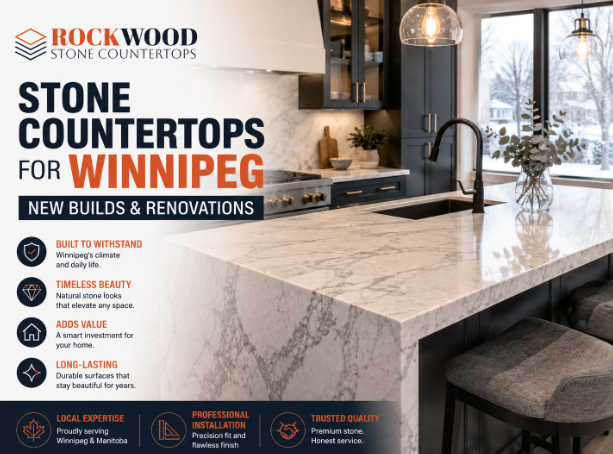
If you’re planning a premium kitchen countertop in Winnipeg, you already know Winnipeg winters aren’t gentle on materials. Temperature swings between a warm indoor kitchen and freezing outdoor air put real stress on cabinets, flooring, and countertops alike. Choosing the right stone slab now saves you money, hassle, and disappointment later, whether you’re finishing a new build or ripping out an old laminate counter.
This guide walks you through the stone options that actually hold up in Winnipeg homes, how to pick between them, what installation looks like, and how to keep your countertop looking new for years.
Why Stone Countertops Matter for Winnipeg Homes
Stone countertops handle Winnipeg’s climate swings better than laminate or wood. Indoor heating during our long winters dries out the air significantly, sometimes dropping indoor humidity below 20 percent. That kind of dryness can crack lower-quality materials over time, especially wood butcher block cores under laminate. Natural and engineered stone slabs resist this kind of damage because they don’t absorb moisture the way wood does or expand and contract the way some laminates do when temperatures shift.
Stone countertops are one of the first things buyers notice during a showing in Winnipeg’s housing market often factor updated kitchens into their valuations. A well-chosen slab isn’t just a design decision; it’s part of your home’s long-term value. Beyond looks and value, stone also handles daily wear better. Cutting boards, hot pans, spilled wine, and dropped utensils are part of everyday kitchen life. Laminate scratches and chips under that kind of use within a few years. Stone, when matched correctly to your habits, can look the same after a decade of daily cooking.
Best Stone Options for Winnipeg Kitchens
Quartz Countertops
Quartz is engineered stone made from crushed natural quartz mixed with resin and pigment. This gives it a consistent pattern and strong resistance to stains and scratches, which matters a lot in a kitchen that sees daily use. It doesn’t need sealing, which makes it a practical pick for busy families who don’t want extra maintenance.
It holds color well under Winnipeg’s strong summer sun coming through south-facing windows, since the resin used in most quartz slabs includes UV stabilizers. If you’re comparing options for a new build, quartz is one of the most requested materials right now because of its low upkeep and wide range of color options.
Marble Countertops
Marble brings a classic look with natural veining that no two slabs share exactly. It works beautifully in kitchens and bathrooms where appearance is a priority, and it’s especially popular for kitchen islands that act as a visual centerpiece. Marble is softer than quartz or granite, so it needs periodic sealing, usually once or twice a year, to resist staining from acidic foods like citrus, wine, or tomato sauce.
For homeowners going for a timeless aesthetic, marble countertops remain a popular choice for island tops and bathroom vanities where heavy daily food prep isn’t happening directly on the surface. Pairing marble with a durable secondary surface, like quartz on the main prep area, is a common approach that gives you the marble look without the maintenance on high-traffic zones.
Porcelain Countertops
Porcelain slabs are fired at extremely high temperatures, often above 1200 degrees Celsius, making them highly resistant to heat, scratches, and UV fading. This makes porcelain a strong option for outdoor kitchens or sunrooms, spaces that see direct sunlight for parts of the year even in Manitoba’s shorter summer season. It’s also lightweight compared to natural stone, which can simplify installation in renovations with older cabinetry that wasn’t built to support heavy granite or marble slabs.
Porcelain resists chemical staining better than almost any other countertop material, which makes it a good fit for households that do a lot of canning or preserving, a common practice among Manitoba homeowners during harvest season.
Dekton Countertops
Dekton is an ultra-compact surface made through a process that combines minerals used in glass, porcelain, and quartz production, sintered together under extreme heat and pressure. It’s built to resist heat, scratching, and staining better than almost any other surface on the market, and it’s also non-porous, meaning bacteria and moisture have nowhere to settle in.
For a busy kitchen where hot pots land directly on the counter regularly, or for a household that hosts frequent dinners, Dekton is worth serious consideration. It also performs well outdoors, which makes it a good match for Winnipeg homeowners building covered patios or three-season rooms.
Quartzite Countertops
Quartzite is a natural stone, not to be confused with engineered quartz, and the naming mix-up trips up a lot of homeowners during their first countertop search. It forms from sandstone under heat and pressure over millions of years, giving it a hardness similar to granite with a softer, more marble-like appearance. It handles heat and daily wear well, making it a solid middle ground for homeowners who want natural stone’s beauty with better durability than marble.
Because quartzite is quarried rather than manufactured, slab availability and pattern can vary more than engineered options. Seeing the actual slab in person before installation, rather than picking from a small sample chip, is a smart step with this material.
Stone Countertop Comparison Table
Not sure which stone fits your kitchen layout and cooking habits? Rockwood Stone Countertops offers in-person consultations across Winnipeg to help you compare slabs before committing.
New Builds vs Renovations: What Changes
New builds give you the advantage of designing around your countertop choice from the start. You can plan cabinet heights, sink cutouts, and backsplash details together, which usually results in a cleaner final look with fewer visible seams. Builders working on new Winnipeg developments often coordinate directly with stone suppliers early in the framing stage so templating can happen right after cabinets go in.
Renovations require more measuring and sometimes compromise, since existing plumbing lines or cabinet widths limit slab placement. Older Winnipeg homes, especially those built before the 1980s, often have cabinets with slightly uneven heights or non-standard depths, which means a template visit becomes even more important. A good installer will visit your home first in either case to template the space accurately before cutting any stone, usually using a laser measuring tool to capture exact dimensions.
New builds can often schedule countertop installation weeks in advance as part of the broader construction sequence. Renovations frequently need the old countertop removed first, which can mean a few days without a functioning kitchen sink, something worth planning around if you’re doing this with a family at home.
How to Choose the Right Stone for Your Kitchen
Start by thinking honestly about how you use your kitchen day to day. If you cook multiple meals daily and often set hot cookware directly on the counter, heat resistance should top your list, which points toward Dekton or porcelain. If your kitchen sees moderate use and you value a low-maintenance surface that still looks premium, quartz covers most needs well.
If appearance matters more than daily durability, and you’re comfortable with occasional sealing, marble or quartzite deliver a natural stone look that manufactured materials still can’t fully replicate. Budget also plays a role, and getting quotes on a few different stones for the same layout helps you compare real numbers instead of general price ranges.
Maintenance Tips for Winnipeg Homeowners
Wipe spills quickly, especially acidic liquids like wine, coffee, or citrus juice, regardless of which stone you choose. For sealed stones like marble and quartzite, mark a reminder on your calendar every six to twelve months to check whether water still beads on the surface, which tells you the seal is holding. If water soaks in instead of beading, it’s time to reseal.
Avoid dragging heavy pots or pans across any stone surface, since even hard materials like quartzite can scratch under enough friction with grit or debris caught underneath. Use cutting boards for chopping, even on materials rated as scratch-resistant, since knife edges can dull small areas of shine over time on any surface.
Final Thoughts
Picking a stone countertop for your Winnipeg home comes down to matching the material to how you actually use your kitchen. If you cook often and want low maintenance, quartz or Dekton are strong picks. If you want natural beauty and don’t mind occasional sealing, marble or quartzite deliver that classic look. For sun-exposed spaces or outdoor setups, porcelain holds up exceptionally well.
Whatever direction you lean, get a slab measured and templated by someone familiar with Manitoba’s climate and building requirements. Reach out to Rockwood Stone Countertops to book a consultation and see real slab samples before you decide.
People Also Ask
Which stone countertop is best for Winnipeg winters?
Dekton and porcelain handle temperature and humidity changes best because they resist moisture absorption and cracking. Quartz is a close second for kitchens that don’t see extreme heat exposure. Marble and quartzite work well too but may need more regular sealing to stay protected.
Do stone countertops crack in cold Manitoba homes?
Properly installed stone countertops rarely crack from cold alone. Cracking usually happens from impact, uneven cabinet support, or extreme sudden temperature changes, like placing a very hot pan directly on marble. Choosing a heat-tolerant material and correct installation prevents most issues.
Is quartz or granite better for a Winnipeg kitchen?
Quartz needs no sealing and resists stains better than most natural stones, making it lower maintenance overall. It also offers more consistent color patterns since it’s engineered rather than mined. For homeowners who want convenience with a modern look, quartz is often the easier long-term choice.
Can stone countertops handle hot pots and pans directly?
Some can, some can’t, and it depends heavily on the material. If heat resistance is a top priority for your kitchen, it helps to read up on heat resistant countertops before choosing a slab, since not every stone performs the same way under direct heat.