


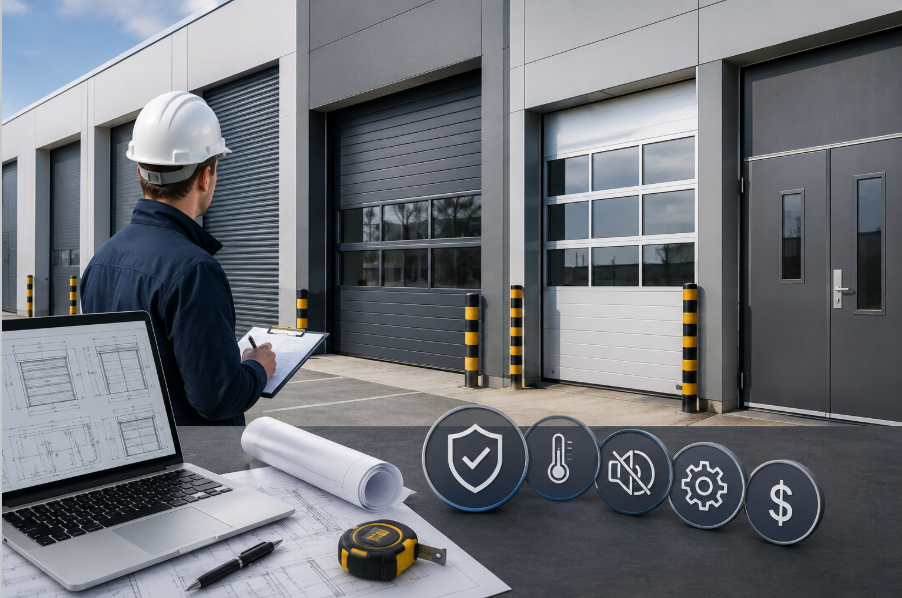
Key Takeaways
- Rolling Steel Service Doors are ideal for high-volume applications that require security and large volumes of entering and exiting through the entrance of a building. Sectional dock doors are best suited for highly insulated applications where a hermetically sealed seal at the dock level is critical.
- The door you choose will greatly affect your operation. Choosing the wrong door for your application can hinder loading, cost you more in energy expenses, and increase the likelihood of unexpected downtime.
- The facility manager who chooses the correct door for the given traffic pattern and climate exposure will save money on maintenance over the life of the product.
Introduction
Choosing the right door for your business can be a costly task, not only in terms of the initial purchase price but also in the long term for repairs and replacements. A ‘stuck’ door can cause so many problems for facilities, especially when they are being used for loading and unloading. The guide below explores all of the key factors to consider when purchasing commercial doors for your business.
What’s the Real Difference Between Commercial Door Types?
Many commercial doors are very different from each other, and choosing a door based on price can cause problems later. For large, high-frequency openings that require security, a rolling steel service door is often the preferred choice. For areas where you need to insulate the dock and create a tight seal with the dock leveler, a sectional dock door is usually the better choice.
Pricing may be an important factor to you, but selecting a door solely based on price may not be the best option for you. The major factor that should determine which door is best for you is the opening frequency of use, weather exposure, and security requirements.
When Does Rolling Steel Make the Most Sense?
Slat-style steel Rolling Steel Service Doors are the best type of commercial door for very high-use doors and for doors that require security. Slat-style steel Rolling Steel Service Doors are made to withstand repeated use and will not wear as fast as panel-style doors as the number of cycles increases.
Common use cases include:
- Warehouse security openings need heavy-duty protection.
- Retail storefronts require a solid barrier after hours.
- Areas with limited vertical clearance.
Rolling steel doors can also be a good choice for doors that are subject to impacts from forklifts, pallet jacks, and other equipment.
When Should You Choose a Sectional Dock Door Instead?
Opt for a sectional dock door where complete insulation, energy efficiency, and preservative seal from the elements while in contact with your dock leveler are more significant than impact resistance. From our work with commercial installations, we typically see facilities that deal with climate-controlled storage or cold chain operations opt for this nearly every time since the panel-and-track design lends itself to thicker insulation cores.
Moreover, these doors tend to work better with dock seals and vehicle restraints, which is vital for facilities operating a continuous truck traffic stream.
How Does Arizona’s Climate Affect the Decision?
Big day-to-night swings and extreme summer heat strain both door types – but they fail differently. Rolling steel goes way up and way down through its coil housing, which affects smooth operation if proper maintenance is not performed. The insulated sectional panels work to keep interior temperature controlled, which is important when energy costs are soaring during stretches of 110 degrees.
Create a maintenance plan that considers these temperature extremes, not an annual checkup template.
What Maintenance Do These Doors Actually Need?
From the above list, you can see that 2 systems require Ongoing Service. However, there are some critical differences between the two systems.
- Track and guide inspection: transferring uneven wear to the bearings and rollers of the alternative product.
- Spring and cable inspections for high-cycle-use doors equipped with torsion springs rated for heavy use.
- Seal and weather-stripping review: Insulation of dock-level section to prevent heat loss.
- Test door opener and safety sensors (especially for high-use doors).
- Look for any damage to door panels and slats; even minor dents or bending can cause problems.
Missing a single routine check can turn a single repair into an emergency shutdown requiring business hours to complete.
How Do You Decide Between the Two for a New Facility?
Start with the opening job, not its size. That said, if the door has to cycle dozens of times per day with undiminished security, the rolling steel service door is often tougher for clothes to wear. If the entrance leads to a loading dock and insulation is an important consideration, then sectionals will often be better in the long run.
Facility managers who make this decision correctly ahead of time avoid the expensive retrofitting of incorrect door types by the time operations are already in progress.
Commercial Door That Best Fits Your Facility
Elite Garage Doors & Gates has been servicing and installing commercial door systems since 2000, providing clients with expert recommendations on all forms of rolling steel and sectional solutions throughout Arizona!
For Free Commercial Door Consulting→
The Bottom Line
Choosing the correct type of commercial door is not about choosing the cheapest or most aesthetically pleasing; it is about picking up a door that fits the actual use of how this entry will be used. If you make that match perfectly, you’ll reduce downtime, save energy bills, and stave off a costly emergency repair somewhere down the road.