Top 7 Benefits of Using a Fleet Dash Cam for Telematics
Fleet managers need more than vehicle location data to keep drivers and vehicles safe. But what happens when GPS data shows an event without showing what caused it? It leaves fleet managers without the visual context needed to understand what happened. Fleet dash cam for telematics enhances fleet data with visual capabilities. It is because these cameras provide managers with clear insight of road incidents and driver behavior. The result is an enhanced level of interpretation of the fleet data.
A fleet dash camera may be used for driver training, reviewing accidents, and claim management. Video telematics enhances fleet data and can add useful context to existing telematics solutions. This guide covers seven benefits of using a fleet dash cam for telematics, key features to consider, and how it can add value to fleet operations.
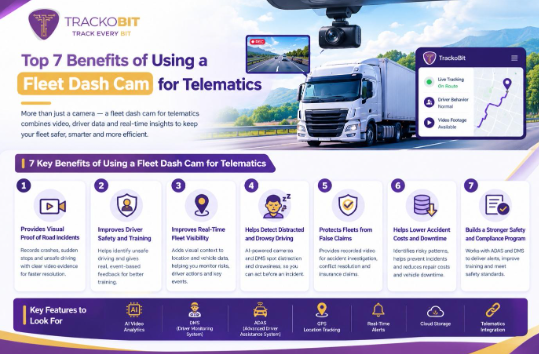
7 Benefits of Using a Fleet Dash Cam for Telematics
Visual proof, driver safety, and real time visibility are the benefits of fleet dash cam for telematics. It combines camera footage with fleet data which gives managers a clear insight of vehicle and its surroundings. Here are seven key benefits:
1. Provides Visual Proof of Road Incidents
A fleet dash cam for telematics records road events provides video evidence. The managers can review crashes, sudden stops, unsafe driving, and other incidents.
2. Improves Driver Safety and Training
Video footage enhances the benefits of fleet telematics by helping managers identify unsafe driving. It also provides clear, event-based feedback during driver training.
3. Improves Real-Time Fleet Visibility
A fleet dash cam adds visual context to location and vehicle data. This feature helps managers to monitor potential hazards, driver actions, and critical events alongside real time tracking.
4. Helps Detect Distracted and Drowsy Driving
An AI dash cam for fleet can work with DMS to identify distraction and drowsiness. It supports managers to respond quickly to risky driving before it leads to an incident.
5. Protects Fleets from False Claims
A fleet dash cam in telematics gives recorded video of events on the road. They can use it to investigate accidents, solve conflicts, and make insurance claims.
6. Helps Lower Accident Costs and Vehicle Downtime
A fleet dash cam video is useful in finding risky driving patterns and investigating accidents. It will help in making safe decisions and cutting avoidable costs and downtimes.
7. Builds a Stronger Safety and Compliance Program
The fleet dash cam works with ADAS and DMS to give safety alerts and driver data. It enables the fleet to enhance driver training programs and safety procedures.
How a Fleet Dash Cam for Telematics Enhances Fleet Data
The purpose of the GPS is to show the location of the car. Telematics brings in more details. For example, GPS may indicate a sudden stop at a particular place. Telematics may show that there is harsh braking. The camera will be useful to determine what the cause of the incident was, such as traffic, another car, or road conditions.
Such an approach is the primary advantage of a dash cam for fleet telematics. It allows combining the location, car information, driver behavior, and video all together. Video telematics may combine DMS and ADAS with visual data.
What to Look for in a Fleet Dash Cam?
You should always look for AI video analytics, DMS, ADAS, and GPS. Cloud storage and telematics integration are also important to improve fleet safety and visibility. Let’s look at the features in detail:
AI Video Analytics: Detects important driving events and risky behavior that assists in taking safety measures by managers in a timely manner.
- DMS: Analyzes the behavior of drivers and recognizes any signs of distractions, drowsiness, or other risky driving behaviors.
- ADAS: Alerts drivers about any road hazards, lane hazards, and accidents so they can drive safely.
- GPS: Links video footage with vehicle location, making it easier to review incidents and track trips.
- Real-Time Alerts: Alerts managers about important driving events to act quickly if required.
- Cloud Storage: Stores record footage securely and make it easier for managers to access and review it.
- Telematics Integration: Combines video with vehicle and driver data to give managers a clearer view of fleet activity.
These features make the fleet dash cam for telematics more useful for daily fleet management than a basic camera.
Are Fleet Dash Cams Worth the Investment?
Fleet dash cam for telematic s is dependent on different considerations like size of the fleet, road hazards, claims and driver management requirements. It is an excellent solution for fleets that require enhanced safety surveillance, accident evidence collection, and driver training.
Basic dashcam features might work for smaller fleets. For larger fleets, more advanced assistance is available through software that integrates DMS, ADAS, GPS, and real-time alerts. The ideal solution for any fleet should suit their requirements and safety objectives.
A dash cam delivers the most value when it works with existing fleet systems. The video along with the telematics data will help the manager to analyze driving events effectively.
Conclusion
A fleet dash cam for telematics gives fleet managers more than recorded footage. It adds visual context to GPS, vehicle, and driver data. This can help improve safety, support driver training, review accidents, reduce false claims, and improve fleet visibility.
The benefits of fleet telematics become more powerful when data can be linked with real events on the road. With the right fleet dash cam and connected telematics solutions, fleet teams will be able to make faster and more informed safety decisions in 2026. For fleets looking to move beyond basic tracking, video telematics can provide a practical way to improve visibility, safety, and control.