

Trees give character to a property. They provide shade on hot afternoons, shelter for birds, and a sense of permanence that makes a house feel like home. But trees don’t last forever, and sometimes keeping one standing does more harm than good. Knowing when to remove a tree — and who to trust with the job — can save your property from costly damage and keep your family safe.
At Art’s Tree Service, we’ve spent years helping homeowners make these tough calls. Below, we’ll walk through the warning signs that a tree needs to go, what the removal process actually looks like, and why choosing an experienced crew matters more than most people realize.
Signs Your Tree May Need to Come Down
Not every tree problem calls for removal. Sometimes a trim or a round of treatment is enough to bring a struggling tree back to health. But certain signs point to a bigger issue:
- Visible decay or fungus growth at the base or trunk, which often signals internal rot
- Large dead branches scattered throughout the canopy, especially if new growth has stopped
- A noticeable lean that wasn’t there before, particularly after a storm
- Cracks or splits running down the trunk
- Roots lifting the soil or damaging nearby structures like sidewalks and foundations
If you’ve spotted any of these red flags, it’s worth having a professional take a closer look before the situation worsens.
Why Storm Damage Changes Everything
High winds and heavy rain are some of the most common reasons homeowners call us. A tree that looked perfectly healthy last season can develop hidden weaknesses after a severe storm. Even when the damage isn’t obvious from the ground, cracked limbs and loosened root systems can turn a tree into a serious hazard.
Storm-damaged trees are unpredictable. A limb that seems stable one day might come crashing down the next, especially with added wind or rain. Waiting too long to address storm damage can put your roof, car, fence, or family at risk.
What Happens During the Removal Process
A lot of homeowners assume tree removal is as simple as cutting down the trunk, but there’s more to it than that. Here’s a general look at how the process unfolds:
Initial Assessment
Our team starts by inspecting the tree’s health, size, and location relative to your home, power lines, and other structures. This helps us determine the safest approach and the right equipment for the job.
Planning the Cut
Every property is different. A tree in an open backyard requires a different strategy than one squeezed between a house and a fence line. We map out exactly how the tree will come down to protect everything around it.
The Removal Itself
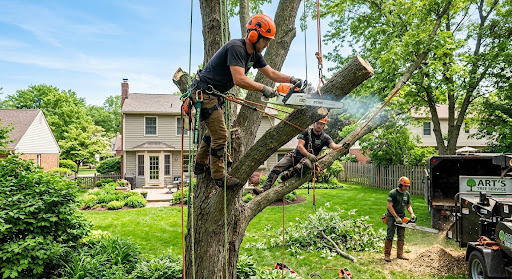
Depending on the tree’s size and location, we may remove it in sections rather than felling it all at once. This technique, often used for trees close to buildings, allows for precise control over where each piece lands.
Cleanup and Stump Handling
Once the tree is down, we clear away branches, logs, and debris. If you’d like the stump removed or ground down, we can take care of that too, leaving your yard ready for whatever comes next — whether that’s new landscaping or simply a clean, open space.
The Risks of DIY Tree Removal
It might be tempting to handle a smaller tree yourself, especially if you own a chainsaw and some basic tools. But tree removal is one of the more dangerous jobs a homeowner can attempt. According to the U.S. Bureau of Labor Statistics, tree trimming and removal consistently ranks among the most hazardous occupations in the country, and that’s with trained professionals on the job.
Without the right equipment, training, and experience, a falling tree can easily damage your home, injure bystanders, or cause harm to the person doing the cutting. Power lines add another layer of danger that most homeowners simply aren’t equipped to handle safely.
Choosing the Right Tree Removal Service
Not all tree services are created equal. When you’re trusting a company to work around your home, it pays to look for a few key qualities:
Experience with your specific tree type. Different species require different techniques, especially when it comes to weight distribution and cutting angles.
Proper licensing and insurance. This protects you if something unexpected happens during the job.
Clear communication. A trustworthy company will walk you through the process, answer your questions, and give you a straightforward estimate before any work begins.
Full-service cleanup. The job isn’t finished until your yard is clear of debris and ready to use again.
Experienced, friendly tree removal services that prioritize your safety and property while leaving your yard spotless are exactly what Art’s Tree Service is built around. We’ve worked on properties of every size, from small residential lots to larger commercial spaces, and we treat every job with the same level of care we’d want for our own homes.
Protecting Your Property for the Long Run
A tree in decline doesn’t just affect your yard’s appearance. It can threaten your home’s foundation, your family’s safety, and your peace of mind. Addressing the problem early, before a storm or a strong gust of wind forces the issue, puts you back in control.
If you’re noticing warning signs in a tree on your property, don’t wait for the situation to escalate. Reach out to Art’s Tree Service for an assessment, and let our experienced team guide you through the safest, most efficient path forward. Your yard — and everyone who enjoys it — will be better off for it.
Frequently Asked Questions
How do I know if a tree is actually dying or just dormant?
Dormant trees typically show signs of life in their branches, like flexible twigs and visible buds. Dying trees often have brittle branches, peeling bark, and little to no new growth during the growing season. A professional inspection can confirm which one you’re dealing with.
Does tree removal damage my lawn?
A skilled crew takes steps to minimize impact on surrounding grass and landscaping, using equipment and techniques suited to your yard’s layout. Some disruption is normal, but it typically resolves quickly with basic lawn care.
What happens to the wood after a tree is removed?
Depending on your preference, the wood can be hauled away, chipped for mulch, or left in manageable sections for firewood. Just let your crew know what you’d like done with it.
Is tree removal expensive?
Costs vary based on the tree’s size, location, and condition. Factors like proximity to power lines or structures can also affect the price. Requesting an estimate upfront is the best way to understand what to expect for your specific situation.