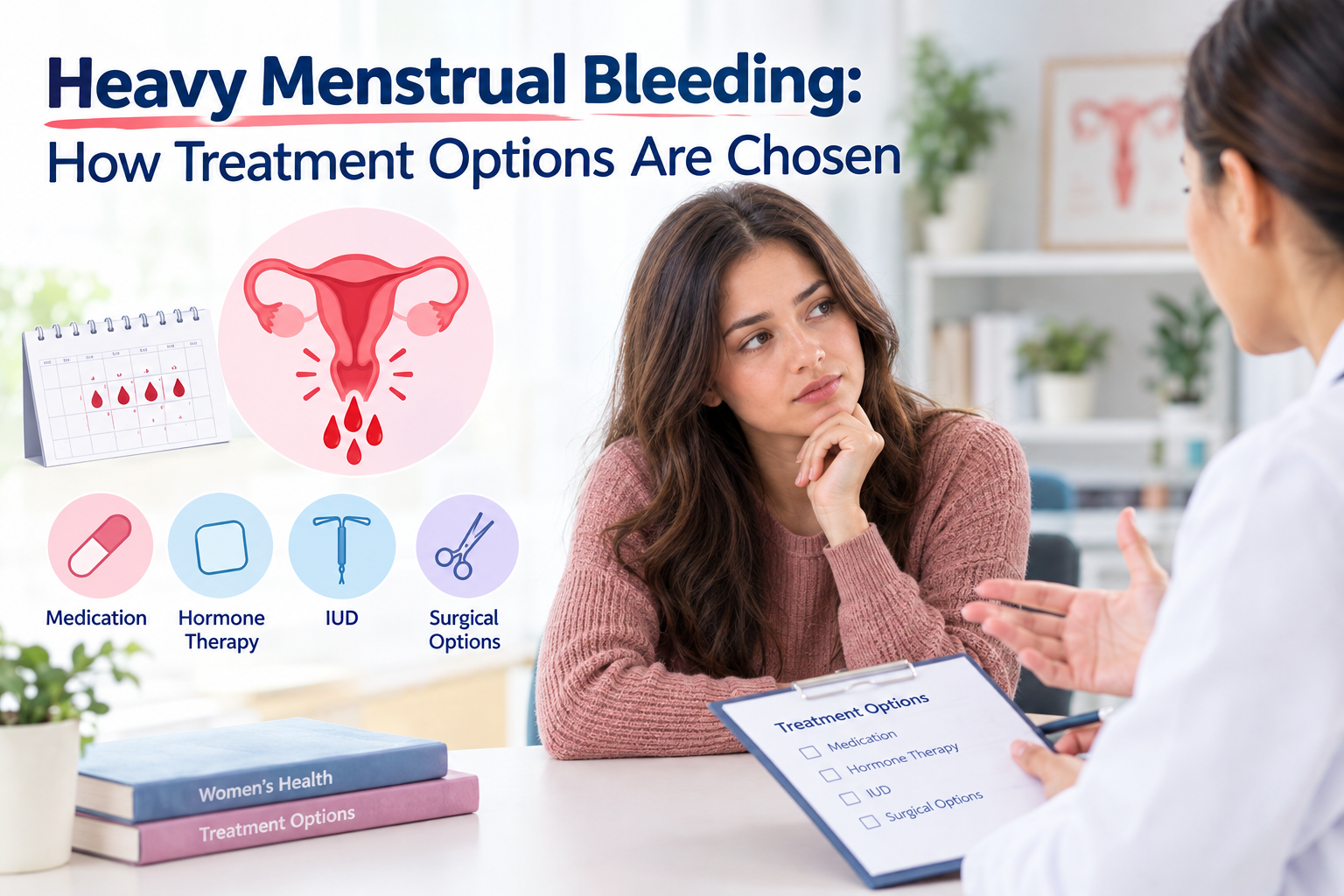
Key Takeaways
- Heavy periods can affect physical health and quality of life, not just menstrual product use.
- Possible causes include fibroids, polyps, adenomyosis, ovulation changes, bleeding disorders, medications, and pregnancy-related conditions.
- Tracking bleeding patterns and related symptoms can make a medical appointment more productive.
- Options may include nonhormonal medication, hormonal treatment, an intrauterine device, targeted procedures, or surgery.
- Fertility goals are an important part of choosing treatment.
- Very heavy bleeding with faintness, severe pain, or possible pregnancy needs prompt medical attention.
Heavy menstrual bleeding can interfere with work, sleep, exercise, relationships, and everyday routines. It is not something a person simply has to tolerate. Evaluation can help identify the cause and guide treatment, which may range from medication to a procedure such as an Endometrial Ablation System for appropriately selected patients.
Treatment is not one-size-fits-all. The best approach depends on how severe the bleeding is, whether there is anemia or another health concern, the suspected cause, past treatment results, and whether a future pregnancy is desired.
What Counts as Heavy Menstrual Bleeding?
Heavy menstrual bleeding describes periods that are unusually heavy, prolonged, or disruptive. The impact on daily life matters. Bleeding that lasts more than seven days, soaks through a pad or tampon every hour for several hours, requires overnight changes, or includes large clots may be signs of heavy bleeding. These warning signs can help people recognize when it is time to discuss symptoms with an obstetrician-gynecologist or another qualified clinician.
Why Heavy Bleeding Can Happen
Many conditions can contribute to heavy periods, and more than one factor may be present. Some causes are related to the uterus itself, while others involve hormones, medications, blood clotting, or pregnancy.
Structural and hormonal causes
Fibroids, uterine polyps, and adenomyosis can contribute to heavier bleeding. Irregular ovulation may also cause the uterine lining to build up and shed unpredictably. This can occur during puberty or perimenopause and may be associated with conditions such as polycystic ovary syndrome or thyroid problems.
Other possible causes
Bleeding disorders can make clotting more difficult. Blood thinners, aspirin, and some birth control methods may affect menstrual flow. Miscarriage and ectopic pregnancy can cause bleeding and require medical assessment. Less commonly, abnormal cells in the uterus or reproductive tract may be involved, which is one reason new or changing bleeding patterns deserve attention.
When to Call a Doctor
Make an appointment for new, worsening, unusually painful, or disruptive bleeding. Medical care is especially important when periods lead to missed work, poor sleep, fatigue, or reduced ability to manage normal activities. A clinician can also check for iron deficiency or anemia when blood loss has been substantial.
- Seek urgent care for bleeding that soaks through a pad or tampon every hour for several hours.
- Get prompt help for faintness, confusion, severe weakness, shortness of breath, or a racing heartbeat.
- Seek immediate evaluation for severe pelvic pain, possible pregnancy, or bleeding after menopause.
What to Track Before an Appointment
A simple period diary can provide useful details that are difficult to recall during a visit. Record the first and last day of bleeding, how frequently menstrual products need changing, clot size, cramps, fatigue, dizziness, and activities missed because of symptoms. Also list medications, supplements, birth control methods, pregnancies, and any personal or family history of easy bruising, nosebleeds, or prolonged bleeding after dental work or surgery.
Tests Doctors May Use
Testing should be tailored to the individual. A clinician may begin with a health history, menstrual history, physical examination, and pregnancy test when appropriate. Blood tests may check for anemia, iron deficiency, thyroid concerns, or clotting problems. Depending on age, symptoms, and examination findings, pelvic ultrasound, hysteroscopy, endometrial biopsy, or other testing may be recommended to look more closely at the uterus.
Medication-Based Treatment Options
Medication is often considered before a procedure when it is safe and likely to address the problem. Nonsteroidal anti-inflammatory drugs may help with cramps and reduce bleeding for some people. Tranexamic acid is a prescription, nonhormonal medication taken during menstrual bleeding. Hormonal options, including pills, patches, rings, injections, and progestin-based therapies, may make periods lighter or more predictable.
A hormone-releasing intrauterine device can reduce bleeding while providing contraception. Iron supplements or other iron treatment may be advised if testing shows low iron or anemia. Medication choices should account for health history, including blood clot risk, migraine type, liver disease, smoking, and pregnancy plans. Various treatments for menstrual problems show why the underlying cause and pregnancy goals should guide the conversation.
When a Procedure May Be Considered
Procedures may be discussed if medication is ineffective, causes unacceptable side effects, or cannot correct a structural cause. Hysteroscopy allows a clinician to view the inside of the uterus and may be used to remove certain polyps or fibroids. Myomectomy removes fibroids while preserving the uterus. Uterine artery embolization may be an option for some people with fibroids.
Endometrial ablation treats the uterine lining to reduce or stop menstrual bleeding in selected patients. It is not a fertility treatment, and pregnancy afterward can carry serious risks. Hysterectomy removes the uterus, permanently ends menstrual periods, and ends the ability to carry a pregnancy. Because it is a major surgery, it is generally considered carefully alongside less invasive options.
How Fertility Goals Shape Treatment
Future pregnancy plans can rule out or favor certain treatments. Some medications, hysteroscopy, and myomectomy may preserve the uterus, although individual effects on fertility vary. Endometrial ablation and hysterectomy are not appropriate for people who may want a future pregnancy. Contraception may still be needed after some treatments because pregnancy can still be possible.
Questions to Ask Before Choosing Treatment
- What is the most likely cause of my bleeding?
- Do I have anemia or low iron?
- Which options preserve fertility?
- How quickly might symptoms improve?
- What side effects, risks, recovery time, and follow-up should I expect?
- What is the next step if the first treatment does not work?
Building a Personal Treatment Plan
A strong treatment plan considers the cause and severity of bleeding, overall health, current medications, anemia risk, fertility preferences, comfort with hormones or procedures, recovery needs, cost, and access to follow-up care. Heavy menstrual bleeding is common, but it should be evaluated rather than dismissed. With a careful assessment and shared decision-making, many people can find an option that better supports their health and daily life