

Go to any gym around six in the morning and count the phones. They’re on the treadmill console, strapped to someone’s arm, sitting on the bench next to a water bottle. Almost all of them are running some kind of fitness app. That’s who you’re competing with now, not just the gym down the street. Fitness tracker app development services give a gym, clinic, or coaching business an actual shot at owning that screen, instead of watching members drift off to whatever free app the app store happened to recommend.
Why Not Just Use an App That Already Exists?
Free trackers work fine for one person. For a business, they’re awkward. You can’t change the onboarding, you have no idea which members stopped logging workouts in March, and the data sits with somebody else. That gap is why so many gym owners and clinics look at custom fitness app development. The app carries your branding, your plans, and your coaches, and the numbers stay with you.
The Features That Actually Get Used
A first version doesn’t need to do everything. It needs a handful of things that work reliably, because people give up on a laggy app faster than they give up on one that’s missing a feature or two.
- Workout tracking tools for gym sessions or home routines
- Step counter and GPS tracking for runs outdoors
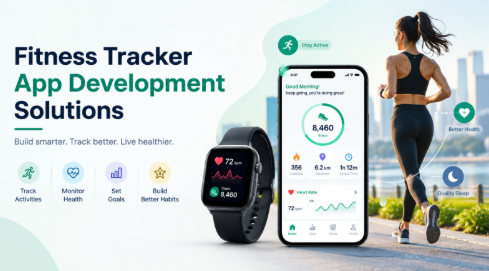
- Heart rate monitoring across training zones
- Calorie tracking features with a searchable food database
- Sleep monitoring insights waiting for them every morning
- Gamification elements, streaks, and badges, nothing fancy
Getting Data In Without Anyone Typing It
Nobody wants to manually enter a number their watch already recorded. That’s the whole point of wearable device integration. It pulls data straight from Apple Watch, Garmin, Fitbit, and Samsung, no manual entry required. On the phone side, Apple HealthKit and Google Fit integration pulls it all into one place. A member training in the UAE expects this to just work, same as anyone else would. Add real-time health analytics on top, and the dashboard is updating while the workout is still happening, not an hour later.
Where AI Is Actually Useful (and Where It Isn’t)
A fixed workout plan has no idea someone barely slept for three nights straight. AI-powered personalized workout plans can adjust the next session based on exactly that kind of thing. It sounds small, but it’s often the difference between someone showing up again or not. A machine learning recommendation engine helps on the retention side too. It notices when a member’s interest is quietly dropping off, so a team can reach out before that character cancels for good, in preference to reaching out after the fact.
Data Protection Isn’t a Nice-to-Have
Once heart rate data and medical notes start moving through an app, things stop being casual. Providers in the USA generally need to build with HIPAA-compliant app development in mind from day one. Anything touching European users needs GDPR-compliant data handling too. Encryption, consent screens, and access controls, none of it is expensive to plan early. Bolting it on after launch is a different story entirely.
Cross-Platform or Native? Depends on What You’re Building
For most fitness startups, going cross-platform is the smarter call. Flutter or React Native gets you onto iOS and Android from one codebase, so your team isn’t building the same thing twice. Apps that lean hard on constant background sensor tracking sometimes need native iOS and Android development instead, that’s usually where cross-platform starts to fall short. Let the feature list decide, not whatever’s trending.
So What Does This Actually Cost?
Everyone asks this primarily, and it is the toughest one to answer with a single quantity. Fitness app development cost moves depending on the systems you’re concentrated on, what number of wearables you are syncing with, how plenty AI is baked in, and how strict the compliance paintings desires to be. A basic logging app costs a fraction of what a full platform with live classes, payments, and coach messaging runs. Rolling it out in phases usually works better anyway, launch with tracking and bookings first, then add nutrition or challenges once you can see how people are actually using it.
How These Apps Actually Make Money
Most run on a subscription revenue model, often with a free tier to pull people in first. Some skip that entirely and go through corporate wellness programs instead, where the employer covers the cost for staff. Both work, it depends on who’s actually paying.
What to Look for in a Development Partner
Don’t simply look at pitch decks. Ask to see apps that are already stay and being used by real people. If a fitness app development company can not stroll you through their discovery procedure, how they test before shipping, and what help looks like after launch without stumbling over the answer, that tells you something.
We’ve built over 1,000 projects across 100+ industries at Kuchoriya TechSoft, and fitness apps are part of that. Take a look at our Map My Fitness app development project if you want to see how we actually approach one of these.
Final Thoughts
None of this matters if people stop opening the app after week two. Get the core features strong, don’t cut corners on records, safety, and planning with an accomplice who offers you straight answers instead of an income pitch. Want to speak via your very own concept? Discuss your fitness app idea with our team and go from there.