


Mexican food holds a permanent place in American dining. Tacos appear on fast-food menus, neighborhood bars serve nachos, supermarkets sell fresh salsa, and cities from San Diego to Boston support restaurants dedicated to regional Mexican cooking. High demand, however, does not automatically make a new restaurant profitable.
The U.S. restaurant industry is expected to generate approximately $1.55 trillion in sales during 2026. That figure shows that Americans continue to spend heavily on food prepared outside the home. It does not reveal how difficult it has become for individual operators to retain a reasonable share of each sale. Restaurant expenses have risen sharply, and 42% of operators reported that their businesses were not profitable in 2025.
A Mexican restaurant can still make money, but the safest opportunity is no longer a large dining room serving an extensive collection of tacos, burritos, enchiladas and fajitas. Profitable openings tend to have a narrower identity, disciplined costs and a location chosen through neighborhood-level research.
The question is therefore not whether Americans still want Mexican food. They clearly do. The important question is whether a particular restaurant can sell the right version of Mexican food at prices that cover ingredients, payroll, rent, delivery fees, insurance, utilities and debt.
Mexican Food Remains Popular, but Popularity Is Not a Business Plan
Mexican cuisine starts with an advantage that many restaurant concepts lack: customers already understand the core product. A new operator does not need to explain what a taco, burrito, quesadilla or bowl is. These dishes work for lunch, dinner, takeaway, catering and late-night service. They can also be adjusted for meat eaters, vegetarians, children and customers seeking lighter meals.
Familiarity lowers part of the commercial risk. A customer may hesitate before ordering from an unfamiliar cuisine, particularly during a short lunch break or through a delivery app. Mexican food usually requires less persuasion. Customers can identify the main ingredients, estimate portion size and choose a spice level that suits them.
Demographic demand also supports the category. The U.S. Hispanic population reached approximately 68 million in 2024, close to one-fifth of the national population. The Hispanic market includes people from many countries and culinary traditions, so it should not be treated as one uniform customer group. Still, Mexican food has deep cultural connections across large parts of the country and broad appeal far beyond Hispanic communities.
Wide acceptance creates opportunity and competition at the same time. A Mexican restaurant competes not only with other independent Mexican restaurants. It also competes with fast-casual chains, taco trucks, bars, convenience stores, supermarket meal counters and delivery-only kitchens. Even restaurants centered on burgers, chicken or breakfast may sell tacos or burritos.
A generic concept therefore enters a crowded category without giving customers a clear reason to switch. A menu that combines standard tacos, nachos, fajitas, enchiladas and margaritas may feel safe because every dish is recognizable. In practice, it can make the business difficult to distinguish from dozens of nearby alternatives.
A stronger concept answers a specific need. It might serve Sonoran-style grilled meat in a growing Arizona suburb, breakfast tacos near offices in Texas, Baja seafood close to a Florida waterfront, or handmade tortillas and regional stews in a city with strong demand for destination dining. The format, location and price point should fit together.
Clear positioning also makes marketing easier. “Mexican restaurant” is too broad to communicate a useful promise. “Counter-service birria and handmade corn tortillas until midnight” tells customers what the restaurant sells, how it operates and when they should visit.
Profitability depends on this clarity because customers do not compare every restaurant equally. A family choosing an affordable dinner has different priorities from a group ordering cocktails and shared plates. Office workers buying lunch care about speed. Delivery customers care about packaging and travel quality. A restaurant that tries to satisfy all of them often builds an oversized menu, a complicated kitchen and an inconsistent brand.
Regional Mexican cuisine provides one route to differentiation, but authenticity should not become a substitute for commercial judgment. A traditional dish may be excellent and still sell poorly when customers do not understand it. Operators need concise menu descriptions, practical portion sizes and staff who can explain unfamiliar ingredients without delivering a lecture.
Americanized dishes can remain profitable as well. Tex-Mex, loaded burritos and combination plates have loyal customers. The problem is not adaptation. The problem is offering the same adaptation as every established competitor while paying higher rent and carrying new-business debt.
Demand creates the opening. A defined concept turns that demand into a potential business.
Where Mexican Restaurants Can Make Money
Mexican food supports profitable menus because many core ingredients can appear across several dishes. Corn or flour tortillas, beans, rice, onions, tomatoes, chiles, cheese, herbs and selected proteins can be arranged into tacos, burritos, bowls, quesadillas and combination meals.
Ingredient overlap reduces the number of products sitting in storage. It can also simplify purchasing, preparation and staff training. Braised meat may be used in tacos, bowls and tortas. Roasted vegetables may appear in a vegetarian taco, a side dish and a catering tray. One salsa can support several menu items without making every dish taste identical.
This advantage disappears when the menu becomes too large. A restaurant that carries six proteins, several seafood options, multiple cheeses, separate sauces and many low-volume specialties may create more waste than a less adaptable cuisine. The owner then pays for ingredients that spoil, refrigeration that consumes space and preparation work that does not always produce sales.
Menu engineering matters more than the theoretical cost of tortillas or beans. Owners should calculate the full plate cost, including garnishes, oil, sauces, packaging and waste. A taco containing inexpensive chicken can still produce a weak margin when it includes costly avocado, imported cheese, oversized portions and several labor-intensive toppings.
Portion control deserves particular attention. Customers often judge Mexican restaurants by generosity, which can pressure operators to serve large quantities of meat, rice, chips and salsa. Generous portions may build loyalty, but unmeasured portions quietly reduce profit. Kitchen teams need consistent scoops, ladles and protein weights rather than visual estimates.
Beverages can improve the economics of a full-service concept. Margaritas, beer, agua fresca, horchata and specialty nonalcoholic drinks generally sell at a higher margin than protein-heavy entrées. Alcohol can also increase the average check and support evening traffic.
Alcohol introduces additional costs and risks. Licensing rules differ by state and city. Insurance becomes more expensive, bartenders require training, and late-night service can increase security needs. A beverage program should be part of the financial model from the beginning rather than an assumed source of easy profit.
The operating format has an even greater effect on profitability. A compact counter-service restaurant can generate respectable sales with fewer employees, a smaller kitchen and less restaurant tables and chairs than a full-service dining room. Customers order at the counter, collect their food or receive limited table service, and leave more quickly. Higher table turnover and lower staffing requirements can compensate for a smaller average transaction.
Fast-casual operations also suit online ordering. Bowls, burritos, quesadillas and many taco preparations travel reasonably well when packed correctly. The restaurant can serve walk-in customers, pickup orders and delivery from the same production line.
Delivery does not automatically improve profit. Third-party platforms may bring additional customers, but commissions, discounts, packaging and refund disputes can absorb much of the revenue. Operators should price delivery menus separately when permitted and remove dishes that deteriorate during transport.
Crisp tacos, nachos covered too early and delicate seafood preparations may arrive in poor condition. A restaurant that sends weak food through delivery apps risks bad reviews from customers who never see the dining room or understand that the dish sat with a driver.
Catering often provides better economics. Mexican food fits office lunches, birthdays, school events, weddings and casual corporate gatherings. Trays of rice, beans, proteins, tortillas and toppings allow customers to assemble meals while reducing individual plating work.
Catering can also fill quieter production hours. A restaurant that prepares a large office order before lunch earns revenue before its dining room becomes busy. Deposits and advance orders improve planning, while larger transactions reduce the number of payments and customer interactions required per sales dollar.
The catering model needs its own procedures. Portions must be calculated precisely, hot and cold foods must travel safely, and pickup times cannot interfere with regular service. A missed catering order can damage a business relationship worth far more than one table.
Smaller concepts can use retail products to create additional revenue. Bottled salsa, hot sauce, tortilla packs or meal kits may extend the brand beyond the restaurant. These products work best when customers already ask to take an item home. Producing a retail line before establishing demand often ties up cash in labels, packaging and inventory.
Breakfast offers another opportunity in selected states. Breakfast tacos and burritos can use eggs, potatoes, beans and smaller portions of meat. These ingredients may produce attractive margins, and early service can generate revenue from a space that would otherwise remain closed.
Breakfast is not free money. Opening earlier adds labor, utilities and management hours. The restaurant needs enough commuters, construction workers, students or office employees nearby to justify the shift.
Late-night service follows the same principle. Tacos, quesadillas and burritos suit customers leaving bars, events or entertainment districts. Late-night traffic may be strong, but payroll, security and cleaning costs also rise. The location must provide consistent volume rather than occasional weekend crowds.
Full-service regional restaurants can make money through higher checks instead of maximum speed. Carefully prepared mole, grilled seafood, handmade masa dishes and mezcal-based drinks may support premium prices. This format depends on skilled kitchen labor, polished service and a market willing to pay for more than basic familiarity.
The economics remain tight across the industry. National Restaurant Association operating data found median pre-tax income of only 2.8% of sales for full-service restaurants and 4% for limited-service restaurants. Food, beverage and labor represented a median of 65 cents from every limited-service sales dollar, while payroll and benefits alone represented 36.5% of sales for full-service restaurants.
Those figures leave little room for careless purchasing, poor scheduling or an expensive lease. A restaurant can look busy every evening and still generate little profit.
The Costs and Mistakes That Destroy the Margin
Labor presents one of the largest risks. Mexican cooking may require long preparation before the first customer arrives. Teams roast chiles, prepare salsas, braise meat, cook beans, portion garnishes and handle fresh produce. Handmade tortillas add another skilled station.
Prep labor must be included in each dish’s cost. Owners often focus on raw ingredients while overlooking the hours required to turn them into a finished product. A sauce made from inexpensive ingredients can become costly when it requires roasting, peeling, blending, straining and cleaning several pieces of equipment.
Labor expenses have increased well beyond pre-pandemic levels. The National Restaurant Association reported that restaurant labor costs rose sharply between 2019 and 2026, while operators also faced higher expenses for food, utilities, occupancy, supplies and payment processing. Total expenses for an average restaurant were estimated to have increased 36% over that period.
Scheduling errors can be as damaging as high hourly wages. Too many employees during slow periods waste payroll. Too few employees during busy periods create long waits, rushed preparation and incorrect orders. Managers need sales forecasts by hour, not only by day.
Staff retention also affects consistency. Restaurants that repeatedly replace cooks and counter staff spend more time training beginners. Recipes drift, portion sizes change and experienced employees become frustrated by carrying weaker colleagues.
Food prices create a second pressure point. The U.S. Consumer Price Index showed that food-away-from-home prices increased 4.1% during 2025, faster than the broader inflation rate. Restaurants raised menu prices partly to cover rising expenses, but customers also became more sensitive to the cost of dining out.
Mexican restaurants face particular volatility in products such as beef, avocados, tomatoes, limes, dairy and seafood. Exchange rates, weather, disease outbreaks, tariffs and transport costs can affect pricing. Owners should avoid building the entire menu around one volatile ingredient unless they have reliable purchasing contracts and room to adjust prices.
Avocado illustrates the problem. Customers expect guacamole, but its cost can change quickly. Free or underpriced guacamole may attract orders while weakening the transaction margin. Charging separately, controlling portions and adjusting the recipe format can protect the business without removing a popular item.
Rent may decide whether the restaurant survives. A prestigious address can produce visibility, yet visibility has little value when occupancy costs require unrealistic sales. Restaurants should estimate how many orders must be completed every day simply to cover rent, common-area charges, property taxes and insurance.
Build-out costs need equal scrutiny. Mexican concepts often require ventilation, gas lines, refrigeration, grease traps, tortilla equipment and substantial cooking capacity. A former restaurant space may save money, but inherited equipment and hidden plumbing problems can create expensive repairs.
Operators should inspect the previous tenant’s reason for leaving. A restaurant-ready site is not automatically a proven restaurant location. Poor parking, weak lunch traffic, difficult access or repeated maintenance problems may have contributed to the vacancy.
Large dining rooms create additional obligations. More seats require more tables, servers, cleaning, air conditioning and maintenance. Empty seats do not produce revenue, but the business still pays for the space.
Competition can force discounting. A new restaurant may offer opening promotions, loyalty rewards and delivery-platform deals to gain attention. Discounts can introduce the brand, but permanent promotions train customers to avoid paying full price.
Online reviews intensify the pressure. Customers compare prices, photos and ratings before visiting. A slow opening week or poorly managed delivery launch can create a negative rating that remains visible for months. Restaurants should test their kitchen, packaging and ordering systems before spending heavily on promotion.
Operational complexity often causes those weak openings. An owner may launch with a forty-item menu to appear generous. The kitchen then struggles to prepare every item consistently, servers take longer to learn the menu, and customers wait while several stations coordinate one order.
A shorter menu allows repetition. Repetition improves speed, purchasing accuracy and recipe control. It also gives the restaurant a better chance of becoming known for specific dishes.
Free chips and salsa require deliberate costing. Customers may treat them as a basic expectation, particularly in full-service Tex-Mex restaurants. The restaurant still pays for corn, oil, tomatoes, labor, baskets, bowls and cleaning. Unlimited refills can become expensive when customers order a few drinks or share one entrée.
Owners can retain the tradition while controlling it. Portions can match party size, premium salsa flights can carry a charge, and staff can avoid placing food before the complete group arrives.
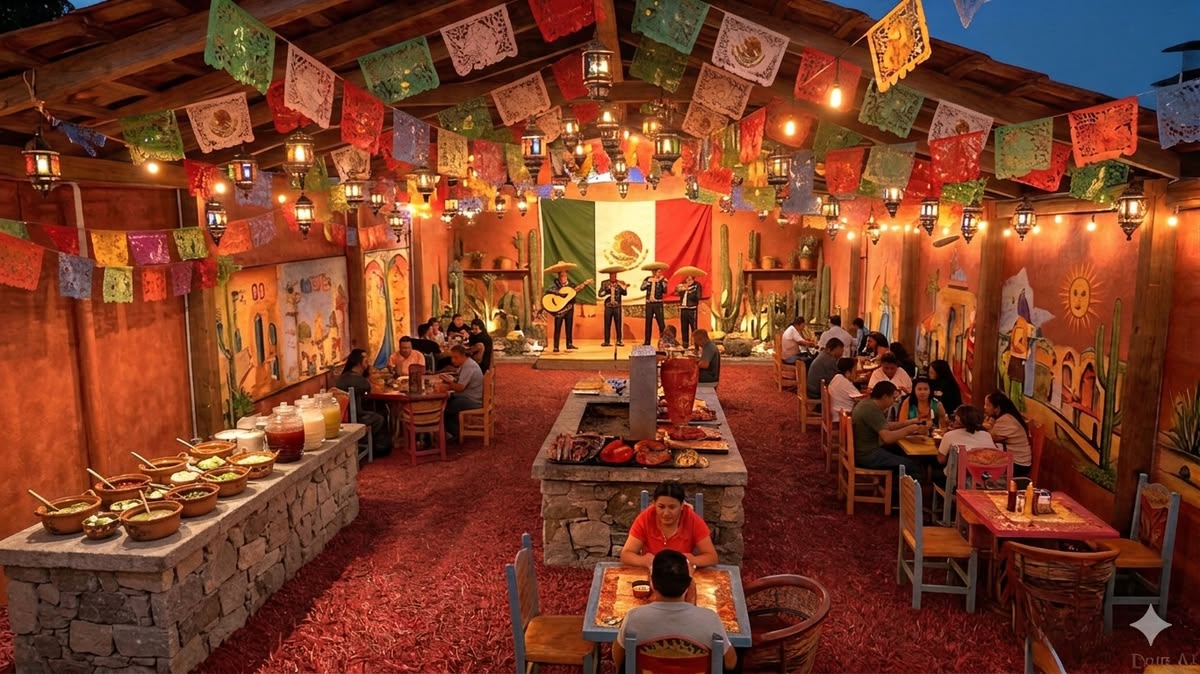
Cultural positioning requires care as well. Mexican cuisine is diverse, and superficial branding can feel dated or disrespectful. Oversized sombreros, stereotyped names and generic decorations do not establish credibility. Customers increasingly notice the difference between a concept built around food knowledge and one built around clichés.
Credibility comes from specifics. A restaurant can identify the region behind a dish, explain its preparation and credit family or culinary influences where appropriate. It should also be honest when a dish has been adapted for the local market.
The Best States for Opening a Mexican Restaurant
Texas offers the strongest overall combination of demand, population size, cultural familiarity and metropolitan growth. The state added more residents than any other state between July 2024 and July 2025, according to Census Bureau estimates. It also contains several large markets rather than relying on one dominant city.
Houston supports cuisines from across Mexico and serves an unusually diverse population. Dallas–Fort Worth offers expanding suburbs, corporate employment and a large base of family customers. San Antonio has deep Tex-Mex traditions, while Austin supports food trucks, premium casual dining and late-night concepts.
Texas also presents severe competition. Customers know Mexican food and may have strong opinions about tortillas, salsa, meat preparation and value. A standard concept will compete against restaurants that have served the same neighborhoods for decades.
Texas works best for an operator with a narrow format and careful site selection. Growing suburbs can offer lower occupancy costs than central entertainment districts while providing families, schools, retail traffic and catering demand. Breakfast tacos, counter-service taquerias, grilled-meat concepts and family-oriented Tex-Mex can all work, but not in every neighborhood.
Arizona ranks close behind for concepts connected to Sonoran and northern Mexican cooking. Phoenix and its suburbs continue to attract residents and new development. The state’s proximity to Mexico supports customer familiarity, ingredient access and a strong existing food culture.
Arizona customers already have many respected options, so operators need more than geographic relevance. A charcoal-grilled chicken concept, flour-tortilla specialist, seafood operation or late-night taco shop may have a clearer opening than a broad sit-down menu.
Heat affects site design and sales patterns. Outdoor dining may perform well during cooler months and struggle during extreme summer temperatures. Air-conditioning costs, shaded pickup areas and delivery packaging should be included in the operating plan.
Florida offers a different opportunity. The state added nearly 197,000 residents between 2024 and 2025, placing it second nationally in numeric population growth. Tourism, migration and multicultural cities support substantial restaurant spending, although the market varies sharply by region.
Miami provides strong Latin American demand but also high rents and competition from Cuban, Colombian, Venezuelan, Peruvian and other regional cuisines. A Mexican restaurant needs a precise identity rather than relying on the general popularity of Latin food.
Orlando offers tourism and a large hospitality workforce. Restaurants can serve local residents, convention visitors and families, but tourist corridors carry expensive leases and inconsistent traffic patterns. Tampa and Jacksonville may provide better openings for neighborhood concepts, particularly in growing suburban districts.
Florida suits seafood tacos, beverage-led cantinas, late-night formats and high-volume casual restaurants. Operators should prepare for seasonal changes, hurricane-related disruption and insurance costs.
North Carolina has become one of the most attractive expansion markets for restaurant owners who want population growth without the same level of saturation found in Texas or California. The state ranked third in numeric population growth from 2024 to 2025. Charlotte, Raleigh, Durham and their suburbs continue to add residents, offices and mixed-use development.
North Carolina may suit approachable regional concepts, fast-casual restaurants and catering-focused operators. New suburban communities often gain housing faster than distinctive independent dining options. A restaurant entering at the right time can build loyalty before national chains and larger restaurant groups fully arrive.
Statewide growth should not replace local research. Some districts contain heavy competition, while others depend on car access and weekend traffic. Operators must examine household income, daytime employment, school locations and delivery distances.
Georgia presents similar advantages. The state ranked fourth in numeric population growth during the same Census period, and the Atlanta metropolitan area continues to spread across a wide suburban region.
Atlanta supports everything from inexpensive taco shops to chef-led regional dining. It also has strong nightlife, airport-related activity, corporate offices and a diverse population. Central neighborhoods can be expensive, but outer districts may offer large customer bases with fewer specialist Mexican restaurants.
Georgia is particularly attractive for operators who combine dine-in sales with office catering and family packages. The main risk is choosing a low-cost site with weak visibility or limited traffic. Cheap rent cannot rescue an inconvenient location.
California has enormous demand but difficult economics. The state offers established Mexican communities, experienced restaurant workers, access to ingredients and customers who appreciate highly specific regional food. Southern California alone can support concepts centered on Baja seafood, Oaxacan cooking, Sonoran grilling, birria, mariscos or modern Mexican tasting menus.
California also carries high labor, occupancy and regulatory costs in many markets. Customers compare new restaurants against exceptional taco trucks, family businesses and celebrated regional specialists. A restaurant can generate high sales and still struggle to retain profit.
California therefore suits experienced operators with strong financing, supply relationships and a concept capable of commanding either high volume or premium pricing. It is a less forgiving choice for a first-time owner financing an expensive build-out.
Nevada deserves consideration for beverage-led and late-night concepts. Las Vegas creates access to tourists, hospitality employees, conventions and entertainment traffic. A well-positioned taco or cantina operation can serve customers outside standard meal periods.
Las Vegas also punishes weak leases and unrealistic sales projections. Tourist traffic can look attractive while leaving the restaurant dependent on hotel calendars, events and costly locations. Neighborhood districts may provide steadier repeat business than famous visitor corridors.
New Mexico offers a strong food identity but a smaller expansion opportunity. Customers understand chile-based cooking and have clear expectations around local dishes. A generic national-style Mexican restaurant may struggle to stand apart, while a restaurant that respects local traditions can build a loyal base.
The best state ranking therefore depends on the concept. Texas provides the strongest overall opportunity. Arizona fits Sonoran and border-influenced formats. Florida and Nevada favor tourism, drinks and late-night demand. North Carolina and Georgia provide growing suburban markets. California rewards culinary distinction but demands more capital and operational skill.
The Final Profitability Test
A prospective owner should define the restaurant in one sentence before negotiating a lease. The sentence should identify the food, service format and primary customer.
“A Mexican restaurant for everyone” is not specific enough. “A counter-service Sonoran taco shop serving families in a fast-growing Phoenix suburb” gives the owner a basis for decisions about rent, menu size, staffing, hours, pricing and promotion.
The financial model should begin with the number of daily transactions required to break even. Owners need realistic estimates for average check, food cost, labor, occupancy, payment fees, utilities, insurance, marketing, repairs and debt payments.
Sales forecasts should use conservative customer counts. A spreadsheet based on full seats every Friday and Saturday will hide the real risk. Restaurants must also survive slow Tuesdays, bad weather, school holidays and periods when customers reduce discretionary spending.
A cash reserve is essential. Opening costs rarely end when the doors open. Equipment breaks, hiring takes longer than expected, permits are delayed and early sales fluctuate. A restaurant that uses all available capital on construction may close before it has enough time to develop repeat business.
Neighborhood analysis matters more than statewide rankings. Owners should count nearby competitors, visit them several times, study their prices and read customer complaints. Parking, road access, office density, household growth and delivery range can matter more than citywide population figures.
A strong site should support the intended service periods. An office district may produce excellent weekday lunches and weak weekends. A suburban retail center may provide family dinners but little late-night demand. A nightlife location may sell drinks and tacos until 2 a.m. while remaining empty at noon.
Menu testing should happen before a permanent opening. Pop-ups, catering jobs, food halls and temporary residencies can reveal which dishes sell, how quickly the kitchen works and what customers will pay. This evidence is more valuable than praise from friends.
The clearest answer is that Mexican restaurants can still be profitable in the United States, but only when owners treat them as disciplined operating businesses rather than culturally popular ideas. Demand remains strong. Population growth in Texas, Florida, North Carolina and Georgia creates new trade areas, while Arizona, California, Nevada and New Mexico offer opportunities tied to specific culinary or service formats.
The winning concept will usually have a focused menu, controlled portions, realistic rent, several revenue channels and a clear reason for customers to choose it. The losing concept will often carry too many dishes, too much space and too much debt.
Mexican food is not running out of customers. Poorly planned Mexican restaurants are running out of margin.